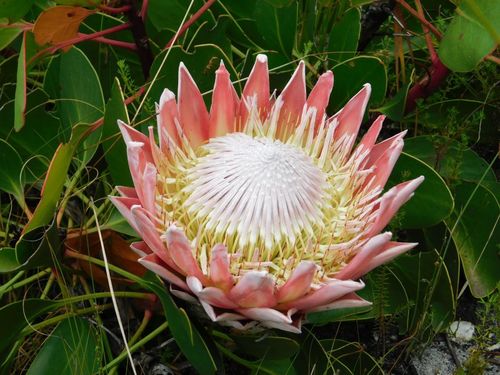
Helicia glabriflora
F. Muell.
Smooth Helicia, Pale Oak, Leather Oak, Brown Oak
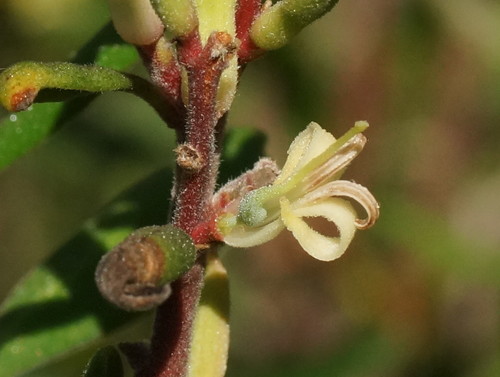
iNaturalist· cc-by-nc
(c) Keevan Heidke, some rights reserved (CC BY-NC)
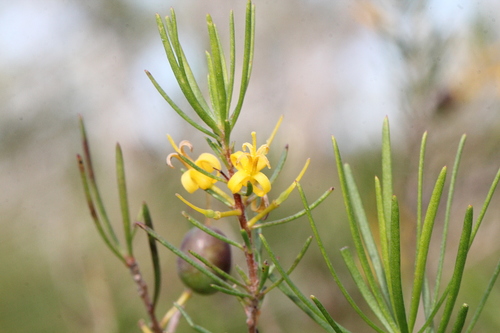
iNaturalist· cc-by-nc
(c) Keevan Heidke, some rights reserved (CC BY-NC)
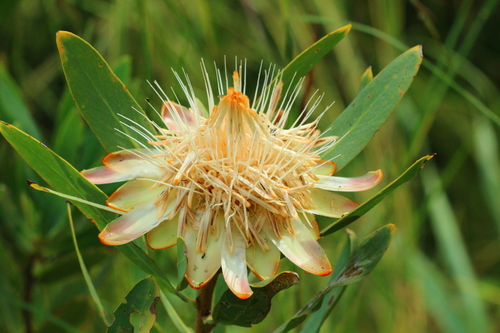
iNaturalist· cc-by-sa
(c) Greg Tasney, some rights reserved (CC BY-SA)
Summary
Source: WikipediaHelicia glabriflora is a species of rainforest shrubs or small trees occurring in eastern Australia. Common names include smooth or pale helicia, pale, leather or brown oak. They grow naturally in a variety of different rainforest types from the Illawarra, New South Wales (34° S) to the Townsville area, Queensland (19° S). Of all the global diversity of approximately one hundred Helicia species, this one species naturally grows the furthest south, in the Minnamurra Rainforest and the Robertson area, Illawarra, New South Wales, there observed more on the relatively fertile basalt and alluvial soils. They grow up to 15 m (50 ft) tall with a stem diameter up to 30 cm (12 in). The grey or brown trunk is fairly smooth, with some bumps and horizontal lines. They have leathery textured leaves, 5 to 15 cm (2 to 6 in) long by 1.5 to 4 cm (0.6 to 1.6 in) wide. The leaf stems measure between 1 and 3 mm long, swollen at the base; often reduced to a pulvinus. The yellow or white flowers open from April to September, arranged in bottle–brush–shaped compound inflorescences. The fruit is a purple blue drupe, around 16 mm (0.63 in) long, maturing from April to November, with a single green seed. The flowers and fruit have the characteristic appearance of the plant family Proteaceae. The seeds are slow to germinate, usually complete after three months with a 90% success rate.
Description
A small tree. It grows 8-10 m high by 5-7 m wide. The crown is round and bushy. The small branches have rusty hairs. Young growth is bright green and shiny. The leaves are 5-16 cm long by 1.5-4.5 cm wide. They are oblong or sword shaped. They are stiff and dark green above but paler underneath. The flowers stalks are 4-10 cm long and in the axils of leaves. They are densely packed with flowers. The flowers are 1.2 cm long and pink or cream. The fruit is 1.2-1.5 cm long by 1-1.2 cm wide. It is oval and dark blue. It contains a single large seed.
Edible Uses
The fruit is eaten.
Traditional Uses
Australia*,
This uses section is brief — help expand it
Distribution
It is a subtropical plant. It grows in a narrow coastal strip. It is a rainforest tree which grows from sea level to 1000 m altitude. They need protection from hot sun and drying winds. It can tolerate heavy frosts.
Production
There are about 90 Helicia species mostly in SE Asia with some in N Australia.
Synonyms
References (5)
- Cooper, W. and Cooper, W., 2004, Fruits of the Australian Tropical Rainforest. Nokomis Editions, Victoria, Australia. p 412
- Flora of Australia Volume 16, Elaeagnaceae, Proteaceae 1. Melbourne: CSIRO Australia (1995) p 394
- Stanley, T. D. & Ross, E. M., 1986, Flora of south-eastern Queensland Volume 2. Queensland Government p 17
- Williams, J.B., Harden, G.J., and McDonald, W.J.F., 1984, Trees and shrubs in rainforests of New South Wales and Southern Queensland. Univ. of New England, Armidale. p 75, 99
- Williams, K.A.W., 1999, Native Plants of Queensland Volume 4. Keith A.W. Williams North Ipswich, Australia. p 222