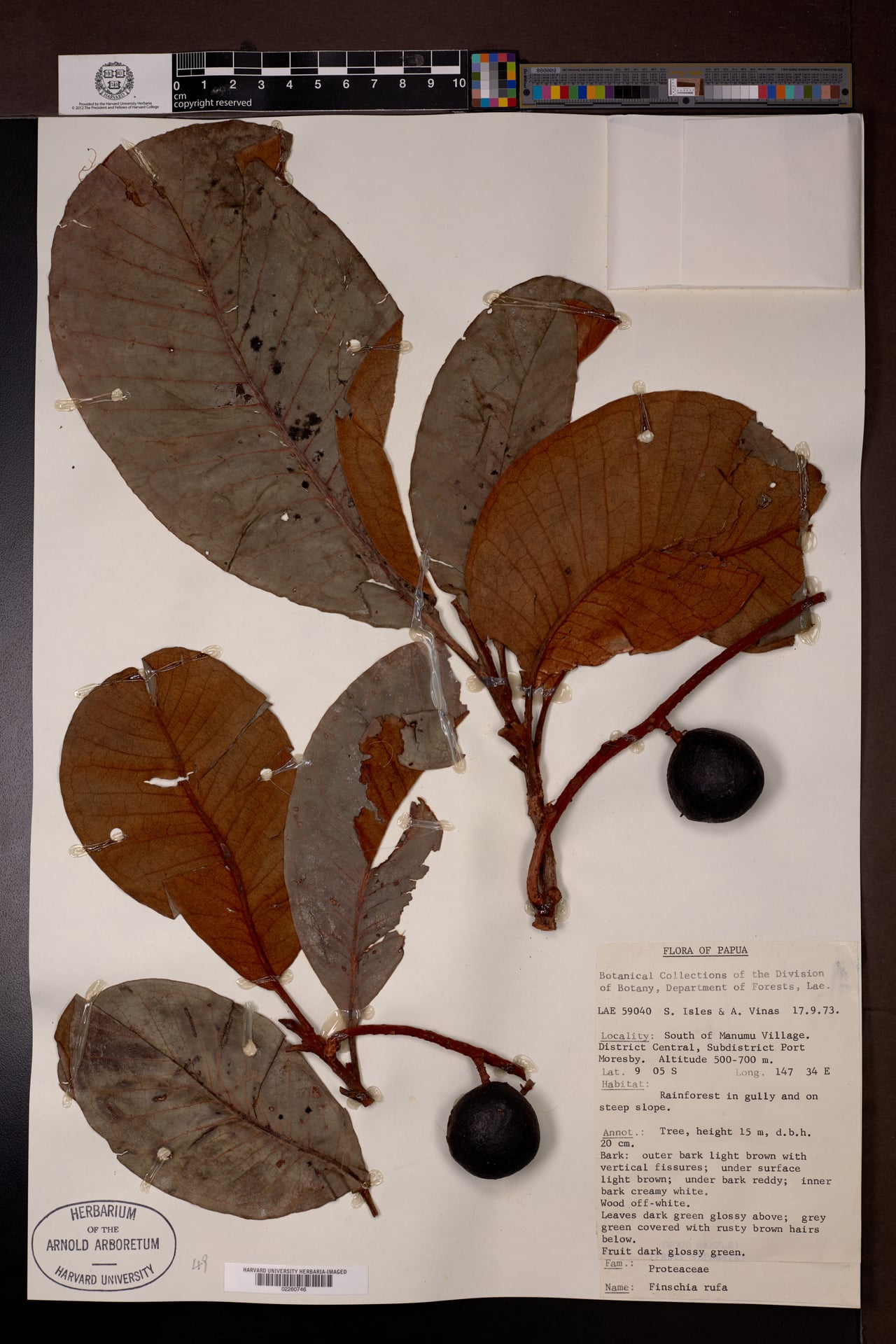
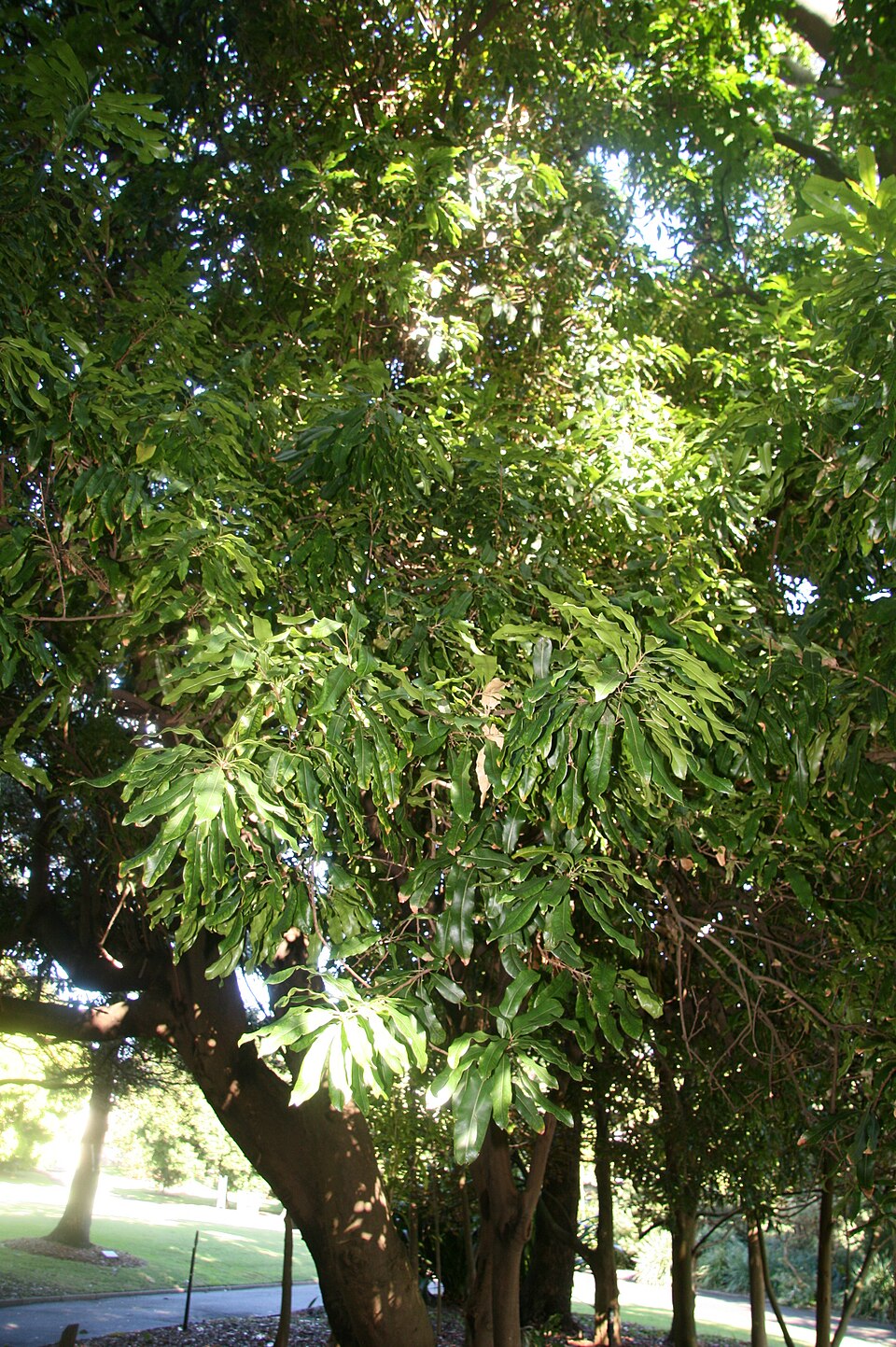
Banksia dentata
L.f
Bottle brush, Swamp Banksia, Tropical Banksia, Northern Banksia
iNaturalist· cc-by-nc
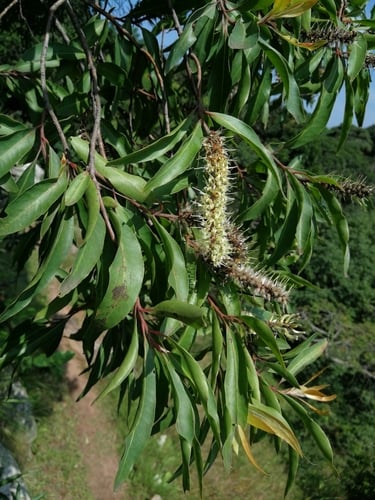
(c) Lorraine Phelan, some rights reserved (CC BY-NC), uploaded by Lorraine Phelan
iNaturalist· cc-by-nc
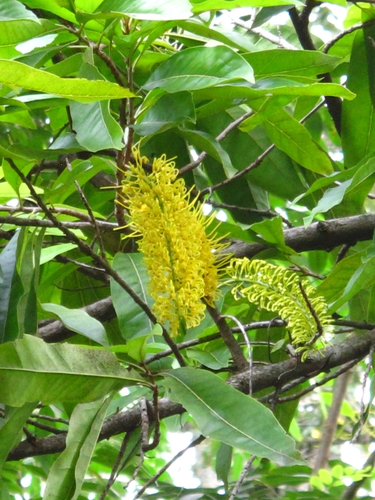
(c) Adam Yates, some rights reserved (CC BY-NC), uploaded by Adam Yates
iNaturalist· cc-by-nc
(c) Adam Yates, some rights reserved (CC BY-NC), uploaded by Adam Yates
Summary
Source: WikipediaBanksia dentata, commonly known as the tropical banksia, is a species of tree in the family Proteaceae. It occurs across northern Australia, southern New Guinea and the Aru Islands. Growing as a gnarled tree to 7 m (23 ft) high, it has large green leaves up to 22 cm (8.7 in) long with dentate margins. The cylindrical yellow inflorescences, up to 13 cm (5.1 in) high, appear between November and May, attracting various species of honeyeaters, sunbirds, the sugar glider and a variety of insects. Flowers fall off the ageing spikes, which swell and develop follicles containing up to two viable seeds each. Banksia dentata is one of four Banksia species collected by Sir Joseph Banks in 1770, and one of the four species published in 1782 as part of Carolus Linnaeus the Younger's original description of Banksia. Within the genus, it is classified in the series Salicinae, a group of species from Australia's eastern states. Genetic studies show it is a basal member within the group. Banksia dentata is found in tropical grassland known as savanna, and associated with Pandanus and Melaleuca. It regenerates from bushfire by regrowing from its woody base, known as a lignotuber.
Description
A small tree. In the forest it is often a straggling miss-shapen tree. It grows to 8 m tall and spreads to 4 m wide. The stem is erect. The bark is dark grey and rough. It has a widely branching crown. The leaves are coarsely toothed along the edge, blue green on top and whitish underneath. They are wedge shaped and 25 cm long by 3-6 cm wide. The flowers are yellow when young then turn brown, dry and hard. Flower spikes can be 15-20 cm long. The flowers are in cylindrical spikes. Seeds are black and winged. These are in large woody fruiting cones. The seed are expelled from the cone.
Edible Uses
Banksia dentata is used as a nectar source in the honey bee industry. Aboriginal people in the Northern Territory would light old seed cones and use them as firebrands, these lasting for up to two hours. The nectar was consumed by indigenous people. A hot smoking flower spike was used to cauterise leprosy sores, and people suffering from diarrhea would squat over smoking cones in the hope this would relieve their symptoms. The thin woody spikes that did not develop follicles were used as nasal ornaments by aboriginal women, and flower spikes were used as combs.
Traditional Uses
The flowers at the yellow stage are broken off and the sweet sap which drips out is collected and eaten. CAUTION Cribb in Wild Foods in Australia suggests headaches and nausea can result from sucking too much bottle brush sap.
Distribution
It is a tropical plant. It occurs in dry coastal areas. It is suited to warm areas in sandy acid soil. It often grows near the edges of swamps. It is drought and frost resistant. It can grow on poor soils. It suits hardiness zones 11-12.
Where It Grows
Asia, Australia, Indonesia, Pacific, Papua New Guinea, PNG, SE Asia,
Cultivation
Seeds grow easily. Young seedlings transplant easily. Under good conditions young plants grow rapidly.
Production
Flowers are produced irregularly throughout the year but with a main season in mid June.
Other Information
A minor incidental food in Papua New Guinea.
Notes
There are about 75 Banksia species. They are mostly in Australia.
References (23)
- Barwick, M., 2004, Tropical and Subtropical Trees. A Worldwide Encyclopedic Guide. Thames and Hudson p 42
- Bodkin, F., 1991, Encyclopedia Botanica. Cornstalk publishing, p 128
- Brock, J., 1993, Native Plants of Northern Australia, Reed. p 95
- Cronin, L., 1989, The Concise Australian Flora. Reed. p 164
- Dunlop, C.R., Leach, G.J. & Cowie, I.D., 1995, Flora of the Darwin Region. Vol 2. Northern Territory Botanical Bulletin No 20. p 119
Show all 23 references Hide references
- Elliot, W.R., & Jones, D.L., 1982, Encyclopedia of Australian Plants suitable for cultivation. Vol 2. Lothian. p 291
- Etherington, K., & Imwold, D., (Eds), 2001, Botanica's Trees & Shrubs. The illustrated A-Z of over 8500 trees and shrubs. Random House, Australia. p 115
- French, B.R., 1986, Food Plants of Papua New Guinea, Asia Pacific Science Foundation p 315
- Hearne, D.A., & Rance, S.J., 1975, Trees for Darwin and Northern Australia. AGPS, Canberra p 29
- Hibbert, M., 2002, The Aussie Plant Finder 2002, Florilegium. p 38
- IRVINE,
- Isaacs, J., 1987, Bush Food, Aboriginal Food and Herbal Medicine. Weldons. p 137
- Lazarides, M. & Hince, B., 1993, Handbook of Economic Plants of Australia, CSIRO. p 30
- Levitt, D., 1981, Plants and people. Aboriginal uses of plants on Groote Eylandt. Australian Institute of Aboriginal Studies, Canberra. p 117
- Low, T., 1991, Wild Food Plants of Australia. Australian Nature FieldGuide, Angus & Robertson. p 142
- Paczkowska, G . & Chapman, A.R., 2000, The Western Australian Flora. A Descriptive Catalogue. Western Australian Herbarium. p 466
- Scarth-Johnson, V., 2000, National Treasures. Flowering Plants of Cooktown and Northern Australia. Vera Scarth-Johnson Gallery Association. Cooktown, Australia. p 74
- Smith, K & I., 1999, Grow your own bushfoods. New Holland. Australia. p 108
- Townsend, K., 1994, Across the Top. Gardening with Australian Plants in the tropics. Society for Growing Australian Plants, Townsville Branch Inc. p 96
- Wheeler, J.R.(ed.), 1992, Flora of the Kimberley Region. CALM, Western Australian Herbarium, p 461
- Wightman, G. & Brown, J., 1994, Jawoyn Plant Identikit, Common Useful Plants in the Katherine Area of Northern Australia. Concervation Commission Northern Territory. p 13
- Yunupinu Banjgul, Laklak Yunupinu-Marika, et al. 1995, Rirratjinu Ethnobotany: Aboriginal Plant Use from Yirrkala, Arnhem Land, Australia. Northern Territory Botanical Bulletin No 21. Parks and Wildlife Commission of the Northern Territory. p 21.
- IRVINE