Banksia aemula
R. Br.
Wallum banksia
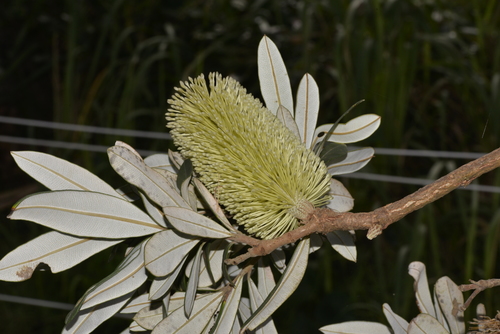
iNaturalist· cc-by
(c) Thomas Mesaglio, some rights reserved (CC BY), uploaded by Thomas Mesaglio
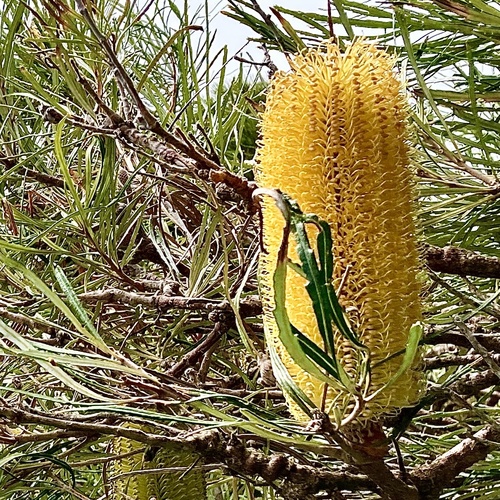
iNaturalist· cc-by-nc
(c) wingspanner, some rights reserved (CC BY-NC), uploaded by wingspanner
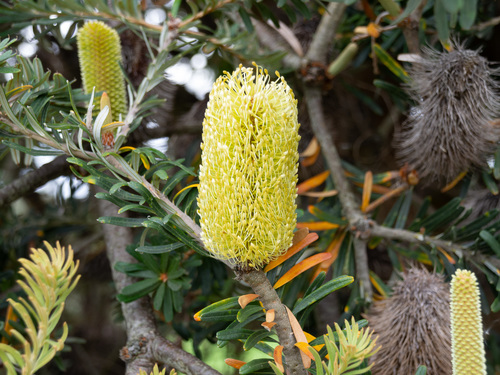
iNaturalist· cc-by-nc
(c) wingspanner, some rights reserved (CC BY-NC), uploaded by wingspanner
Summary
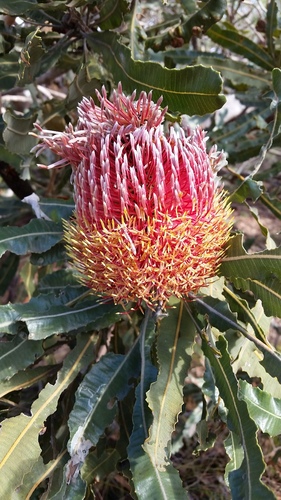
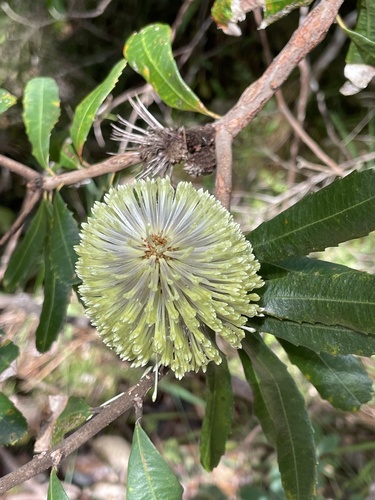
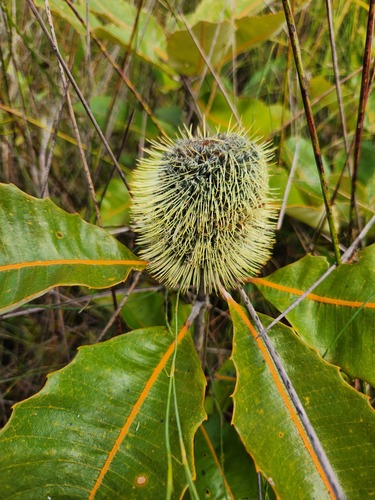
Source: WikipediaBanksia aemula, commonly known as the wallum banksia, is a shrub of the family Proteaceae. Found from Bundaberg south to Sydney on the Australian east coast, it is encountered as a shrub or a tree to 8 m (26 ft) in coastal heath on deep sandy soil, known as Wallum. It has wrinkled orange bark and shiny green serrated leaves, with green-yellow flower spikes, known as inflorescences, appearing in autumn. The flower spikes turn grey as they age and large grey follicles appear. Banksia aemula resprouts from its woody base, known as a lignotuber, after bushfires. First described by the botanist Robert Brown in the early 19th century, it derives its specific name 'similar' from its resemblance to the closely related B. serrata. No varieties are recognised. It was known for many years in New South Wales as B. serratifolia, contrasting with the use of B. aemula elsewhere. However, the former name, originally coined by Richard Anthony Salisbury, proved invalid, and Banksia aemula has been universally adopted as the correct scientific name since 1981. A wide array of mammals, birds, and invertebrates visit the inflorescences and are instrumental in pollination; honeyeaters are particularly prominent visitors. Grown as a garden plant, it is less commonly seen in horticulture than its close relative B. serrata.
Description
A shrub or small tree. It grows 8 m tall. The flowers are in a cylinder shaped spike. They are 10-15 cm long by 8 cm wide.
This description is brief — help expand it
Edible Uses
The flowers are used to make a drink.
Distribution
It is a subtropical plant. It grows in swampy heath.
Where It Grows
Australia*,
Synonyms
References (1)
- Edible and Useful Native Plants (off internet)