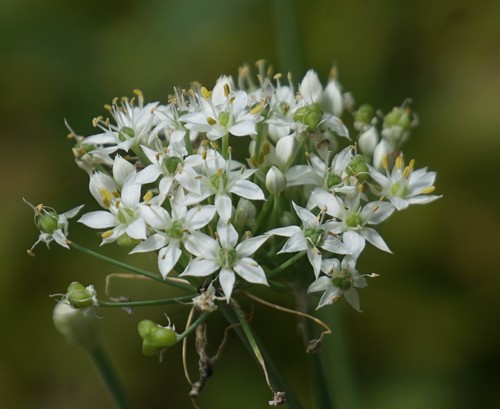
Allium cepa var. aggregatum
L., G.Don.
Shallots, Everlasting Onion
gbif· cc-by-nc-sa
MBG
gbif· cc-by
The New York Botanical Garden
gbif· cc-by
The New York Botanical Garden
Description
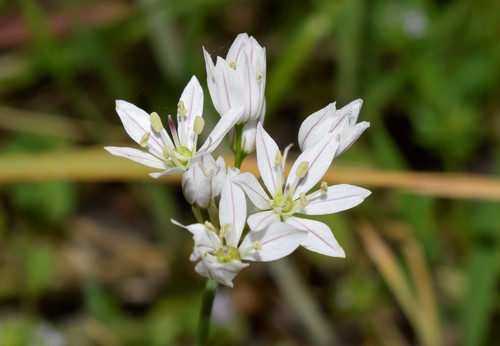
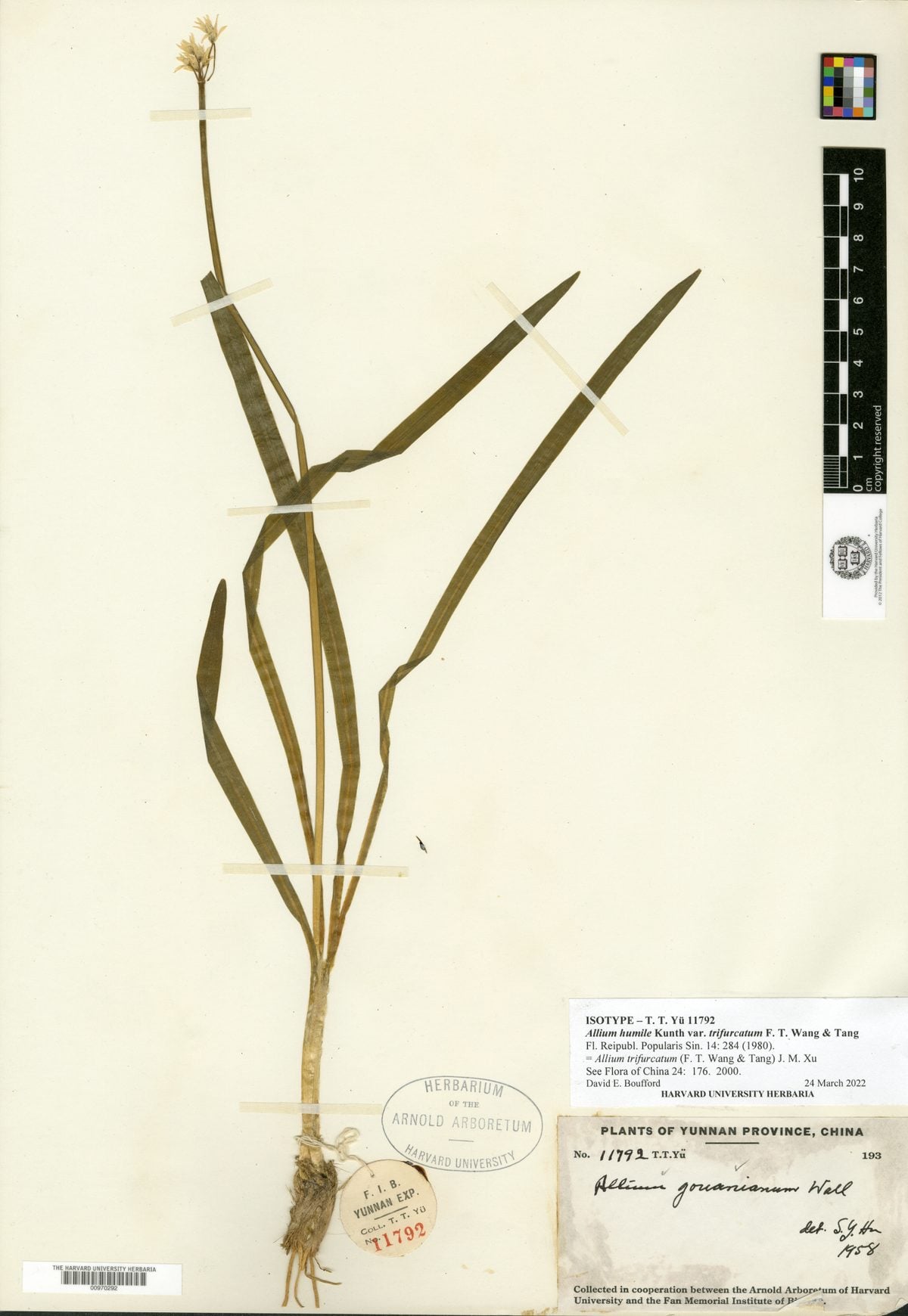
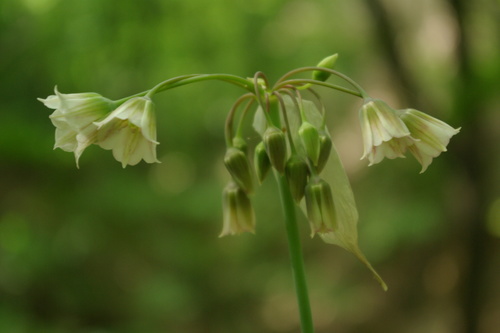
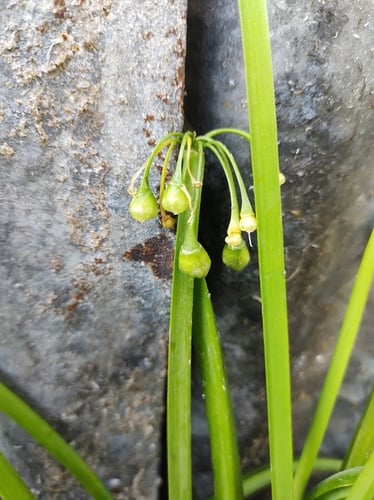
These onion like plants produce a cluster of bulbs. They are narrowly oval. It grows to 1.2 m high. The leaves are round and hollow. This is a genuinely perennial form of Allium cepa, the bulb grows deeper in the soil and divides to produce a number of underground bulbs each year in much the same way as shallots. Large bulbs divide to form 5-15 bulbs whilst smaller bulbs grow into one large bulb. They do not produce bulbils in the flower-head.
Edible Uses
The bulbs are eaten raw or cooked. The leaves are eaten raw or cooked. The flowers are used raw or to flavour salads.
Traditional Uses
The bulbs are eaten raw or cooked. The leaves are eaten raw or cooked. The flowers are used raw or to flavour salads.
This uses section is brief — help expand it
Medicinal Uses
None mentioned.
Distribution
A temperate plant. They can be grown throughout the country in Papua New Guinea but do best in the cooler higher places. In PNG it is recorded between sea level and 2,800 m above sea level. They need a fertile well drained soil. They are frost resistant. They tolerate a pH in the range 4.5 to 8.3. It suits hardiness zones 5-10.
Where It Grows
Asia, Asia, Australia, Cambodia, China, Cuba, East Africa, Ecuador, Europe, Finland, Ghana, Guyana, Haiti, Hawaii, Himalayas, India, Indochina, Indonesia, Japan, Lithuania, Madagascar, Malawi, Malaysia, Myanmar, Nepal, Nigeria, Niue, Pacific, Papua New Guinea, PNG, Philippines, Scandinavia, SE Asia, Sierra Leone, Singapore, Solomon Islands, South America, Sri Lanka, Tanzania, Tasmania, Thailand, Tonga, USA, Vietnam, West Africa, West Indies,
Cultivation
Normally plants are grown by planting one bulb. It is best to plant them on slightly raised beds. Plants should be about 20 cm apart.
Other Information
This is becoming a well accepted and popular vegetable for flavouring foods in most parts of Papua New Guinea. It is a commercially cultivated vegetable.
Notes
There are about 300-700 Allium species. Most species of Allium are edible (Flora of China). All alliums are edible but they may not all be worth eating! They have also been put in the family Alliaceae.
Nutrition
| Part | Moisture | kJ | kcal | Protein | Vit A | Vit C | Iron | Zinc |
|---|---|---|---|---|---|---|---|---|
| Bulbs | 81 | 281 | 67 | 1.9 | — | 2 | 0.8 | — |
| Flowers | — | — | — | — | — | — | — | — |
Synonyms
Also Known As
Aka wakegi, Alubosa, Bawang merah, Bunching onion, Cebollo corojo, Chhyapi, Chota piaz, Ever-ready onion, Hanh huong, Hom daeng, Huo cong, Khtim kraham, Kon tsung-tau, Kyet-thun-ni, Multiplier onion, Onioni, Potato onion, Rathu-lunu, Sibuyas
References (27)
- Bremness, L., 1994, Herbs. Collins Eyewitness Handbooks. Harper Collins. p 143
- Chin, H. F., 1999, Malaysian Vegetables in Colour. Tropical Press. p 37
- Crawford, M., 2012, How to grow Perennial Vegetables. Green Books. p 137
- Dahlen, M., 1995, A Cook's Guide to Chinese Vegetables. Odyssey Guides. p 22
- Facciola, S., 1998, Cornucopia 2: a Source Book of Edible Plants. Kampong Publications, p 5
Show all 27 references Hide references
- Flora of Pakistan. www.eFloras.org
- French, B., 1986, Food Plants of Papua New Guinea, Asia Pacific Science Foundation p 124
- French, B.R., 2010, Food Plants of Solomon Islands. A Compendium. Food Plants International Inc. p 148
- Furusawa, T., et al, 2014, Interaction between forest biodiversity and people's used of forest resources in Roviana, Solomon Islands: implications for biocultural conservation under socioeconomic changes. Journal of Ethnobiology and Ethnomedicine, 10:10
- Hu, Shiu-ying, 2005, Food Plants of China. The Chinese University Press. p 311 (As Allium ascalonicum)
- Jardin, C., 1970, List of Foods Used In Africa, FAO Nutrition Information Document Series No 2.p 52
- Kays, S. J., and Dias, J. C. S., 1995, Common Names of Commercially Cultivated Vegetables of the World in 15 languages. Economic Botany, Vol. 49, No. 2, pp. 115-152
- Kybal, J., 1980, Herbs and Spices, A Hamlyn Colour Guide, Hamlyn Sydney, p 22
- Mem. Wern. Nat. Hist. Soc. 6:59. 1832
- Miguel, E., et al, 1989, A checklist of the cultivated plants of Cuba. Kulturpflanze 37. 1989, 211-357
- Plants for a Future database, The Field, Penpol, Lostwithiel, Cornwall, PL22 0NG, UK. http://www.scs.leeds.ac.uk/pfaf/
- Schneider, E., 2001, Vegetables from Amaranth to Zucchini: The essential reference. HarperCollins. p 543
- Siemonsma, J. S. and Piluek, K. (Eds), 1994, Plant Resources of South-East Asia No. 8 Vegetables. Prosea Foundation, Bogor, Indonesia, p 64
- Sillitoe, P. 1995, An Ethnobotanical Account of the Plant Resources of the Wola Region, Southern Highlands Province, Papua New Guinea. J. Ethnobiol. 15(2): 201-235
- Staples, G.W. and Herbst, D.R., 2005, A tropical Garden Flora. Bishop Museum Press, Honolulu, Hawaii. p 680
- Tindall, H.D., 1983, Vegetables in the tropics. Macmillan p. 16
- Torre, de la L., et al, 2008, Enciclopedia de las Plantas Útiles del Ecuador. Herbario QCA. Pontificia Universidad Católica del Ecuador. p 151
- USDA, ARS, National Genetic Resources Program. Germplasm Resources Information Network - (GRIN). [Online Database] National Germplasm Resources Laboratory, Beltsville, Maryland. Available: www.ars-grin.gov/cgi-bin/npgs/html/econ.pl (10 April 2000)
- van Wyk, B., 2005, Food Plants of the World. An illustrated guide. Timber press. p 48
- Wiersema, J. H. & Leon, B., 2013, World Economic Plants. A Standard Reference CRC Press. 2nd Ed. p 33
- Woodward, P., 1996, Garlic and Friends. The History, Growth and Use of Edible Alliums. Hyland House. p 121
- Woodward, P., 2000, Asian Herbs and Vegetables. Hyland House. p 10