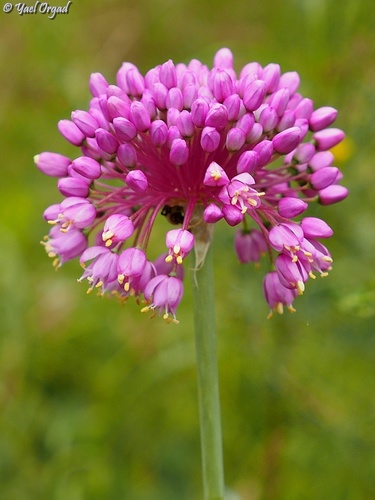
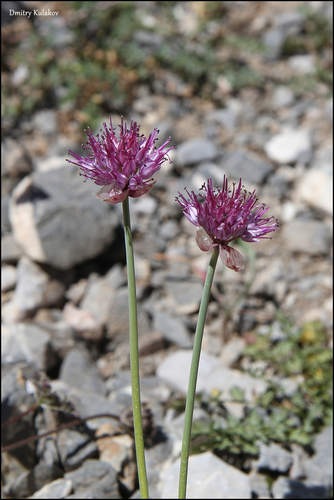
Allium tricoccum
Aiton
Wood leek, Ramp
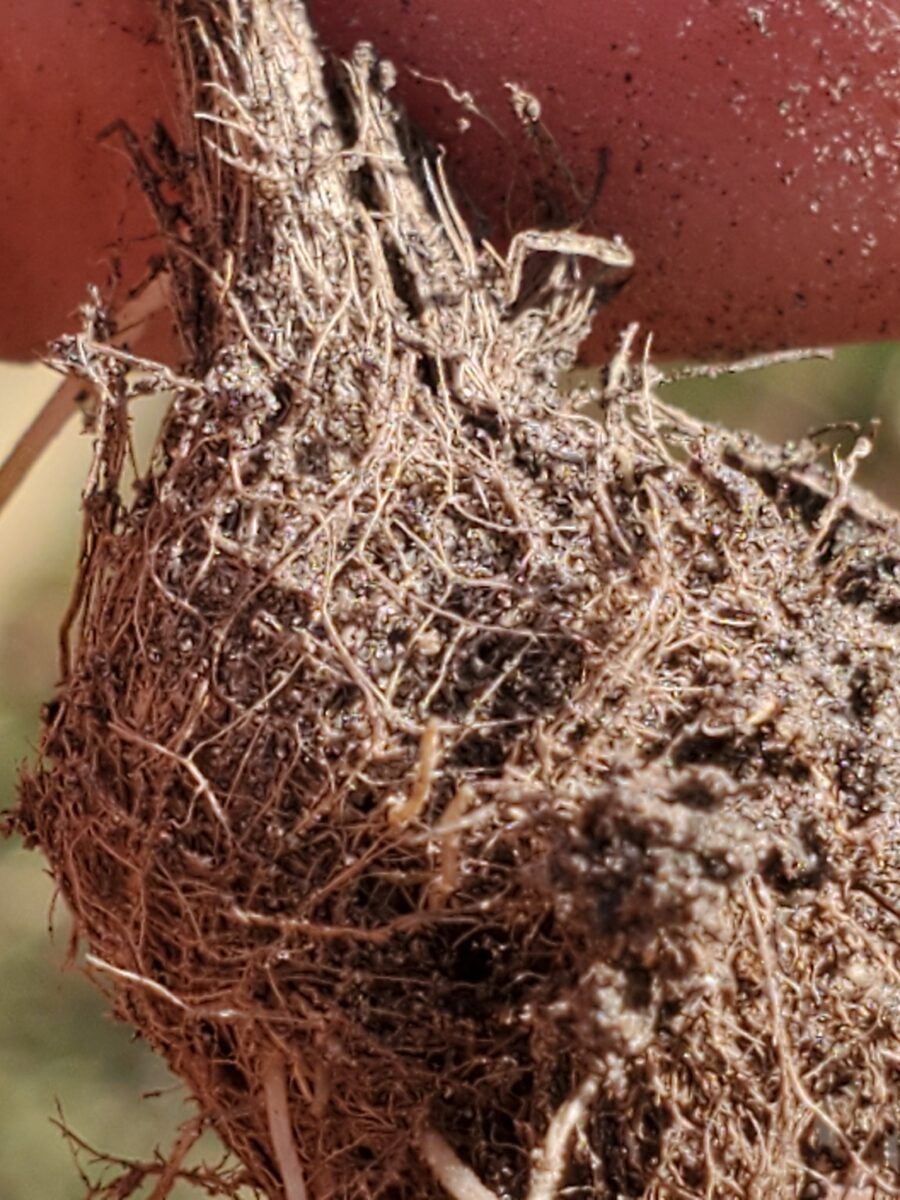
iNaturalist· cc-by-sa
(c) Douglas Goldman, some rights reserved (CC BY-SA), uploaded by Douglas Goldman
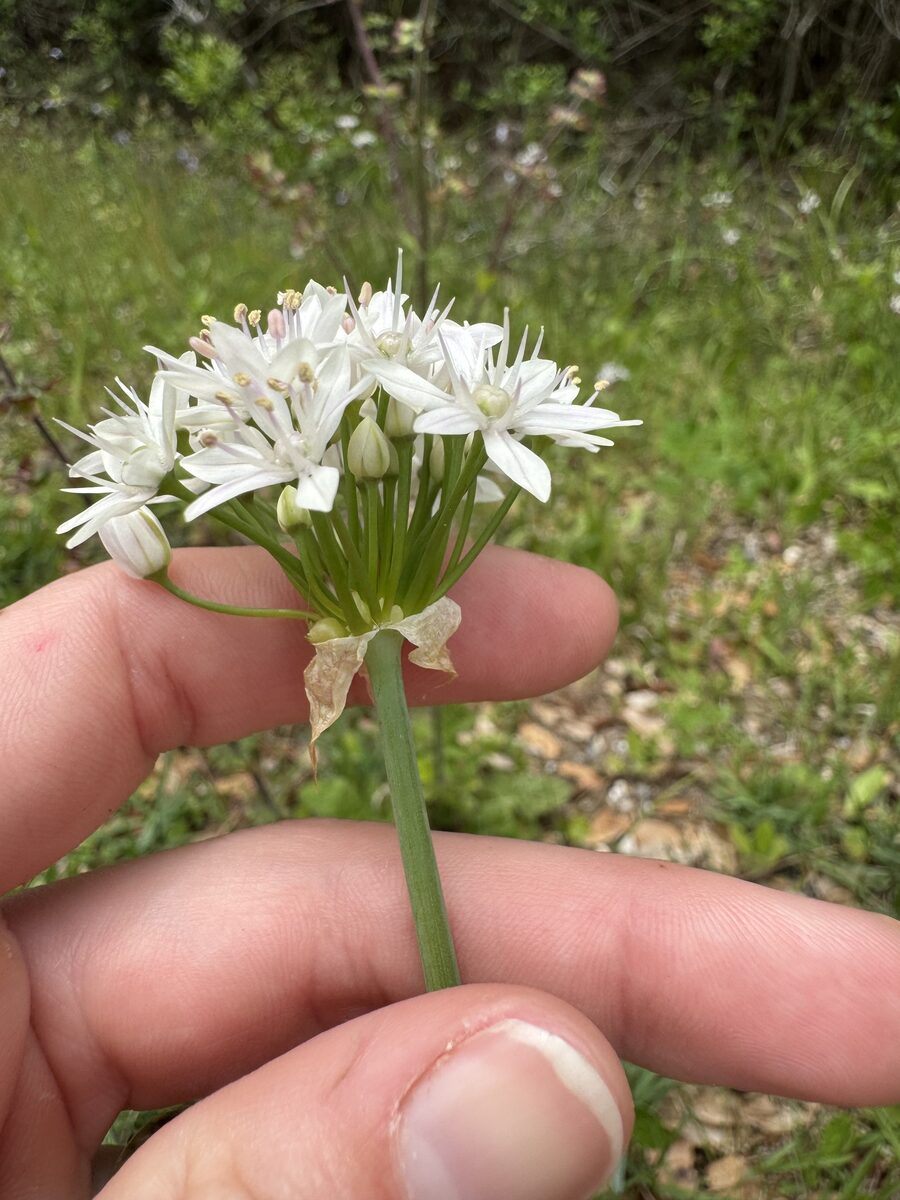
iNaturalist· cc-by
(c) Annie Weissman, some rights reserved (CC BY), uploaded by Annie Weissman
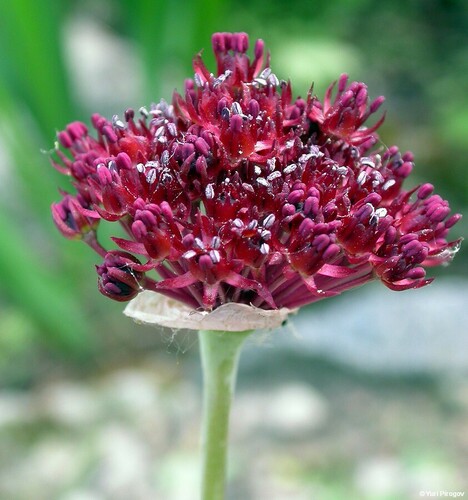
iNaturalist· cc-by-nc
(c) mahpin, some rights reserved (CC BY-NC), uploaded by mahpin
Summary
Source: WikipediaAllium tricoccum (commonly known as ramps, ramson, wild leek, wood leek, or wild garlic) is a bulbous perennial flowering plant in the amaryllis family Amaryllidaceae. It is a North American species of wild onion or garlic found in eastern North America. Many of the common English names for this plant are also used for other Allium species, particularly the similar Allium ursinum, which is native to Eurasia. An edible plant, Allium tricoccum is used in a variety of North American and indigenous cuisines, and has also been used by Native Americans in traditional medicine. A French rendering (chicagou) of a Miami–Illinois name for this plant is the namesake of the American city of Chicago.
Description
An onion family plant that keeps growing from year to year. It grows 15-45 cm tall and spreads 10-15 cm wide. It has a long stalk. The leaves are flat and tapering. They are 20-24 cm long and appear in spring then die off. It has bulbs like onion. The flowers are in white heads on long stalks.
Edible Uses
The bulb, produced in clusters on a rhizome and measuring up to 12mm wide and 50mm tall, can be eaten raw or cooked. It is considered one of the best North American wild species for sweetness and flavour, with a mild, sweet taste resembling leeks. It is used mainly as a flavouring in salads and savoury dishes and is an early spring vegetable. The leaves, best harvested as they unfurl in spring, have the same mild, sweet leek-like flavour and can be eaten raw or cooked. The flowers are eaten raw as a salad garnish and have a hot onion flavour.
Traditional Uses
The underground bulbs can be boiled and added to salads. The young leaves before the flower stalk appears can be cooked as greens. It has a strong garlic like taste. Often it is baked or dried to reduce acidity.
Medicinal Uses
This species likely shares most of the medicinal properties of garlic (Allium sativum), though in milder form. Traditionally, the leaves were used to treat colds and croup and as a spring tonic. The warm juice of the leaves and bulb was applied externally to relieve earaches. A strong decoction of the root is emetic.
Known Hazards
Although no individual reports regarding this species have been seen, there have been cases of poisoning caused by the consumption, in very large quantities and by some mammals, of certain members of this genus. Dogs seem to be particularly susceptible.
Distribution
It is a temperate plant. It grows in rich moist soils and deciduous woods. It suits hardiness zones 4-8.
Where It Grows
Africa, Canada, Djibouti, East Africa, North America, USA,
Cultivation
Prefers a sunny position in a light well-drained soil. Grows well in light moist woodland, where the plant forms large clumps and can become invasive. It is probably best grown in the wild garden. Plants are hardy to at least -15°c. The bulbs should be planted fairly deeply. The leaves die down in early summer before the flowers have fully opened. Grows well with most plants, especially roses, carrots, beet and chamomile, but it inhibits the growth of legumes. This plant is a bad companion for alfalfa, each species negatively affecting the other. Members of this genus are rarely if ever troubled by browsing deer. Ephemeral emerging in spring and dying back by summer every year.
Propagation
Sow seed in spring in a cold frame. Germination typically occurs within 12 months, but in the first year the plant produces only a root and a small bulb — top growth does not appear until the second spring. Sowing ripe seed in early summer or in autumn may speed germination. Sow thinly so seedlings can grow undisturbed for their first two years, and apply a liquid feed monthly during the growing season to prevent mineral deficiency. At the end of the second year's dormancy, divide so that 2–3 small bulbs are in each pot, grow on for a further year under glass, then plant out while dormant. Division in spring is very easy; divisions can be planted straight out into permanent positions.
Other Uses
The plant's juice works as a moth repellent, and the whole plant is said to repel insects and moles. It is a good shade plant and tolerates juglone, a substance some plants produce to inhibit the growth of neighbouring plants.
Notes
There are about 300-700 Allium species. Most species of Allium are edible (Flora of China). All alliums are edible but they may not all be worth eating! They have also been put in the family Alliaceae.
Dangerous Lookalikes
This plant can be confused with the following toxic species. Always verify identification carefully before consuming any wild plant.
Death Camas
Toxicoscordion venenosum
Craig Martin https://www.inaturalist.org/people/craigmartin
Wood leek
Allium tricoccum
(c) Douglas Goldman, some rights reserved (CC BY-SA), uploaded by Douglas Goldman
Death Camas: NO onion or garlic smell, grass-like narrow leaves, cream/white flowers in raceme, bulb without onion smell.
Wood leek: Strong onion/garlic smell, broad leaves (for ramps), reddish stem base.
Nutrition
| Part | Moisture | kJ | kcal | Protein | Vit A | Vit C | Iron | Zinc |
|---|---|---|---|---|---|---|---|---|
| Bulb | — | — | — | — | — | — | — | — |
| Leaves | — | — | — | — | 80 | — | — | — |
| Flowers | — | — | — | — | — | — | — | — |
Synonyms
Also Known As
Wild Leek, Wood Leek, Ramp.
References (16)
- Beckstrom-Sternberg, Stephen M., and James A. Duke. "The Foodplant Database." http://probe.nalusda.gov:8300/cgi-bin/browse/foodplantdb.(ACEDB version 4.0 - data version July 1994)
- Brown, D., 2002, The Royal Horticultural Society encyclopedia of Herbs and their uses. DK Books. p 114
- Elias, T.S. & Dykeman P.A., 1990, Edible Wild Plants. A North American Field guide. Sterling, New York p 61
- Esperanca, M. J., 1988. Surviving in the wild. A glance at the wild plants and their uses. Vol. 2. p 332
- Facciola, S., 1998, Cornucopia 2: a Source Book of Edible Plants. Kampong Publications, p 7
Show all 16 references Hide references
- Hort. kew. 1:428. 1789
- INFOODSUpdatedFGU-list.xls
- Kiple, K.F. & Ornelas, K.C., (eds), 2000, The Cambridge World History of Food. CUP p 1890
- Lim, T. K., 2015, Edible Medicinal and Non Medicinal Plants. Volume 9, Modified Stems, Roots, Bulbs. Springer p 6
- MacKinnon, A., et al, 2009, Edible & Medicinal Plants of Canada. Lone Pine. p 192
- Plants for a Future database, The Field, Penpol, Lostwithiel, Cornwall, PL22 0NG, UK. http://www.scs.leeds.ac.uk/pfaf/
- Saunders, C.F., 1948, Edible and Useful Wild Plants. Dover. New York. p 17
- Schneider, E., 2001, Vegetables from Amaranth to Zucchini: The essential reference. HarperCollins. p 534
- Seidemann J., 2005, World Spice Plants. Economic Usage, Botany, Taxonomy. Springer. p 26
- Toupal, R. S. & Hollenback, K., 2009, An Ethnobotany of Indiana Dunes National Lakeshore: Plant Uses of the Ojibwa People. Bureau of Applied research in Anthropology. University of Arizona
- Wiersema, J. H. & Leon, B., 2013, World Economic Plants. A Standard Reference CRC Press. 2nd Ed. p 36