Habenaria walleri
Reichb.f.
iNaturalist· cc-by-nc
(c) Nicholas Wightman, some rights reserved (CC BY-NC), uploaded by Nicholas Wightman
gbif· cc0
President and Fellows of Harvard College
Description
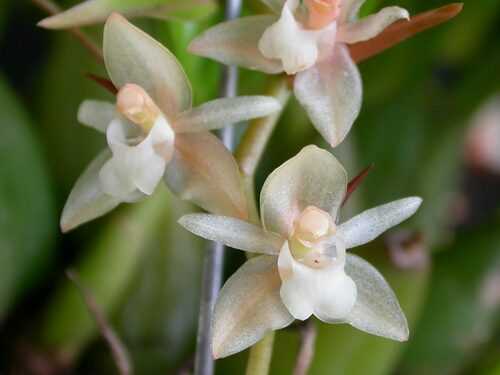
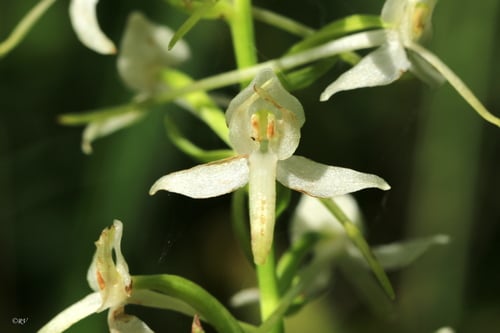
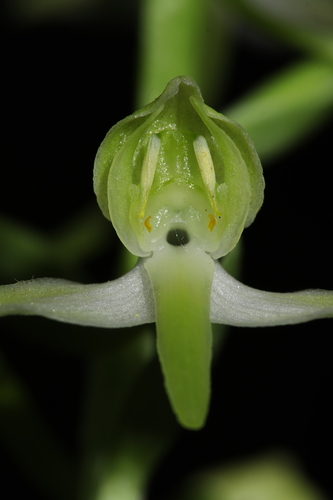
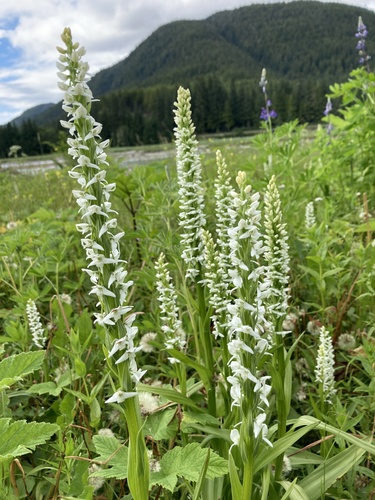
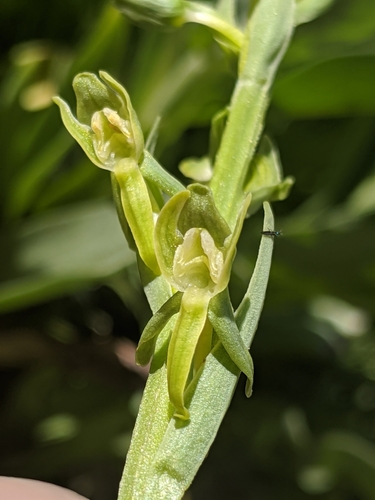
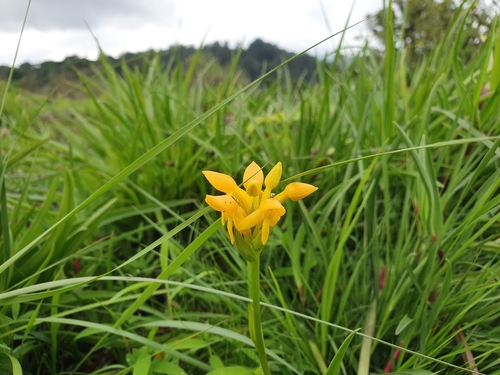
An orchid. It is a slender herb. It grows in the soil. It grows up to 80 cm tall. The tuber is 4 cm long by 2 cm wide. There are 7-10 erect leaves. They are oval and the largest one is 6-14 cm long. The leaves are close to the stem. The flowers are large and white with green sepals. They form a head 8-28 cm long. They have a sweet scent at night. The fruit are thin capsules that open by slits to release the very small seeds.
Edible Uses
The tubers require special preparation: washing, pounding, skin removal, sun-drying, repounding, boiling in water, drying again, and finally boiling with salt before eating. The tubers are sold in local markets.
Traditional Uses
The tuber needs special preparation. The tubers are washed, pounded, the skin removed, dried in the sun then repounded. They are then boiled in water and then dried. This is then boiled with salt and eaten.
Medicinal Uses
The roots are pounded and soaked in cold water. The resulting liquid is used in the treatment of stomach-ache.
Known Hazards
The species is becoming rare due to over-harvesting; plants should be cultivated rather than harvested from the wild.
Distribution
A tropical plant. It grows in marshes and grassland. In Tanzania it grows between 1,000-2,000 m above sea level.
Where It Grows
Africa, Burundi, Cameroon, Central Africa, Congo, East Africa, Gabon, Guinea, Guinée, Kenya, Malawi, Nigeria, Sudan, Tanzania, Uganda, West Africa, Zambia,
Cultivation
Plants can be grown from tubers.
Production
In Tanzania tubers are harvested May to July. Tubers can be stored in a cool dry place for several weeks.
Other Information
Tubers are sold in local markets.
Notes
There are about 500-600 Habenaria species. It is becoming rare due to over harvesting. Plants should be cultivated not simply harvested from the wild.
Synonyms
Also Known As
Chinaka, Chikande
References (8)
- Burkill, H. M., 1985, The useful plants of west tropical Africa, Vol. 4. Kew.
- Campbell, B. (Ed.), 1996, The Miombo in Transition: Woodlands and Welfare in Africa. CIFOR p 105
- Fowler, D. G., 2007, Zambian Plants: Their Vernacular Names and Uses. Kew. p 87
- Jardin, C., 1970, List of Foods Used In Africa, FAO Nutrition Information Document Series No 2.p 79
- Peters, C. R., O'Brien, E. M., and Drummond, R.B., 1992, Edible Wild plants of Sub-saharan Africa. Kew. p 36
Show all 8 references Hide references
- Ruffo, C. K., Birnie, A. & Tengnas, B., 2002, Edible Wild Plants of Tanzania. RELMA p 362
- Williamson, J., 2005, Useful Plants of Malawi. 3rd. Edition. Mdadzi Book Trust. p 128
- World Checklist of Useful Plant Species 2020. Royal Botanic Gardens, Kew