Dendrobium canaliculatum
R. Brown
Tree orchid, Antelope Orchid, Tea-tree Orchid, Onion orchid
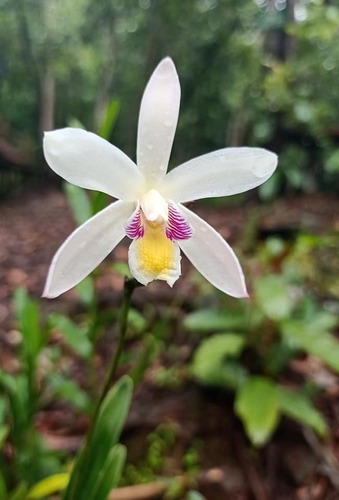
iNaturalist· cc-by-nc
(c) Ian Cowan, some rights reserved (CC BY-NC)
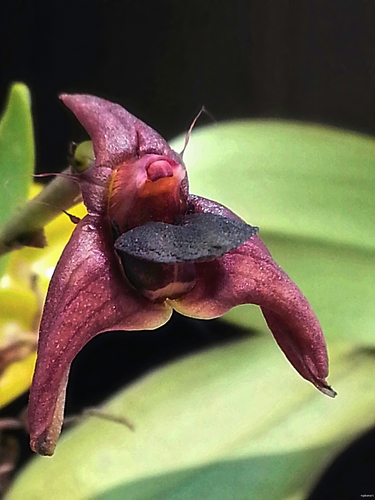
iNaturalist· cc-by-nc
(c) ryanthughes, some rights reserved (CC BY-NC)
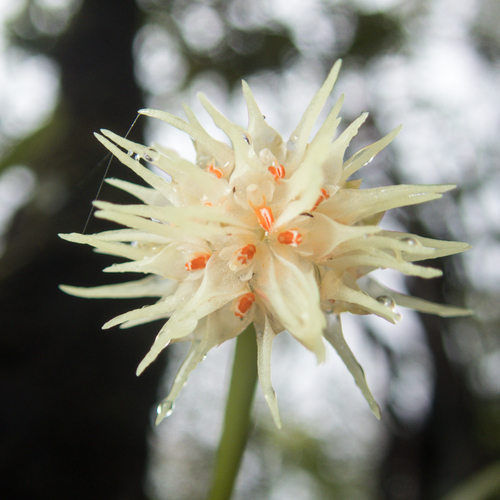
iNaturalist· cc-by-nc
(c) ryanthughes, some rights reserved (CC BY-NC)
Summary
Source: WikipediaDendrobium canaliculatum, commonly known as the brown tea tree orchid or thin tea tree orchid, is an epiphytic or lithophytic orchid in the family Orchidaceae. It has cone-shaped or onion-shaped pseudobulbs, up to six deeply channelled, dark green leaves and up to thirty star-shaped, light brown to caramel-coloured white or greenish to apricot-coloured flowers with darker tips. It grows in tropical North Queensland and New Guinea.
Description
An orchid which grows attached to other plants. It grows in clumps. It is 20-30 cm high. The false bulbs are short, thick and fleshy. They are 3-12 cm long. The leaves are smooth, thick and fleshy and long and narrow. They are deeply grooved along the upper surface. They are 10-20 cm long by 0.5-1.2 cm wide. Between 2 and 6 leaves occur at the top of the false bulb. They are dark green. The flower have twisted petals which are greenish white flecked with purple green or brown spots. The lower petal is white, tipped with purple and is 3 lobed. The flowers are 1-2 cm long by 1.5 cm across. Between 10 and 40 flowers occur in a cluster which is 10-30 cm long and on a long stalk. The flowers have a smell. The fruit is a capsule. The plant varies a lot in the different areas where it grows.
Edible Uses
The pseudo-bulb and stem are cooked and eaten.
Traditional Uses
The bulb like stem is cooked and eaten.
This uses section is brief — help expand it
Distribution
A tropical plant. It grows attached to paperbark trees. It is mostly in lowland swamps and coastal flood plains. They suit areas with bright light but humid conditions. It is very cold sensitive. It must have a temperature above 10°C. It occurs in southern Papua New Guinea. It grows in areas with a seasonal dry condition. It cannot grow in soggy conditions. It suits hardiness zones 11-12.
Where It Grows
Australia, Hawaii, Pacific, Papua New Guinea*, PNG, USA,
Cultivation
Plants can be grown from seed. It can be grown in a good, well drained soil or potting medium.
Production
In Australia flowering occurs June to October and fruiting in November.
Notes
There are about 900-1200 Dendrobium species orchids.
Also Known As
Yamberin
References (11)
- Brock, J., 1993, Native Plants of Northern Australia, Reed. p 135
- Cundall, P., (ed.), 2004, Gardening Australia: flora: the gardener's bible. ABC Books. p 478
- Elliot, W.R., & Jones, D.L., 1984, Encyclopedia of Australian Plants suitable for cultivation. Vol 3. Lothian. p 220
- Greig, D., 1996, Flowering Natives for Home Gardens. Angus & Robertson. p 137
- Hibbert, M., 2002, The Aussie Plant Finder 2002, Florilegium. p 84
Show all 11 references Hide references
- Hinton, B & B., 1982, A Wilderness in Bloom. Wildflowers of tropical Australia. p 7
- Holliman, J., (Ed.), 2002, Orchids. Botanica's Pocket. Random House, Australia. p 187
- Maiden, J. H., 1889, The Useful Native Plants of Australia (including Tasmania). The Technology Museum of NSW, Sydney. p 22
- Ratcliffe D & P., 1987, Australian Native Plants for Indoors. Little Hills press. p 79
- Scarth-Johnson, V., 2000, National Treasures. Flowering Plants of Cooktown and Northern Australia. Vera Scarth-Johnson Gallery Association. Cooktown, Australia. p 151
- Staples, G.W. and Herbst, D.R., 2005, A tropical Garden Flora. Bishop Museum Press, Honolulu, Hawaii. p 722