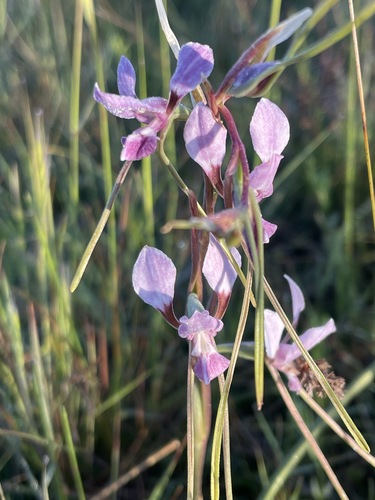
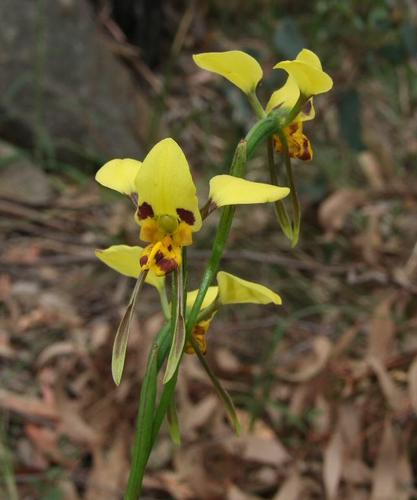
Dactylorhiza incarnata
(L.) Soó
Early marsh orchid
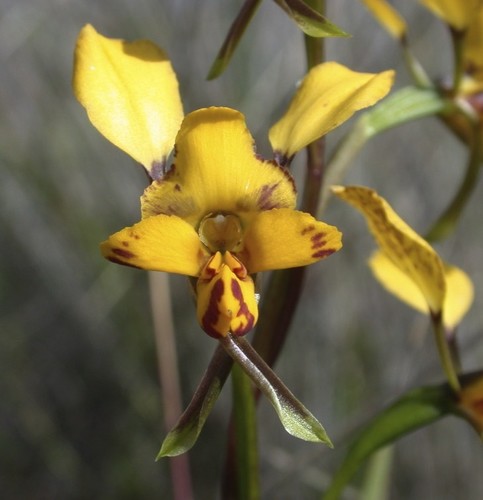
iNaturalist· cc-by-nc
(c) Kutushev Radik, some rights reserved (CC BY-NC), uploaded by Kutushev Radik
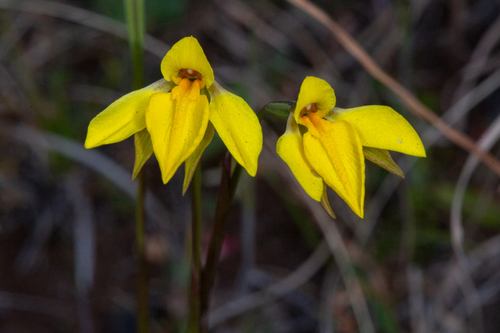
iNaturalist· cc-by-nc
(c) Alexander Baransky, some rights reserved (CC BY-NC)
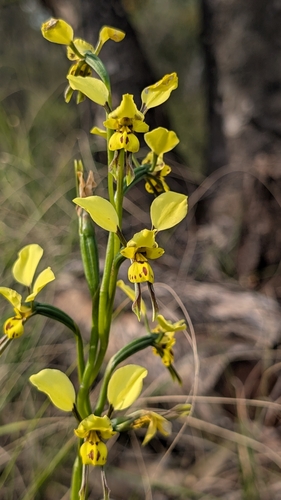
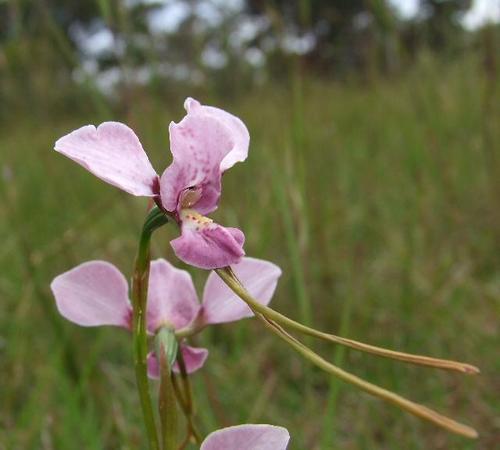
iNaturalist· cc-by-nc
(c) hilaryfox, some rights reserved (CC BY-NC)
Summary
Source: WikipediaDactylorhiza incarnata, the early marsh-orchid, is a perennial, temperate-climate species of orchid generally found growing in wet meadows, and generally on base-rich soils, up to about 2100m asl. The species occurs widely in Europe and Asia from Portugal and Ireland east to Siberia and Xinjiang. There are several subspecies and also hybrids, rendering the identification of this species more difficult, but typically, the flowering spike is robust with a hollow stem, 25–60 cm (9.8–24 in) tall, and bearing up to 50 flowers. Plants grow to a height of from 15 to 70 cm (5.9 to 28 in). The 4–7 erect yellowish-green leaves are hooded at the tip. The inflorescence is 4–12 cm (1.6–4.7 in) long, with up to 50 blooms. The labellum appears long and narrow, since its sides are strongly reflexed (folded back). The tip is shallowly three-lobed. The flower is often flesh-coloured (the meaning of incarnata) and the labellum normally has loop-shaped markings. The flowering period is from May to mid-July, dependent on latitude and subspecies.
Description
An orchid. The stem is 60 cm long. It has 5-7 sword shaped leaves which do not have spots. The apex forms a hood. The flowers are relatively small. They are about 12 mm across. They occur densely on the flower stalk. There can be 50 flowers on a stalk. The lips have slightly folded back edges.
Edible Uses
The tuber is cooked and is highly nutritious. It is the source of salep, a fine white to yellowish-white powder made by drying and grinding the tuber. Salep is a starch-like substance with a sweetish taste and a faint, somewhat unpleasant smell. It can be prepared as a drink or added to cereals and used in bread-making. One ounce of salep is said to be sufficient to sustain a person for a full day.
Medicinal Uses
Salep is highly nutritive and demulcent, and has been used as a dietary aid of particular value for children and convalescents. It is prepared by boiling with water and flavouring, in the same way as arrowroot. Rich in mucilage, it forms a soothing, demulcent jelly used to treat irritations of the gastro-intestinal canal; one part salep to fifty parts water is sufficient to produce the jelly. The tuber should be harvested as the plant dies down after flowering and setting seed.
Distribution
It grows in damp, wet grasslands. It suits areas with alkaline soils. It is resistant to frost but damaged by drought. It suits hardiness zones 5-9.
Where It Grows
Asia, Australia, Britain, Europe*, Himalayas, Luxembourg, Mongolia, Nepal, Slovenia, Turkey, Türkiye,
Cultivation
Plants can be grown by division.
Propagation
Surface sow seed in a greenhouse, preferably as soon as it is ripe, keeping the compost consistently moist. The seed is extremely simple — a minute embryo surrounded by a single layer of protective cells, with very little food reserve. It depends on a symbiotic relationship with a soil-dwelling fungus whose hyphae invade the seed and embryo cells; the orchid digests this fungal tissue as a food source until it can draw nutrients from decaying soil matter. To establish this relationship, incorporate soil from around established plants when sowing, or sow around an existing plant of the same species and allow seedlings to grow until large enough to move. Division in autumn is possible, though the plant is very intolerant of root disturbance — always retain a large ball of soil around the plant. Tubers can also be divided as the flowers fade: this species produces a new tuber late in the growing season, and removing it while flowers are fading can stimulate the formation of further new tubers. The removed tuber should be treated as dormant while the parent plant is encouraged to keep growing and produce replacements. Division can also be done once the plant has a fully developed rosette of leaves but before flowering — remove the entire new growth from the old tuber, pot it up, cutting near the bottom of the stem but leaving one or two roots on the old tuber. This is often achievable without digging up the plant. The old tuber should produce one or two new growths, and the new rosette should continue to grow and flower normally.
Other Uses
No other uses are known for this plant.
Notes
There are 33 Dactylorhiza species.
Synonyms
Also Known As
Mesnordeča prstatsta kukavica
References (6)
- Bodkin, F., 1991, Encyclopedia Botanica. Cornstalk publishing, p 319
- Cundall, P., (ed.), 2004, Gardening Australia: flora: the gardener's bible. ABC Books. p 465
- Holliman, J., (Ed.), 2002, Orchids. Botanica's Pocket. Random House, Australia. p 189
- Plants for a Future database, The Field, Penpol, Lostwithiel, Cornwall, PL22 0NG, UK. http://www.scs.leeds.ac.uk/pfaf/
- Urgamal, M., et al, 2014, Conspectus of the Vascular Plants of Mongolia. Mongolia Academy of Sciences Institute of Botany and National University of Mongolia Department of Biology. p 42
Show all 6 references Hide references
- Yonzone, R., et al, Orchids in Ethnobotany. Ethnobotany and Medicinal Plants. ISBN 978-93-5067-867-1 (As Orchis latifolia)