Dactylorhiza maculata
(L.) Vermuel
Spotted orchid, Heath spotted orchid, Adder's grass, Hen's kames
iNaturalist· cc-by-nc
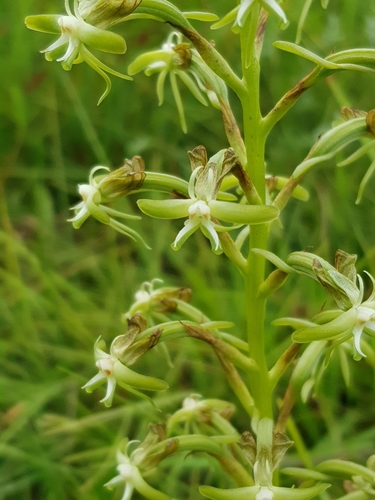
(c) Павел Голяков, some rights reserved (CC BY-NC), uploaded by Павел Голяков
iNaturalist· cc-by-nc
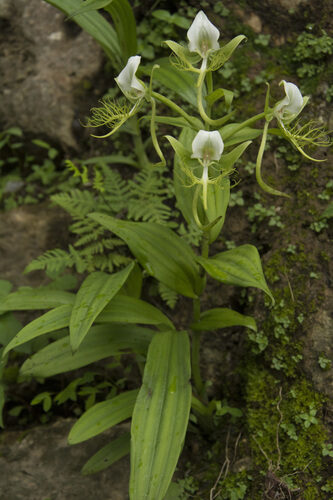
(c) Erin Haase, some rights reserved (CC BY-NC)
iNaturalist· cc-by-nc
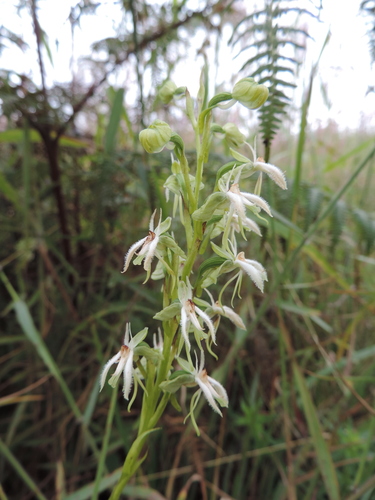
(c) Erin Haase, some rights reserved (CC BY-NC)
Summary
Source: WikipediaDactylorhiza maculata, known as the heath spotted-orchid or moorland spotted orchid, is a herbaceous perennial plant of the family Orchidaceae. It is widespread in mountainous regions across much of Europe from Portugal and Iceland east to Russia. It is also found in Algeria, Morocco, and western Siberia. It prefers woods, moorland, bogs, marshes, pastureland and meadows.
Description
A ground orchid. It grows 15-60 cm high. There are 6-10 leaves spaced along the stem. They are oval to oblong. The leaves are spotted. It has 3 similar sized lip lobes. The uppermost leaves are bract like. The flower spike is dense. The flowers are large and pale pink to purple. The lip is lined or dotted with purple. They have narrow bracts around them. The lower bracts are shorter than the flowers.
Edible Uses
The tuber is cooked and is the source of salep, a fine white to yellowish-white powder produced by drying and grinding the root. Salep is a starch-like substance with a sweetish taste and a faint, somewhat unpleasant smell. It can be made into a drink or added to cereals and used in bread-making. One ounce of salep is said to be enough to sustain a person for a full day.
Traditional Uses
Salep is made from the tubers.
This uses section is brief — help expand it
Medicinal Uses
Salep is highly nutritive and demulcent, and has been used as a dietary aid of special value for children and convalescents, prepared by boiling with water and flavouring in the same way as arrowroot. Rich in mucilage, it forms a soothing, demulcent jelly used in treating irritations of the gastro-intestinal canal. One part salep to fifty parts water is sufficient to form this jelly. The tuber should be harvested as the plant dies down after flowering and setting seed.
Distribution
It grows in wet, acidic soils. It is mainly in hills and mountains in the mediterranean.
Where It Grows
Britain, Europe, France, Greece, Italy, Luxembourg, Mediterranean, Slovenia,
Propagation
Surface sow seed in a greenhouse, preferably as soon as it is ripe, and do not allow the compost to dry out. The seed is extremely simple — a minute embryo surrounded by a single layer of protective cells with very little food reserve — and depends on a symbiotic relationship with a soil-dwelling fungus. The fungal hyphae invade the seed and embryo cells, and the orchid digests this tissue as a food source until it can obtain nutrients from decaying soil material. Incorporate soil from around established plants when sowing, or sow around an existing plant of the same species and allow seedlings to develop until large enough to move. Tubers can be divided as the flowers fade: this species forms a new tuber late in the growing season, and removing it at flowering time can stimulate further new tubers to form. The removed tuber should be kept dormant while the parent plant continues growing to build replacements. Division can also be done when the plant has a fully developed rosette of leaves but before it flowers — remove the entire new growth from the old tuber, pot it up with the cut made near the bottom of the stem, leaving one or two roots attached to the old tuber. This can often be done without digging up the plant. The old tuber should produce one or two new growths, while the new rosette continues to grow and flower normally.
Other Uses
No other uses are known for this plant.
Notes
There are 33 Dactylorhiza species.
Also Known As
Pegasta prstasta kukavica
References (6)
- Blamey, M and Grey-Wilson, C., 2005, Wild flowers of the Mediterranean. A & C Black London. p 509
- Facciola, S., 1998, Cornucopia 2: a Source Book of Edible Plants. Kampong Publications, p 164
- Holliman, J., (Ed.), 2002, Orchids. Botanica's Pocket. Random House, Australia. p 190
- Nom. nov. gen. Dactylorhiza 7. 1962 (As (L.) Soo)
- Plants for a Future database, The Field, Penpol, Lostwithiel, Cornwall, PL22 0NG, UK. http://www.scs.leeds.ac.uk/pfaf/
Show all 6 references Hide references
- Slocum, P.D. & Robinson, P., 1999, Water Gardening. Water Lilies and Lotuses. Timber Press. p 93