Gynura procumbens
(Lour.) Merr.
Purple passion plant, Velvet plant
iNaturalist· cc-by-nc
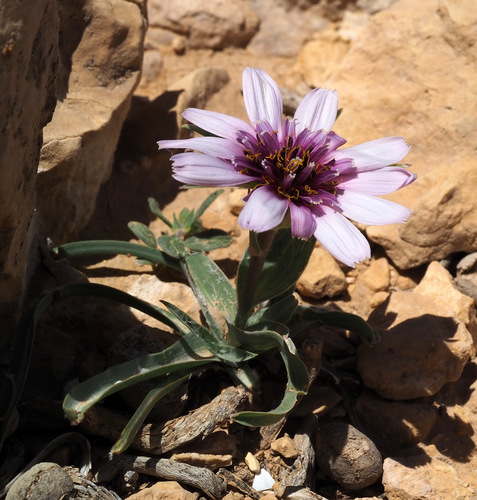
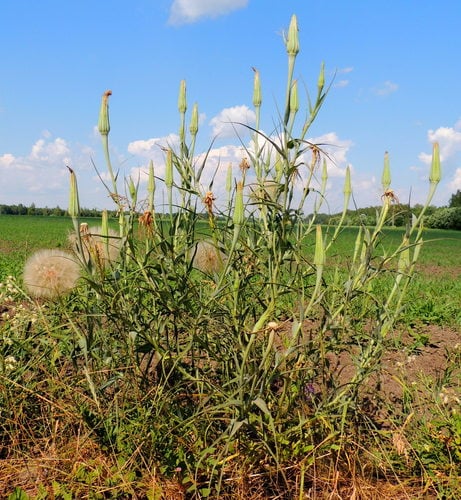
(c) Pizzas fear me, some rights reserved (CC BY-NC), uploaded by Pizzas fear me
iNaturalist· cc-by-nc
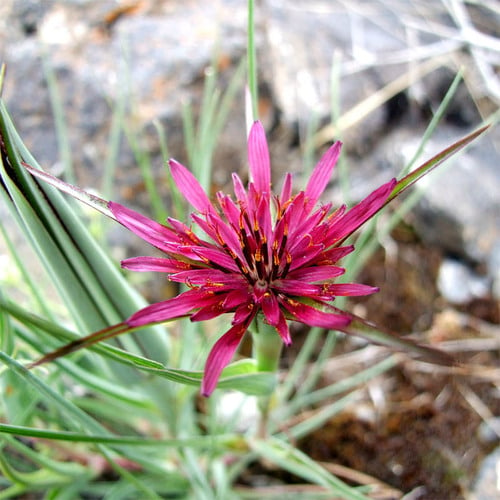
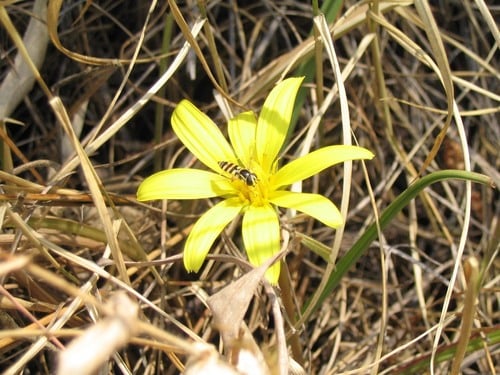
(c) dan, some rights reserved (CC BY-NC), uploaded by dan
Summary
Source: WikipediaGynura procumbens is a species of flowering plant in the family Asteraceae. It is sometimes referred to by the common names sabuñgai, sambung nyawa, longevity spinach, or longevity greens. It is an edible vine that is native to Bangladesh, Benin, Borneo, Cambodia, the Central African Republic, China, the Democratic Republic of Congo, Gabon, Guinea, Indonesia, Ivory Coast, Java, Liberia, Malaysia, New Guinea, Nigeria, the Philippines, Thailand, and Vietnam. Its leaves are ovate-elliptic or lanceolate, 3.5 to 8 centimetres (1+1⁄3 to 3+1⁄6 in) long, and 0.8 to 3.5 centimetres (1⁄3 to 1+1⁄3 in) wide. Flowering heads are panicled, narrow, yellow, and 1 to 1.5 centimetres (1⁄3 to 2⁄3 in) long. The plant grows wild but is also cultivated as a vegetable or medicinal plant. Its young leaves are used for cooking, such as with meat and prawns in a soup.
Description
A climbing or creeping herb. It can grow 1 m tall. The leaves are fleshy. The young leaves are often purple underneath. They are 3-8 cm long by 2-4 cm wide. The flowers are in greenish-yellow heads 2 cm long. The fruit are 5-6 mm long.
Edible Uses
Leaves and young shoots are the edible parts of this plant. The leaves are green and fleshy, said to taste like green beans, and can be eaten fresh in salads or added to rice and noodle dishes. They can also be cooked like spinach — sautéed in butter or oil with a little garlic, or added to soups and stews. The plant also serves as a flavouring for food.
Traditional Uses
The young leaves are sometimes used to flavour dishes. They are cooked with meat and in soup. CAUTION: In large amounts the leaves are poisonous.
This uses section is brief — help expand it
Medicinal Uses
The plant is febrifuge and is used in the treatment of fevers, kidney troubles, and dysentery. The semi-succulent leaves can be applied externally to relieve rheumatic pains and general body pains. In Singaporean folk medicine, the leaves are used to lower blood pressure and reduce blood sugar levels.
Distribution
A tropical plant. It grows in sunny places. It grows on the edge of forests and in thickets. It grows along streams and up to 1,500 m above sea level. In Sichuan and Yunnan. At MARDI.
Where It Grows
Africa, Asia*, Australia, Cambodia, China, Indochina, Indonesia, Malaysia, Myanmar, Nigeria, Papua New Guinea, PNG, Philippines, SE Asia, Sierra Leone, Thailand, Vietnam, West Africa,
Cultivation
Plants can be grown from seeds and cuttings.
Propagation
Can be grown from seed. Longevity spinach is very easy to grow and propagate from cuttings.
Other Uses
This plant works well as a ground cover and is beneficial to soil health. It attracts pollinators, as its flowers are rich in nectar and pollen, and can be integrated into a permaculture or food forest garden. In Mindanao in the Philippine Islands, it is grown in rice areas as a remedy for rice aphids, though the mechanism of action is not well understood. The plant is also a useful forage plant for poultry. Its dense foliage can provide shelter for invertebrates, and the aromatic properties of its leaves may help confuse pests and attract beneficial insects. Suitable for containers of 3 gallons (12L) or larger.
Other Information
In Malaysia the leaves are often eaten with rice. It is cultivated as a vegetable.
Notes
There are about 100 Gynura species. They are mostly in the tropics.
Nutrition
| Part | Moisture | kJ | kcal | Protein | Vit A | Vit C | Iron | Zinc |
|---|---|---|---|---|---|---|---|---|
| Leaves | 95.7 | 50 | 12 | 1.3 | — | 36 | — | — |
Synonyms
Also Known As
Akar sebiak, Akar, Bau dat, Daun dewa, Ebure, Gipoi, Kacham akar, Kelemai merah, Kim that, Phti angkam, Rau hung lui, Sambung nyawa
References (16)
- Bodkin, F., 1991, Encyclopedia Botanica. Cornstalk publishing, p 523
- Bremness, L., 1994, Herbs. Collins Eyewitness Handbooks. Harper Collins. p 176
- Burkill, H. M., 1985, The useful plants of west tropical Africa, Vol. 1. Kew.
- Burkill, I.H., 1966, A Dictionary of the Economic Products of the Malay Peninsula. Ministry of Agriculture and Cooperatives, Kuala Lumpur, Malaysia. Vol 1 (A-H) p 1140
- Enum. Philipp. fl. pl. 3:618. 1923
Show all 16 references Hide references
- Facciola, S., 1998, Cornucopia 2: a Source Book of Edible Plants. Kampong Publications, p 39 (As Gynura sarmentosa)
- MARDI Malaysia
- Martin, F.W. & Ruberte, R.M., 1979, Edible Leaves of the Tropics. Antillian College Press, Mayaguez, Puerto Rico. p 99, 185
- Mot So Rau Dai an Duoc O Vietnam. Wild edible Vegetables. Ha Noi 1994, p 92
- Phon, P., 2000, Plants used in Cambodia. © Pauline Dy Phon, Phnom Penh, Cambodia. p 326
- Samy, J., Sugumaran, M., Lee, K. L. W., 2009, Herbs of Malaysia, Marshall Cavendish. p 116
- Seidemann J., 2005, World Spice Plants. Economic Usage, Botany, Taxonomy. Springer. p 171
- Sukarya, D. G., (Ed.) 2013, 3,500 Plant Species of the Botanic Gardens of Indonesia. LIPI p 638
- Tanaka, Y. & Van Ke, N., 2007, Edible Wild Plants of Vietnam: The bountiful garden. Orchid books. p 50
- Terra, G.J.A., 1973, Tropical Vegetables. Communication 54e Royal Tropical Institute, Amsterdam, p 50
- World Checklist of Useful Plant Species 2020. Royal Botanic Gardens, Kew