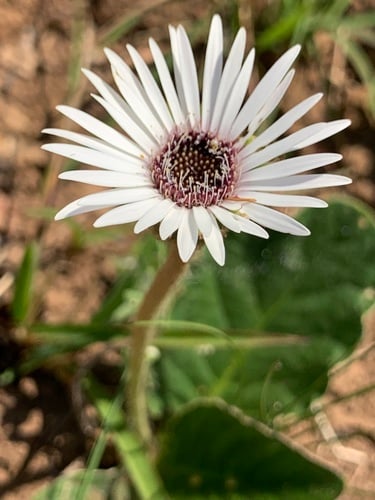
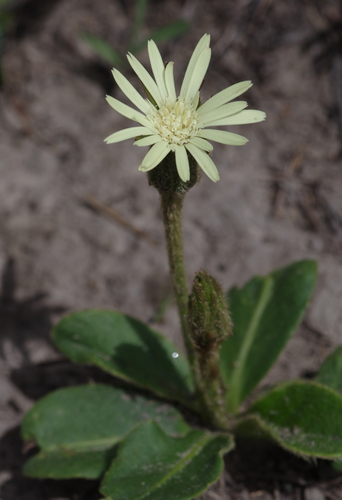
Euchiton japonicus
(Thunb.) Holub.
Everlasting flower
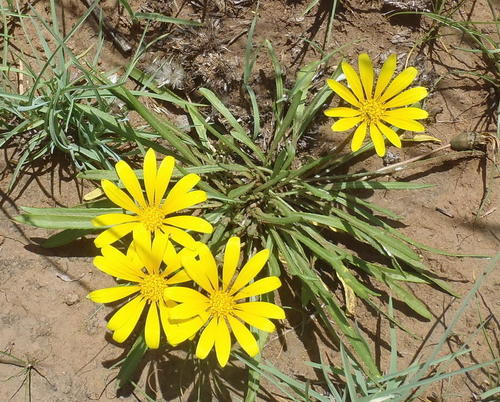
iNaturalist· cc-by-nc
(c) Mike Lusk, some rights reserved (CC BY-NC), uploaded by Mike Lusk
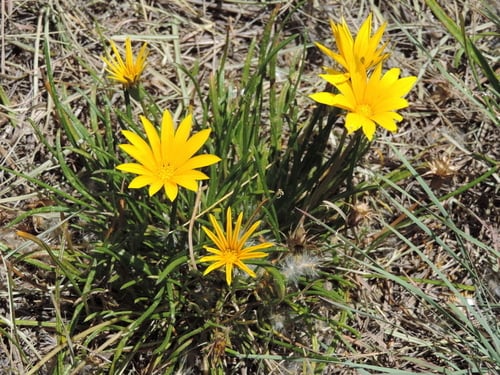
iNaturalist· cc-by-nc
(c) mattward, some rights reserved (CC BY-NC), uploaded by mattward
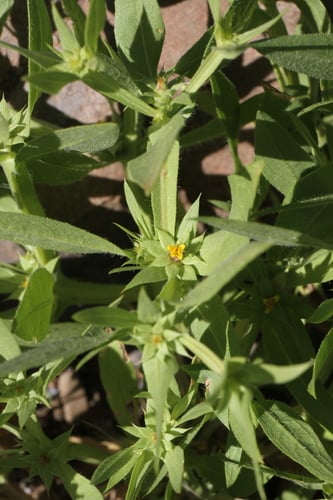
iNaturalist· cc-by-nc-sa
(c) Marley Ford, some rights reserved (CC BY-NC-SA), uploaded by Marley Ford
Summary
Source: WikipediaEuchiton japonicus, or creeping cudweed, is a species of plant within the Asteraceae family.
Description
A herb. It keeps growing from year to year. It has creeping rhizomes. It grows 5-25 cm tall. The leaves are mostly near the root. They are in rings. They are 2-3 cm long by 2-4 mm wide. The flowering stems are tufted.
Edible Uses
The leaves, shoots, and flowers are edible.
Distribution
It is a subtropical plant. It grows in waste fields between 200-1,800 m above sea level. In Sichuan and Yunnan.
Where It Grows
Asia, China, Japan*, Korea, Taiwan,
Notes
There are about 200 Gnaphalium species.
Synonyms
References (6)
- Famine foods (As Gnaphalium japonicum)
- Fl. jap. 311. 1784 (As Gnaphalium japonicum)
- Hwang, H., et al, 2013, A Study on the Flora of 15 Islands in the Western Sea of Jeollanamdo Province, Korea. Journal of Asia-Pacific Biodiversity Vol. 6, No. 2 281-310 (As Gnaphalium japonicum)
- Liu, Yi-tao, & Long, Chun-Lin, 2002, Studies on Edible Flowers Consumed by Ethnic Groups in Yunnan. Acta Botanica Yunnanica. 24(1):41-56 (As Gnaphalium japonicum)
- Plants for a Future database, The Field, Penpol, Lostwithiel, Cornwall, PL22 0NG, UK. http://www.scs.leeds.ac.uk/pfaf/ (As Gnaphalium japonicum)
Show all 6 references Hide references
- READ (As Gnaphalium japonicum)