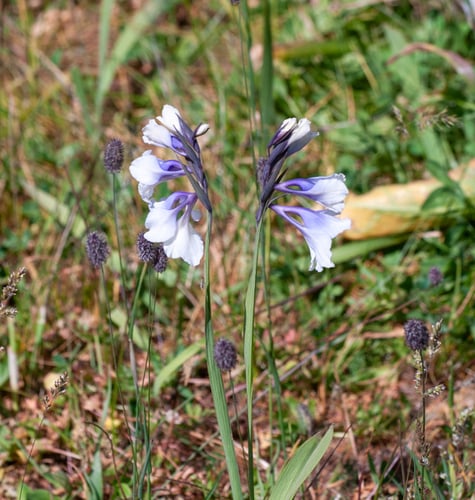
Gynandriris sisyrinchium
(L.) Parl..
Spanish nut, Barbary nut
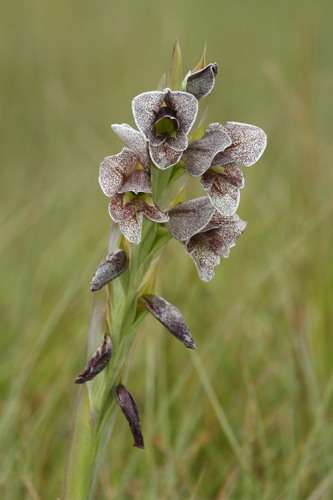
iNaturalist· cc-by-nc
(c) Nicolas Lagière, some rights reserved (CC BY-NC)
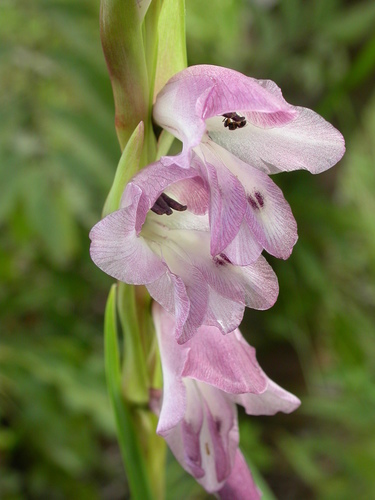
iNaturalist· cc-by-nc
(c) Agapakis Georgios, some rights reserved (CC BY-NC)
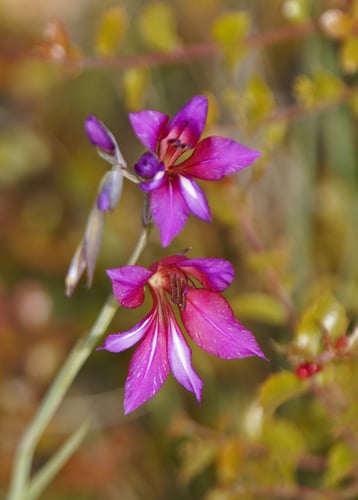
iNaturalist· cc-by-nc
(c) Agapakis Georgios, some rights reserved (CC BY-NC)
Summary
A low-growing perennial reaching 20cm tall and 10cm wide. Hardy to UK zone 8. Flowers May to June. Hermaphroditic and self-fertile. Thrives in medium to heavy loamy or clay soils with good drainage; tolerates very alkaline conditions. Grows in semi-shade or full sun, adapting to either dry or moist soil.
Description
A low plant which has a corm. It keeps growing from year to year. There are few leaves. Often there are only 1-2 leaves. They are deep green and have channels. They are 5-8 mm wide and often longer than the flower stem. There are up to 4 pairs of bracts. Each enclose several flowers. They are papery. The flowers are 22-40 mm long and bluish-lilac. The flowers only last a short time from midday until evening. The flowers are like iris with a white or yellow patch on the falls. The ovary has a slender solid neck. This is 20-30 mm long.
Edible Uses
The root is eaten raw or cooked and is also used as a spice. Some caution is advised due to potential toxicity.
Medicinal Uses
None known
Known Hazards
Some caution is advised due to toxicity.
Distribution
It is a Mediterranean climate plant. It grows in cultivated and waste places.
Where It Grows
Australia, Europe, France, Greece, Italy, Mediterranean, Portugal, Spain, Turkey, Türkiye,
Propagation
Seed is best sown in a cold frame as soon as it is ripe. Stored seed should be sown as soon as possible, also in a cold frame. Prick seedlings into individual pots once large enough to handle and grow on in the greenhouse for at least their first winter. Plant out into permanent positions in late spring or early summer, after the last expected frosts. Division is also possible.
Other Uses
None known
Synonyms
Also Known As
çayır kılıçotu
References (6)
- Blamey, M and Grey-Wilson, C., 2005, Wild flowers of the Mediterranean. A & C Black London. p 495
- Ertug, F, Yenen Bitkiler. Resimli Türkiye Florası -I- Flora of Turkey - Ethnobotany supplement
- Hibbert, M., 2002, The Aussie Plant Finder 2002, Florilegium. p 117
- Nuov. gen. sp. monocot. 52. 1854
- Plants for a Future database, The Field, Penpol, Lostwithiel, Cornwall, PL22 0NG, UK. http://www.scs.leeds.ac.uk/pfaf/
Show all 6 references Hide references
- Wickens, G.E., 1995, Edible Nuts. FAO Non-wood forest products. FAO, Rome. p160