Iris pseudacorus
L.
Yellow Flag, Paleyellow iris
iNaturalist· cc-by-nc
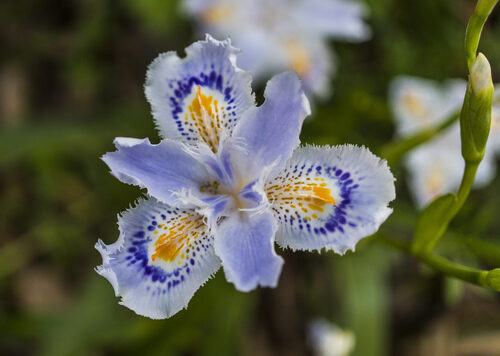
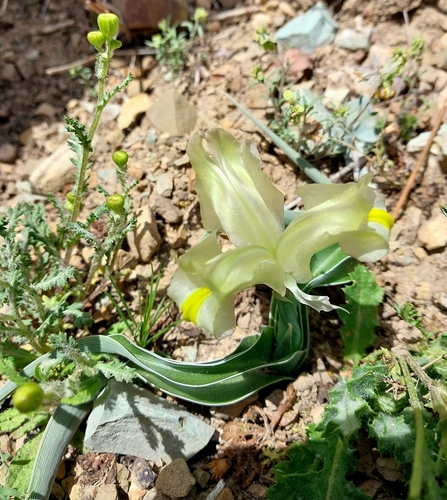
(c) roy pilcher, some rights reserved (CC BY-NC), uploaded by roy pilcher
iNaturalist· cc-by-nc
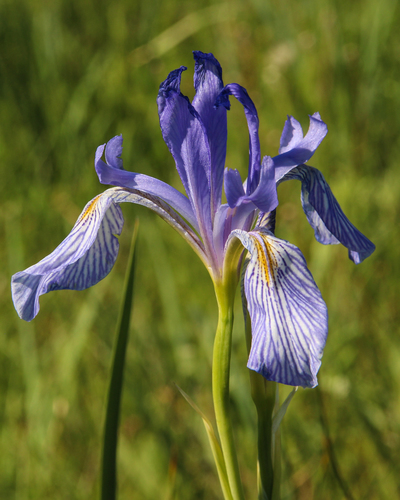
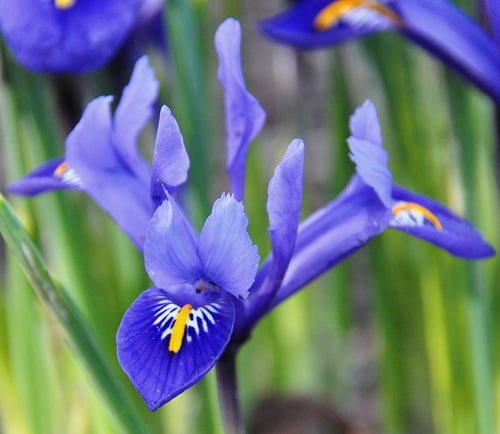
(c) Анна Чернопалкина, some rights reserved (CC BY-NC), uploaded by Анна Чернопалкина
iNaturalist· cc-by
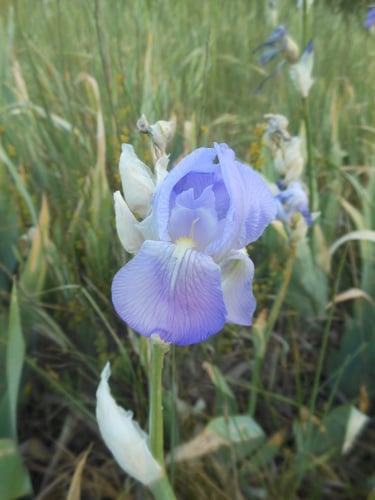
(c) E. Borchert, some rights reserved (CC BY), uploaded by E. Borchert
Description
Iris pseudacorus is a PERENNIAL growing to 1.5 m (5ft) by 2 m (6ft) at a medium rate. See above for USDA hardiness. It is hardy to UK zone 5 and is not frost tender. It is in flower from May to July. The species is hermaphrodite (has both male and female organs) and is pollinated by Bees, hoverflies. The plant is self-fertile. Suitable for: light (sandy) and medium (loamy) soils. Suitable pH: mildly acid, neutral and basic (mildly alkaline) soils. It can grow in semi-shade (light woodland) or no shade. It prefers moist or wet soil and can grow in water. The plant can tolerates strong winds but not maritime exposure.
Edible Uses
Coffee. The seed is said to make an excellent coffee substitute as long as it is well roasted[2, 7, 61, 105, 115, 244]. Caution is advised, it might be poisonous.
Medicinal Uses
Astringent Cathartic Emetic Emmenagogue Odontalgic. The fresh root is astringent, cathartic, emetic, emmenagogue and odontalgic. A slice of the root held against an aching tooth is said to bring immediate relief. It was at one time widely used as a powerful cathartic but is seldom used nowadays because of its extremely acrid nature. It can also cause violent vomiting and diarrhoea. When dried the root loses its acridity and then only acts as an astringent.
Known Hazards
The leaves, and especially the rhizomes, of this species contain an irritating resinous substance called irisin. If ingested this can cause severe gastric disturbances. Plants can cause skin irritations and allergies in some people.
Distribution
Europe, including Britain, from Norway south and east to N. Africa the Caucasus and W. Asia.
Where It Grows
TEMPERATE ASIA: Iran, Syria, Turkey, Russian Federation-Ciscaucasia (Ciscaucasia), Azerbaijan, Russian Federation-Western Siberia (Western Siberia) EUROPE: Denmark, Finland, United Kingdom, Ireland, Norway, Sweden, Czechoslovakia, Austria, Belgium, Switzerland, Germany, Hungary, Netherlands, Poland, Russian Federation (European part), Belarus, Estonia, Lithuania, Latvia, Moldova, Russian Federation (Astrakhan, Saratov, Volgogradskaja oblast), Ukraine (incl. Krym), Former Yugoslavia, Bulgaria, Greece (incl. Crete), Italy (incl. Sardinia, Sicily), Romania, Spain (incl. Baleares), France (incl. Corsica), Portugal AFRICA: Spain (Canarias), Portugal (Madeira Islands), Algeria, Morocco
Cultivation
Prefers a humus rich soil. Succeeds in water up to 15cm deep. Requires a moist soil, especially in early summer. Prefers a position in semi-shade. Plants can be grown in quite coarse grass, which can be cut annually in the autumn. A delicately scented essential oil is obtained from the dried roots. Members of this genus are rarely if ever troubled by browsing deer or rabbits. Some named forms have been selected for their ornamental value. In garden design, as well as the above-ground architecture of a plant, root structure considerations help in choosing plants that work together for their optimal soil requirements including nutrients and water.
Propagation
Seed - best sown as soon as it is ripe in a cold frame. Stored seed should be sown as early in the year as possible in a cold frame. A period of cold stratification improves germination time and rates. Prick out the seedlings into individual pots when they are large enough to handle and grow them on in the greenhouse or cold frame for their first year. Plant out into their permanent positions in late spring or early summer. Division in March or October. Early autumn is best. Very easy, larger clumps can be replanted direct into their permanent positions, though it is best to pot up smaller clumps and grow them on in a cold frame until they are rooting well. Plant them out in the spring.
Other Uses
Dye Essential Ink TanninA beautiful yellow dye is obtained from the flowers. A good black dye is obtained from the root if it is mixed with iron sulphate. It is brown otherwise. The root is a source of tannin and has been used in making ink. A delicately scented essential oil, obtained from the roots, has been used to adulterate the oil of Acorus calamus.
Also Known As
Yellow Flag, Paleyellow iris, Iris, Yellow iris