Erythrina fusca
Lour.
Purple coral tree, Swamp coral tree
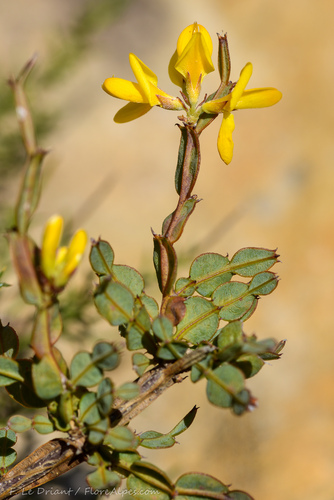
iNaturalist· cc-by
(c) keesgroenendijk, some rights reserved (CC BY), uploaded by keesgroenendijk
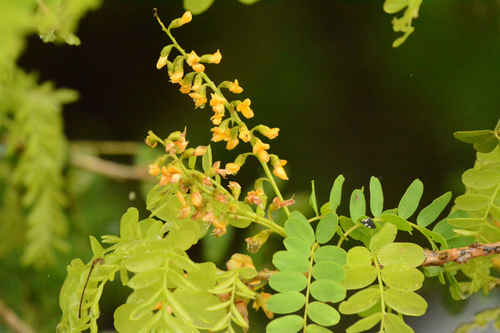
iNaturalist· cc-by-nc
(c) Brayan Rios, some rights reserved (CC BY-NC), uploaded by Brayan Rios
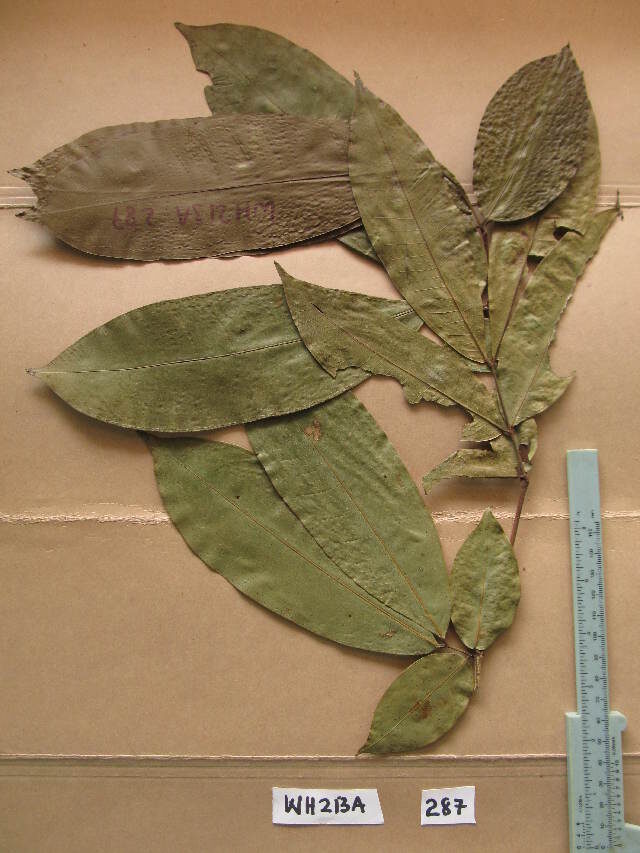
iNaturalist· cc-by-nc
(c) Riccy Lemus, some rights reserved (CC BY-NC), uploaded by Riccy Lemus
Summary
Source: WikipediaErythrina fusca is a species of flowering tree in the legume family, Fabaceae. It is known by many common names, including purple coraltree, gallito, bois immortelle, bucayo, and the more ambiguous "bucare" and "coral bean". E. fusca has the widest distribution of any Erythrina species; it is the only one found in both the New and Old World. It grows on coasts and along rivers in tropical Asia, Oceania, the Mascarene Islands, Madagascar, Africa, and the Neotropics. The easy-to-grow and attractive flowering tree is cultivated as an ornamental shade and hedge plant. It is a common shade tree in cacao plantations. It attracts hummingbirds, which pollinate its flowers. E. fusca is the official flower of the Venezuelan state of Trujillo.
Description
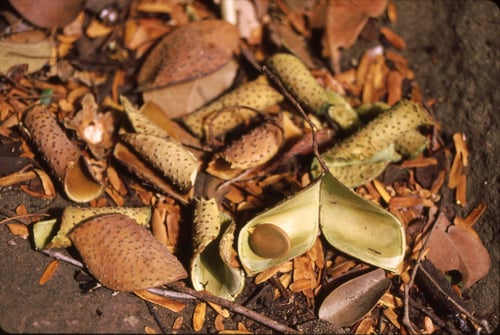
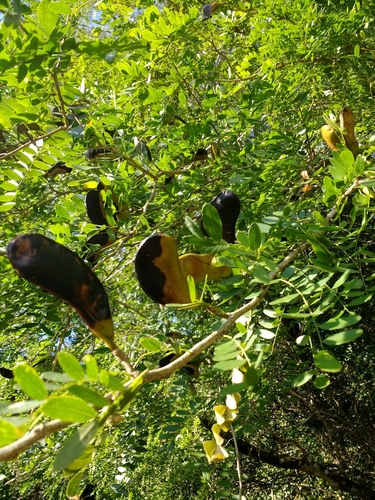
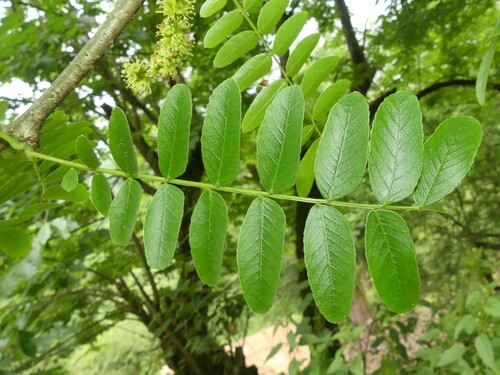
An evergreen tree. It grows to 5-26 m high and spreads to 3 m across. Trees can lose their leaves. The stem is erect and sturdy and has prickles along it. The trunk branches and forks and can be crooked. It can have buttresses. The bark is grey or green and is cracked and flaky. The leaves have 3 leaflets. They are yellowish green on top and with a bluish green bloom underneath. They are thick and oval and 2.5-15 cm long by 1.4-15 cm wide. The leaf stalks are 1-19 cm long have prickles. The flowers are pea shaped and scarlet. They occur in large branching sprays at the ends of branches. This flower spray stalk is 8-13 cm long with flower stalks 3-13 cm long. The flower standard is bright orange-red. It is 4-7 cm long and 4-6 cm wide. The fruit are pods which have stalks. The pods are 14-33 cm long and 1.4-1.8 cm wide. There are 6-12 seeds in a pod. The pod is slightly constricted between the seeds. They are densely velvety. The seeds are dark brown and oblong. They are 1.2-1.8 cm long by 5-8 mm wide.
Edible Uses
Young leaves can be eaten raw in salads or cooked as a vegetable. Flowers are also cooked and eaten as a vegetable.
Traditional Uses
The young leaves and shoots are eaten raw in salads, or cooked in stews and other dishes. They are also used for making tea.
This uses section is brief — help expand it
Medicinal Uses
An infusion of the bark is used to treat liver ailments and to induce sleep. The bark is applied as a poultice on fresh wounds. The stem bark and root bark are combined with the stem bark of Parkia pendula to make a cataplasm applied to the head for violent and persistent headaches. Bark or root decoctions are used in the treatment of beriberi. The root is antirheumatic, sudorific, and purgative in large doses. A decoction is used to treat feverish conditions such as malaria and flu. The flowers are antitussive; a decoction is used to soothe coughs. The seed contains the anaesthetic alkaloid erythroidine.
Known Hazards
Although no specific mention has been seen for this species, the seed, bark and stems of plants in this genus usually contain alkaloids that are toxic in all but small amounts.
Distribution
It is a tropical tree. It prefers rich, moist, well drained soils. It suits a protected sunny position. It is damaged by drought and frost. It grows in tropical lowland swamp forest. Often it is along the edges of rivers. In Papua New Guinea it occurs between 30-135 m and 1600-2000 m altitude.
Where It Grows
Africa, American Samoa, Asia, Australia, Belize, Bolivia, Brazil, Cambodia, Central America, Colombia, Comoros, Costa Rica, Cuba, Dominican Republic, East Africa, Ecuador, Fiji, Guatemala, Guiana, Guianas, Guyana, Haiti, Hawaii, Honduras, India, Indochina, Indonesia, Jamaica, Laos, Madagascar, Malaysia, Micronesia, Myanmar, Nicaragua, Pacific, Panama, Papua New Guinea, PNG, Peru, Philippines, Pohnpei, Puerto Rico, Sao Tome and Principe, SE Asia, South America, Sri Lanka, Suriname, Tanzania, Thailand, Tonga, Trinidad & Tobago, USA, Venezuela, Vietnam, West Africa, West Indies,
Cultivation
A tropical tree. Succeeds at low to moderate elevations in tropical, subtropical and warm temperate areas. It can be grown at elevations up to 2,000 metres. It grows best in areas where annual daytime temperatures are within the range 16 - 24°c, but can tolerate 12 - 32°c. It prefers a mean annual rainfall in the range 1,200 - 3,000mm, but tolerates 1,000 - 3,500mm. It seems to prefer littoral locations with badly drained soils, like swamps and stream banks and upland riverine marshes. In an experiment, it has shown better performance on acid soils of pH 4.3 and aluminium saturation of 80%. Prefers a pH in the range 4.5 - 6.5, tolerating 4 - 7. Established plants are very drought tolerant. Frequently hybridizes with other Erythrina species. The seeds float in water and at times have been dispersed by ocean currents. Established trees stand regular pruning very well. They start sprouting rapidly and develop strong shoots. The tree is managed under a moderate regime of pruning if it is grown as a shade tree for cocoa. The trees are partially pollarded once every 1 - 2 years, leaving a few branches per tree to regulate light influx to the crop. A 6 month pollarding cycle is used for trees supporting black pepper vines. This species has a symbiotic relationship with certain soil bacteria, these bacteria form nodules on the roots and fix atmospheric nitrogen. Some of this nitrogen is utilized by the growing plant but some can also be used by other plants growing nearby.
Propagation
Fresh seeds and those harvested within 3–6 months of maturity can be sown without pre-treatment, and germination rates are generally high, often reaching 100%. Seeds older than 6 months may take 12–18 months to germinate due to a hardening seed coat. Soaking in hot water or scarifying the seed coat can reduce this time considerably. Seeds can be placed in water that has just fallen below boiling point and left to soak for a minimum of one hour — up to 12 hours for seed 3 or more years old — before sowing. Alternatively, a groove can be carefully filed through the sides of the seed coat using a slender triangular file, taking care not to damage the cotyledons or embryo, which can result in death from fungal attack or in weakened, malformed seedlings. Healthy seeds germinate well in almost any well-drained soil with minimal damping-off problems. When used as a shade or nurse tree, propagation is typically by large cuttings about 2 metres long and 6–10 cm in diameter; rooting success is excellent provided soil moisture is close to field capacity.
Other Uses
The tree is often planted as a shade tree in cocoa and coffee plantations in Central America and, less commonly, in Southeast Asia. It is a pioneer species that germinates in open land and helps create habitat suitable for forest trees. Its use as a nurse tree in tropical reforestation projects has been explored. Cocoa trees growing near this species have been observed to produce more pods than those farther away, attributed to increased litter fall that raises available nitrogen and phosphorus in the soil. It is occasionally used in live fences and as a support for black pepper vines and vanilla plants, and is also planted as a hedge. In areas where rainfall is irregular and sometimes below 1,000 mm per year, the species has been noted to persist through prolonged drought without losing its leaves, recirculating nitrogen, phosphorus, and potassium from prunings, making it a promising candidate for agroforestry with maize and cassava. The heartwood is light yellow to yellowish brown, light in weight, moderately soft, weak, not durable, and scarcely suitable for lumber; it is used for making canoes and for carving. Dry branches are occasionally used as firewood, though they are said to burn poorly and produce considerable ash.
Other Information
It is cultivated.
Notes
There are 108 Erythrina species.
Nutrition
| Part | Moisture | kJ | kcal | Protein | Vit A | Vit C | Iron | Zinc |
|---|---|---|---|---|---|---|---|---|
| Leaves raw | 81.5 | 251 | 60 | 4.6 | — | — | 1.8 | — |
Synonyms
Also Known As
Acacu, Acuarana, Bucayo, Changkering, Coral-bean, Eritrina-da-baixa, Gatae apalgi, Kane, Kathit, Kn-kathit, Palo prieto, Pizamo tree, Rase, Sanandu, Suina, Swamp immortelle, Tawng lang nam, Thong lang, Thong long, Vong
References (35)
- Barwick, M., 2004, Tropical and Subtropical Trees. A Worldwide Encyclopedic Guide. Thames and Hudson p 168
- Bodkin, F., 1991, Encyclopedia Botanica. Cornstalk publishing, p 402
- Burkill, H. M., 1985, The useful plants of west tropical Africa, Vol. 2. Kew.
- Burkill, I.H., 1966, A Dictionary of the Economic Products of the Malay Peninsula. Ministry of Agriculture and Cooperatives, Kuala Lumpur, Malaysia. Vol 1 (A-H) p 961
- Condit, R., et al, 2011, Trees of Panama and Costa Rica. Princeton Field Guides. p 220
Show all 35 references Hide references
- Elevitch, C.R.(ed.), 2006, Traditional Trees of the Pacific Islands: Their Culture, Environment and Use. Permanent Agriculture Resources, Holualoa, Hawaii. p 331
- Facciola, S., 1998, Cornucopia 2: a Source Book of Edible Plants. Kampong Publications, p 104
- Fl. cochinch. 2:427. 1790
- Food Composition Tables for use in East Asia FAO http://www.fao.org/infoods/directory No. 464
- Grandtner, M. M., 2008, World Dictionary of Trees. Wood and Forest Science Department. Laval University, Quebec, Qc Canada. (Internet database http://www.WDT.QC.ca)
- Grandtner, M. M. & Chevrette, J., 2013, Dictionary of Trees, Volume 2: South America: Nomenclature, Taxonomy and Ecology. Academic Press p 224
- Grubben, G. J. H. and Denton, O. A. (eds), 2004, Plant Resources of Tropical Africa 2. Vegetables. PROTA, Wageningen, Netherlands. p 561
- Jacquat, C., 1990, Plants from the Markets of Thailand. D.K. Book House p 49
- Kermath, B. M., et al, 2014, Food Plants in the Americas: A survey of the domesticated, cultivated and wild plants used for Human food in North, Central and South America and the Caribbean. On line draft. p 344 (As Erythrina glauca)
- Kiple, K.F. & Ornelas, K.C., (eds), 2000, The Cambridge World History of Food. CUP p 1762
- Lord, E.E., & Willis, J.H., 1999, Shrubs and Trees for Australian gardens. Lothian. p 54
- Lorenzi, H., 2002, Brazilian Trees. A Guide to the Identification and Cultivation of Brazilian Native Trees. Vol. 02 Nova Odessa, SP, Instituto Plantarum p 215
- Martin, F.W. & Ruberte, R.M., 1979, Edible Leaves of the Tropics. Antillian College Press, Mayaguez, Puerto Rico. p 82, 199
- Peekel, P.G., 1984, (Translation E.E.Henty), Flora of the Bismarck Archipelago for Naturalists, Division of Botany, Lae, PNG. p 249, 246
- Pham-Hoang Ho, 1999, An Illustrated Flora of Vietnam. Nha Xuat Ban Tre. p 938
- Plants of Haiti Smithsonian Institute http://botany.si.edu/antilles/West Indies
- PROSEA (Plant Resources of South East Asia) handbook, Volume 11, 1997, Auxiliary plants
- Roa, J. A. G. & Boada, D. S. G., 2018, Fundación para el Fortalecimiento de la Fruticultura y Plantas Alimenticias no Convencionales en Colombia.
- Sukarya, D. G., (Ed.) 2013, 3,500 Plant Species of the Botanic Gardens of Indonesia. LIPI p 263
- Terra, G.J.A., 1973, Tropical Vegetables. Communication 54e Royal Tropical Institute, Amsterdam, p 45
- Torre, de la, L., et al, 2008, Enciclopedia de las Plantas Útiles del Ecuador. Herbario QCA. Pontificia Universidad Católica del Ecuador. p 340
- Uphof,
- USDA, ARS, National Genetic Resources Program. Germplasm Resources Information Network - (GRIN). [Online Database] National Germplasm Resources Laboratory, Beltsville, Maryland. Available: www.ars-grin.gov/cgi-bin/npgs/html/econ.pl (10 April 2000)
- Van Sam, H. et al, 2004, Trees of Laos and Vietnam: A Field Guide to 100 Economically or Ecologically Important Species. Blumea 29 (2004) 201-349
- Verdcourt, B., 1979, Manual of New Guinea Legumes. Botany Bulletin No 11, Division of Botany, Lae, Papua New Guinea. p 424
- Wiersema, J. H. & Leon, B., 2013, World Economic Plants. A Standard Reference CRC Press. 2nd Ed. p 283
- World Checklist of Useful Plant Species 2020. Royal Botanic Gardens, Kew
- www.worldagroforestrycentre.org/treedb/
- Young, J., (Ed.), 2001, Botanica's Pocket Trees and Shrubs. Random House. p 350
- Yuncker, T.G., 1959, Plants of Tonga, Bernice P. Bishop Museum, Hawaii, Bulletin 220. p 145