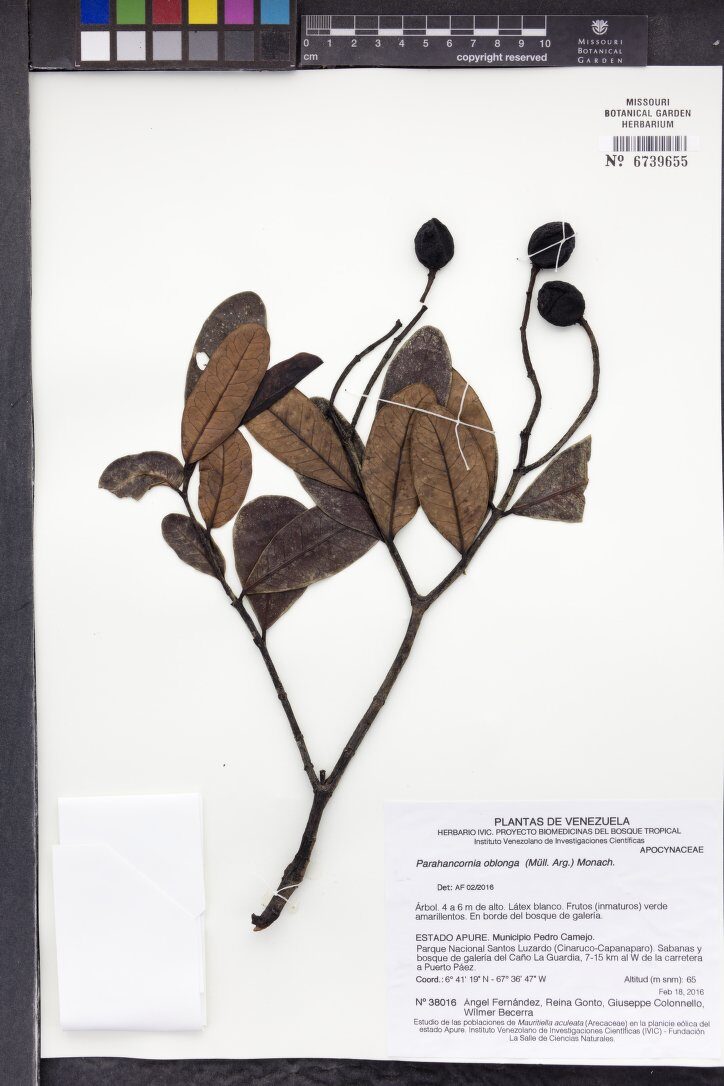
Gymnanthera oblonga
(Burm.f.) P. S. Green
Sea rubber vine, Harpoon bud
iNaturalist· cc-by-nc
(c) Russell Cumming, some rights reserved (CC BY-NC), uploaded by Russell Cumming
iNaturalist· cc-by
(c) Cheongweei Gan, some rights reserved (CC BY), uploaded by Cheongweei Gan
iNaturalist· cc-by-nc
(c) Russell Cumming, some rights reserved (CC BY-NC), uploaded by Russell Cumming
Summary
Source: WikipediaGymnanthera oblonga is a species of vine in the family Apocynaceae (previously Asclepiadaceae) from northern Australia, southeast Asia (Cambodia, Indonesia, Malaysia, Philippines, Thailand, Vietnam), New Guinea, and southern China (Guangdong, Hainan).
Description
A small vine with milky sap. It can be a climber. It grows 3-6 m high. It has milky sap. The stems can be 4 cm across. Leaves are in pairs opposite each other. They are smooth and vary in shape. Often they are oblong 4.5-13 cm long by 1.2-6 cm wide. They are dark green on top and paler underneath and with a pointed tip. There are about 6-13 veins on each side of the midrib. The leaf stalk is 2 cm long. The flowers are green or cream and have a scent. They form tubes with star like petals. The flowers are 1.5-2 cm across. The fruit is a green capsule and with green ridges along it. Inside the fruit is composed of small green leafy type coverings. The fruit are about 8.5 cm long by 0.5 cm wide. There are many seeds. The seeds have feathery wings.
Edible Uses
Young fruit are cooked and eaten, while ripe fruit are eaten raw.
Traditional Uses
The young fruit are cooked and eaten but ripe fruit are eaten raw.
This uses section is brief — help expand it
Distribution
It is a tropical plant. Grows in the Nipa zone along the coast. It grows above the beach on dunes. It is often near streams and on the edges of swamps. It grows near sea level in the mangroves.
Where It Grows
Asia, Australia, Cambodia, China, Indochina, Indonesia, Malaysia, Malesia, Pacific, Papua New Guinea, PNG, Philippines, SE Asia, Thailand, Vietnam,
Cultivation
It grows wild. It can be grown from seed or cuttings.
Notes
There are 2-5 Gymnanthera species. Probably now in the Apocynaceae.
Synonyms
Also Known As
Hai dao teng, Karrkarr
References (15)
- Brock, J., 1993, Native Plants of Northern Australia, Reed. p 212 (Photo) (As Gymnanthera nitida)
- Cooper, W. and Cooper, W., 2004, Fruits of the Australian Tropical Rainforest. Nokomis Editions, Victoria, Australia. p 40 (As Gymnanthera nitida)
- Elliot, W.R., & Jones, D.L., 1992, Encyclopedia of Australian Plants suitable for cultivation. Vol 4. Lothian. p 170 (As Gymnanthera nitida)
- Flora of Australia, Volume 28, Gentiales, Melbourne:CSIRO Australia, 1996. p 202, Map 231 p 300, Fig 102 p 203,
- French, B.R., 1986, Food Plants of Papua New Guinea, A Compendium. Asia Pacific Science Foundation p 351 (As Gymnanthera nitida)
Show all 15 references Hide references
- http://keys.trin.org.au Australian Tropical Rainforest Plants
- Jackes, B.R., 2001, Plants of the Tropics. Rainforest to Heath. An Identification Guide. James Cook University. p 43
- Jones, D.L. & Gray, B., 1977, Australian Climbing Plants. Reed. p 108 (As Gymnanthera nitida)
- Jones D. L., 1986, Ornamental Rainforest Plants in Australia, Reed Books, p 289 (As Gymnanthera nitida)
- Kenneally, K.E., Edinger, D. C., and Willing T., 1996, Broome and Beyond, Plants and People of the Dampier Peninsula, Kimberley, Western Australia. Department of Conservation and Land Management. p 62
- Li Ping-tao; Michael G. Gilbert, W. Douglas Stevens, ASCLEPIADACEAE Flora of China.
- Paczkowska, G. & Chapman, A.R., 2000, The Western Australian Flora. A Descriptive Catalogue. Western Australian Herbarium. p 153
- Townsend, K., 1994, Across the Top. Gardening with Australian Plants in the tropics. Society for Growing Australian Plants, Townsville Branch Inc. p 244 (As Gymnanthera nitida)
- Wheeler, J.R.(ed.), 1992, Flora of the Kimberley Region. CALM, Western Australian Herbarium, p 712 (As Gymnanthera nitida)
- Wightman, G. M. & Andrews, M.R., 1989, Plants of Northern Territory Monsoon Vine Forests (Vol 1). Conservation Commission of Northern Territory. p 126 (As Gymnanthera nitida)