Carissa grandiflora
(E. Mey.) A. DC.
Carissa, Natal plum, Boxwood beauty
iNaturalist· cc-by
(c) Robert Martin, some rights reserved (CC BY)
iNaturalist· cc-by
(c) Robert Martin, some rights reserved (CC BY)
iNaturalist· cc-by-nc
(c) berniecoccia, some rights reserved (CC BY-NC)
Description
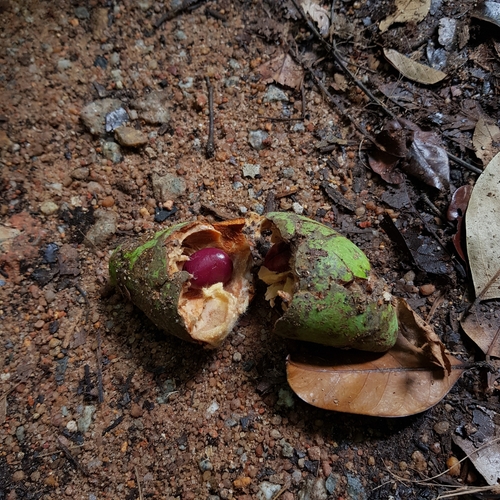
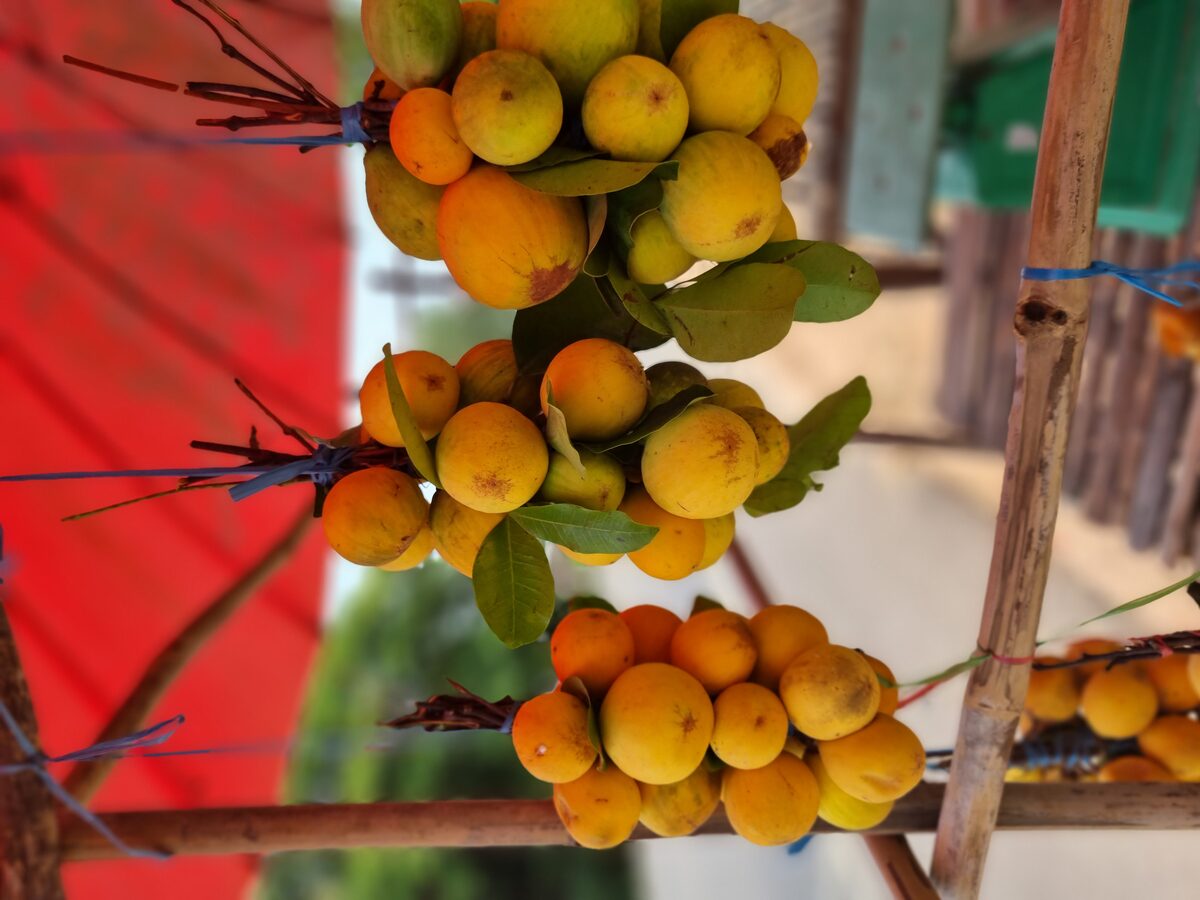
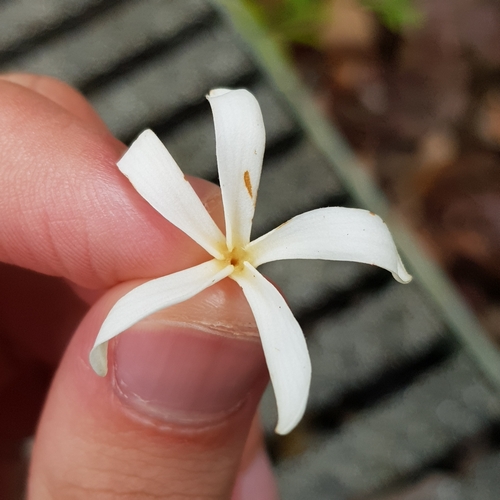
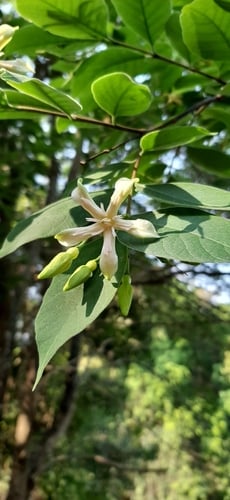
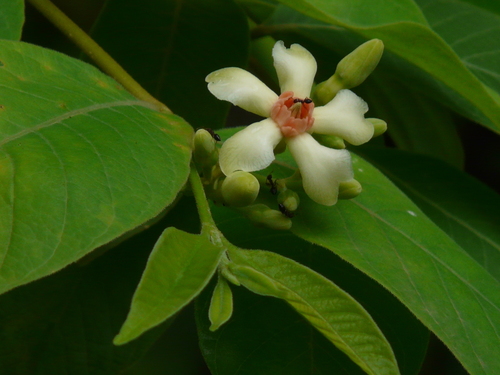
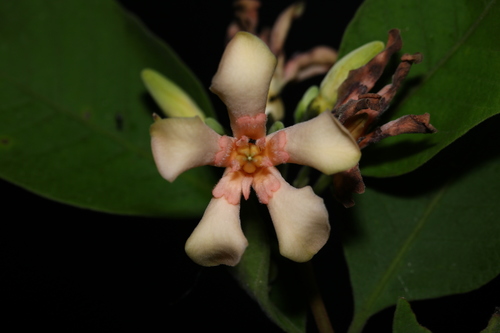
A large shrub. It grows up to 5 m tall. It is thorny. The leaves are dark green, shiny and very thick. Leaves are on thick branches with sharp branched thorns. The flowers are white and fragrant. They are 4-5 cm across. Fruit are 5 cm long, oval and red. The fruit have thin skin and red flesh. There are several round white seeds inside.
Edible Uses
The fruit are eaten fresh, used in salads, sauces, and juice, or processed into pies and preserves.
Traditional Uses
The fruit are eaten fresh or used in salads, sauces and for juice. They are also used in pies and preserves.
This uses section is brief — help expand it
Distribution
A subtropical plant. It can tolerate salt spray. It is resistant to wind damage. It can grow on most soil types. It needs good drainage and plenty of sunlight. It can tolerate cold weather. It is damaged by frost.
Where It Grows
Africa, Asia, Australia, Hawaii, India, Indochina, North America, Pacific, Philippines, SE Asia, South Africa, Southern Africa, Sri Lanka, Thailand, USA,
Cultivation
Plants can easily be grown from seed. Seedlings may produce kinds with poorer fruit. Cuttings are also commonly used to maintain preferred kinds. Air layering can also be used. Plants can be 2 m apart of 1 m apart if used as a hedge.
Production
It is a slow growing shrub. Trees produce in 5 years.
Other Information
It is a cultivated plant.
Notes
There about 20-37 Carissa species. All Carissa species bear edible fruit. They grow in the tropics and subtropics.
Nutrition
| Part | Moisture | kJ | kcal | Protein | Vit A | Vit C | Iron | Zinc |
|---|---|---|---|---|---|---|---|---|
| Fruit | 81.9 | 284 | 68 | 0.4 | — | — | 1.3 | — |
Synonyms
Also Known As
Amatungula, Hiip-mai-ngaam
References (22)
- Ambasta S.P. (Ed.), 2000, The Useful Plants of India. CSIR India. p 106
- Ashton, M. S., et al 1997, A Field Guide to the Common Trees and Shrubs of Sri Lanka. WHT Publications Ltd. p 107
- Bircher, A. G. & Bircher, W. H., 2000, Encyclopedia of Fruit Trees and Edible Flowering Plants in Egypt and the Subtropics. AUC Press. p 84
- Bodkin, F., 1991, Encyclopedia Botanica. Cornstalk publishing, p 215
- Burkill, I.H., 1966, A Dictionary of the Economic Products of the Malay Peninsula. Ministry of Agriculture and Cooperatives, Kuala Lumpur, Malaysia. Vol 1 (A-H) p 469
Show all 22 references Hide references
- Darley, J.J., 1993, Know and Enjoy Tropical Fruit. P & S Publishers. p 122
- Engel, D.H., & Phummai, S., 2000, A Field Guide to Tropical Plants of Asia. Timber Press. p 144
- Flowerdew, B., 2000, Complete Fruit Book. Kyle Cathie Ltd., London. p 163
- Food Composition Tables for use in East Asia FAO http://www.fao.org/infoods/directory No. 926
- Gouldstone, S., 1983, Growing your own Food-bearing Plants in Australia. Macmillan p 110
- Hardwick, G., 2001, Economically Useful Plants for Northern Australia: Master Species List. Crusader eBooks.
- Hedrick, U.P., 1919, (Ed.), Sturtevant's edible plants of the world. p 163
- John, L., & Stevenson, V., 1979, The Complete Book of Fruit. Angus & Robertson p 201
- Kiple, K.F. & Ornelas, K.C., (eds), 2000, The Cambridge World History of Food. CUP p 1821
- Lord, E.E., & Willis, J.H., 1999, Shrubs and Trees for Australian gardens. Lothian. p 211
- Macmillan, H.F. (Revised Barlow, H.S., et al) 1991, Tropical Planting and Gardening. Sixth edition. Malayan Nature Society. Kuala Lumpur. p 296
- Prodr. 8:335. 1844
- Purseglove, J.W., 1968, Tropical Crops Dicotyledons, Longmans. p 626
- Self, M., 199, Phoenix Seeds catalogue. p 16
- Swaminathan, M.S., and Kochnar, S.L., 2007, An Atlas of Major Flowering Trees in India. Macmillan. p 210
- Tankard, G., 1990, Tropical fruit. An Australian Guide to Growing and using exotic fruit. Viking p 112
- Zeven, A. C. & de West, J. M. J., 1982, Dictionary of cultivated plants and their regions of diversity. Wageningen. p 122