Carissa carandas
L.
Ceylon damson, Sri Lankan damson
iNaturalist· cc-by-nc
(c) chengailim, some rights reserved (CC BY-NC), uploaded by chengailim
iNaturalist· cc-by
(c) Seema Merchant, some rights reserved (CC BY), uploaded by Seema Merchant
iNaturalist· cc-by-nc
(c) virenvaz, some rights reserved (CC BY-NC)
Summary
Source: WikipediaCarissa carandas is a species of flowering shrub in the family Apocynaceae. It produces berry-sized fruits that are commonly used as a condiment in Indian pickles and spices. The fruit is black and tastes sweet or sour depending on the plant. It is a hardy, drought-tolerant plant that thrives well in a wide range of soils. Common names in English include Bengal currant, Christ's thorn, Carandas plum, Karonda, Karvanda and Kanna . The supposed varieties congesta and paucinervia refer to the related conkerberry (C. spinarum).
Description
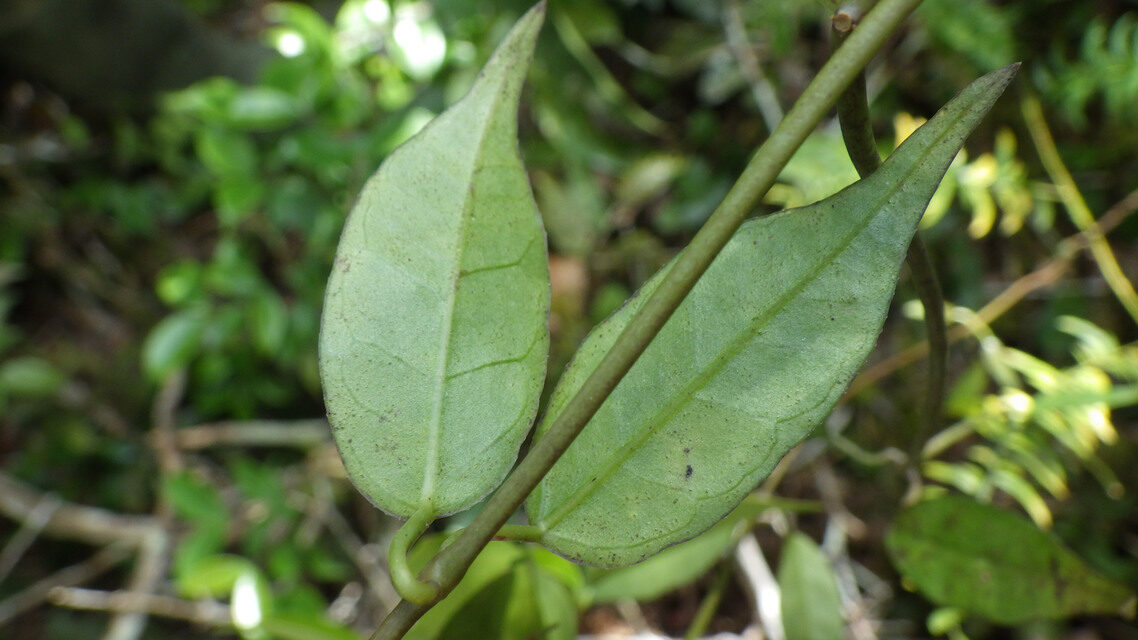
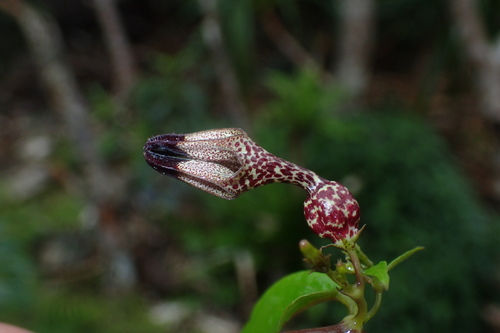
A large shrub. It grows 5 m tall. It has stout spines in pairs. They are 5 cm long. The leaves are oblong with distinct veins. They are 3-7 cm long by 2-4 cm wide. There are usually 3 flowers at the ends of the branches. The flowers have a scent. The fruit are red to purple berries. They are oval and 1.5-2.5 cm long by 1-2 cm wide.
Edible Uses
Ripe fruit are eaten raw or used for juices, salads, and jams. Unripe fruit are used for pickles, and ripe fruit are eaten with salt.
Traditional Uses
Ripe fruit are eaten raw and unripe fruit are also used for pickles. Ripe fruit are used for juices, salads and jams. The fruit are eaten with salt.
Medicinal Uses
The fruits are astringent, antiscorbutic and also used as a remedy for biliousness. A leaf decoction is used against fever, diarrhoea, and earache. The roots serve as a stomachic, vermifuge and remedy for itches.
Distribution
It is a temperate or subtropical plant. It suits drier areas. It grows in lowland rainforest between 300-1,800 m above sea level.
Where It Grows
Asia, Afghanistan, Andamans, Bangladesh, Brazil, Caribbean, China, Colombia, Cuba, Himalayas, India*, Indochina, Indonesia, Malaysia, Myanmar, North America, Northeastern India, Nepal, Pakistan, SE Asia, Sri Lanka, Taiwan, Thailand, USA, West Indies,
Cultivation
Plants can be grown from seeds or by cuttings.
Propagation
Seed - Cuttings. Can be difficult. Air layering. Can be difficult.
Other Uses
The roots are used as an insect repellent. A white latex is found in the plant. The wood is hard and is used to make small utensils. It is used for making household furniture and for turning. The plant responds well to trimming and is frequently grown as a hedge. With its sharp spines, it makes an excellent barrier.
Production
In China plants flower from March to June and fruit from July to December. A tree can produce 10 kg of fruit.
Other Information
It is cultivated.
Notes
Now an accepted name. There has been confusion with Carissa congesta (Now Carissa spinarum)
Nutrition
| Part | Moisture | kJ | kcal | Protein | Vit A | Vit C | Iron | Zinc |
|---|---|---|---|---|---|---|---|---|
| Fruit fresh | 91 | — | 42 | 1.1 | — | — | 39.1 | — |
Synonyms
Also Known As
Ankukoli, Buah karanda, Buah samarinda, Caranda, Chutro, Ci huang guo, Garna, Kakronda, Kala, Kalakkay, Kallakai, Kalmi, Karamcha, Karanda, Karaudi, Karaunda, Karenja, Karonda, Karounda, Karunda, Karvand, Kaule kayi, Khan, Kilakkay, Koramcha, Mahakaramba, Malaysian karanda, Perungala
References (41)
- Arinathan, V., et al, 2007, Wild edibles used by Palliyars of the western Ghats, Tamil Nadu. Indian Journal of Traditional Knowledge. 6(1) pp 163-168
- Ashton, M. S., et al 1997, A Field Guide to the Common Trees and Shrubs of Sri Lanka. WHT Publications Ltd. p 107
- Bajpai, O., et al, 2015, Tree species of the Himalayan Terai region of Uttar Pradesh, India: a checklist. Check List 11(4): 1718
- Bandyopadhyay, S. et al, 2009, Wild edible plants of Koch Bihar district, West Bengal. Natural Products Radiance 8(1) 64-72
- Bandyopadhyay, S., et al, 2012, A Census of Wild Edible Plants from Howrah District, West Bengal, India. Proceedings of UGC sponsored National Seminar 2012
Show all 41 references Hide references
- Banerjee, A., et al, 2013, Ethnobotanical Documentation of Some Wild Edible Plants in Bankura District, West Bengal, India. The Journal of Ethnobiology and Traditional Medicine. Photon 120 (2013) 585-590
- Banik, B. C. et al, 2012, Research and development in Karonda (Carissa carandas), a Semi Wild Fruit in India. In Acta Horticulturae Number 948 p 61-65
- Basha, S. K. M., Ethnobotanical Trees of Sri Lanka Malleswara Wildlife Sanctuary; Eastern Ghats, Andhra Pradesh.
- Behera K. K., et al, 2008, Wild Edible Plants of Mayurbhanj District, Orissa, India. J. Econ. Taxon. Bot. Vol. 32 (Suppl.) pp 305-314
- Chakraborty, S. & Chaturbedi, H. P., 2014, Some Wild Edible Fruits of Tripura- A Survey. Indian Journal of Applied research. (4) 9
- Chandrashekara, U. M., 2009, Tree species yielding edible fruit in the coffee-based homegardens of Kerala, India: their diversity, uses and management. Food Sec. 1:361-370
- Chowdery, T., et al, 2014, Wild edible plants of Uttar Dinajpur District, West Bengal. Life Science Leaflets. 47:pp 20-36 http://lifesciencesleaflets.ning.com
- Chowdhury, M. & Mukherjee, R., 2012, Wild Edible Plants Consumed by Local Communities of Maldah of West Bengal, India. Indian J.Sci.Res.3(2) : 163-170
- Das, S. and De, B., 2013, Evaluation of Angiotension I-Converting Enzyme (ACE) inhibitory potential of some underutilized indigenous fruits of West Bengal using an in vitro model. Fruits, Vol. 68:499-506
- Dobriyal, M. J. R. & Dobriyal, R., 2014, Non Wood Forest Produce an Option for Ethnic Food and Nutritional Security in India. Int. J. of Usuf. Mngt. 15(1):17-37
- Flora and Livestock in Coastal Karnataka. 2007, Report. EMPRI p 173
- Flora of China.
- Gautam, R. S., et al, 2022, Ethnobotanical Review of Wild Edible Plants of Nepal. Journal of Natural History Museum Volume 32, 2021-22 p 103
- Hazarika, B. et al. (2020). An overview of the unexplored underutilized fruit crops of Assam, India. Journal of Applied and Natural Science, 12(3): 442 - 453.
- Khan, D. & Shaukat, S.S., 2006, The Fruits of Pakistan: Diversity, Distribution, Trends of Production and Use. Int. J. Biol. Biotech., 3(3):463-499
- Kuhnlein, H. V., et al, 2009, Indigenous Peoples' food systems. FAO Rome p 195
- Kumar, P. D., et al, 2015, Ethnobotanical Knowledge and Usage of Wild Plants in Theog Forest Division, Himachal Pradesh, North Western Himalaya. The Journal of Ethnobiology and Traditional Medicine. Photon 124(2015) 922-935
- Kumar, S. A., Manus, D. & Mallika, M., 2018, Impact of non-timber forest products on Forest and in Livelihood Economy of the People of Adjoining Areas of Jalpaiguri Forest Division, West Bengal, India. Int. J. of Life Sciences, 2018; 6 (2):365-385
- Kuvar, S. D. & Shinde, R. D., 2019, Wild Edible Plants used by Kokni Tribe of Nasik District, Maharashtra. Journal of Global Biosciences. Volume 8, Number 2, 2019, pp. 5936-5945
- Misra S. & Misra M., 2016, Ethnobotanical and Nutritional Evaluation of Some Edible Fruit Plants of Southern Odisha, India. International Journal of Advances in Agricultural Science and Technology, Vol.3 Issue.1, March- 2016, pg. 1-30
- Pasha, M. K. & Uddin, S. B., 2019, Minor Edible Fruits of Bangladesh. Bangladesh J. Plant Taxon. 26(2): 299–313
- Patiri, B. & Borah, A., 2007, Wild Edible Plants of Assam. Geethaki Publishers. p 82
- Paul, A., 2013, Minor and uncultivated fruits of Eastern India, 2nd International Symposium on Minor Fruits and Medicinal Plants
- Pradhan, R., et al, 2020, Potential Wild Edible Plants and its Significance in Livelihood of Indigenous People of Male Mahadeshwara Hills, Karnataka. Economic Affairs Vol. 64, No. 4 pp. 01-14
- Rajapaksha, U., 1998, Traditional Food Plants in Sri Lanka. HARTI, Sri Lanka. p 65
- Rasingam, L., 2012, Ethnobotanical studies on the wild edible plants of Irula tribes of Pillur Valley, Coimbatore district, Tamil Nadu, India. Asian Pacific Journal of Tropical Biomedicine. (2012) S1493-S1497
- Roa, J. A. G. & Boada, D. S. G., 2018, Fundación para el Fortalecimiento de la Fruticultura y Plantas Alimenticias no Convencionales en Colombia.
- Sarma, H., et al, 2010, Updated Estimates of Wild Edible and Threatened Plants of Assam: A Meta-analysis. International Journal of Botany 6(4): 414-423
- Singh, G. K. & Ahirwar, R. K., 2013, An Ethnobotanical Survey for Certain Wild Edible Plants of Chanda Forest District Dindori Central India. International Journal of Science and Research. 6:14
- Sukarya, D. G., (Ed.) 2013, 3,500 Plant Species of the Botanic Gardens of Indonesia. LIPI p 604
- Tomar, A., Kumar, A., & Dubey, K., 2002, Underutilized Wild Edible fruits of Nutritional and Medicinal Value. J. Res. Educ. Indian Med., Vol XX1
- Toppo, P. et al, 2016, Wild edible plants of Dhamtari district of Chhattisgarh, India. Van Sangyan Vol. 3, No. 4
- Uprety, Y., et al, 2012, Diversity of use and local knowledge of wild edible plant resources in Nepal. Journal of Ethnobotany and Ethnomedicine 8:16
- Wiersema, J. H. & Leon, B., 2013, World Economic Plants. A Standard Reference CRC Press. 2nd Ed. p 145
- World Checklist of Useful Plant Species 2020. Royal Botanic Gardens, Kew
- www.tradewindsfruit.com