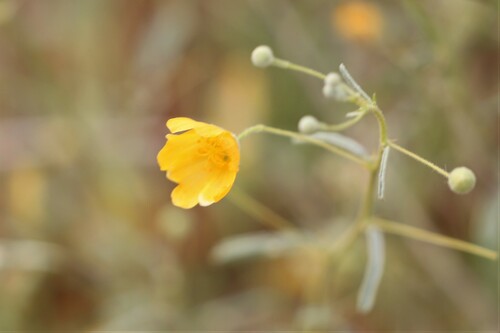
Patinoa paraensis
(Huber) Cuatrec.
gbif· cc-by-nc
C. Dennis : Field Museum of Natural History - Botany Department
gbif· cc-by-nc
Rapid Reference Collection (RRC) | Field Museum of Natural History - Keller Science Action Center
Description
An evergreen tree. The crown is elongated. It grows 15-30 m tall. The trunk is 30-45 cm across. It has large knots along the branches. The fruit are 20 cm long.
Edible Uses
The fruit is an indehiscent capsule more than 20cm long containing seeds covered in a fleshy, fibrous pulp. This report does not specify that the fruit is edible, however, it belongs to a genus of plants with edible fruits and in a family with little record of toxins. It would certainly be worth trying.
Traditional Uses
The fruit is possibly edible.
This uses section is brief — help expand it
Distribution
It is a tropical plant. It grows in humid forests in the Amazon and along river banks.
Where It Grows
Amazon, Brazil, Colombia, Ecuador, Peru, South America,
Cultivation
Succeeds in a sunny position and in dappled shade. A fast-growing plant.
Propagation
Seed - best sown as soon as it is ripe in a partially shaded position in individual containers. A germination rate of virtually 100% can be expected, with the seed sprouting within 20 - 30 days.
Other Uses
A strong fibre is obtained from the bark. The seeds contain around 26% of a viscous oil with a low congealing temperature. The wood is medium-textured, straight-grained, light in weight, moderately hard, with low resistance to wood-eating organisms. It is only used to make items such as containers for chilled or pre-frozen products, life jackets, flotation devices etc.
Notes
Previously in the family Bombacaceae. In the subfamily Bombacoideae.
Synonyms
Also Known As
Cupurana, Cupuacurana, Laurel bracilargo, Zapote
References (4)
- e-jardim.com (As Matisia paraensis)
- Fern, K., 2012, Tropical Species Database http://theferns.info/tropical/
- Roa, J. A. G. & Boada, D. S. G., 2018, Fundación para el Fortalecimiento de la Fruticultura y Plantas Alimenticias no Convencionales en Colombia.
- Torre, de la L., et al, 2008, Enciclopedia de las Plantas Útiles del Ecuador. Herbario QCA. Pontificia Universidad Católica del Ecuador. p 251