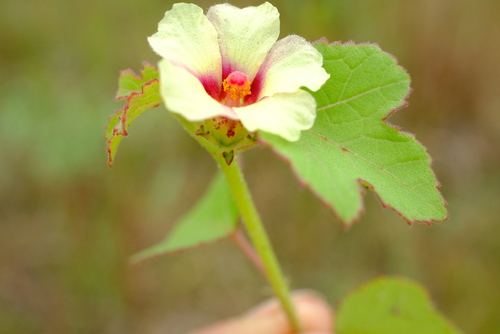
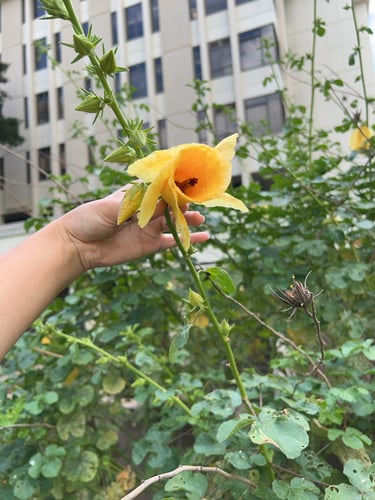
Pavonia odorata
Willd.
iNaturalist· cc-by
(c) Lalithamba, some rights reserved (CC BY)
iNaturalist· cc-by-nc
(c) Faeezah Faeezah, some rights reserved (CC BY-NC)
Description
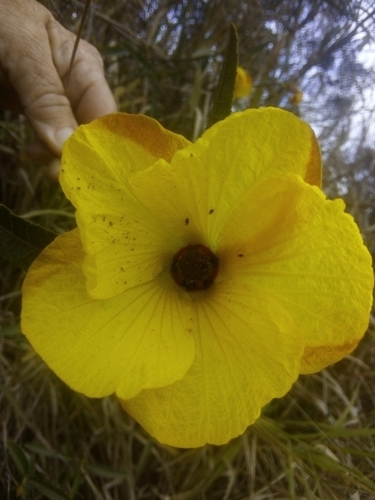
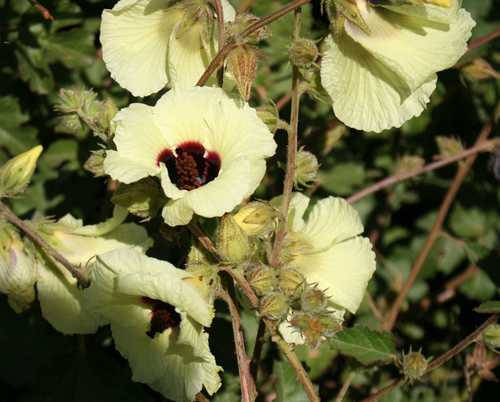
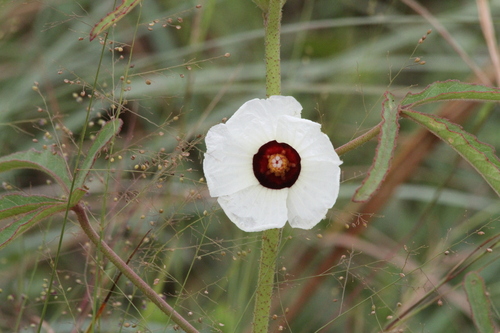
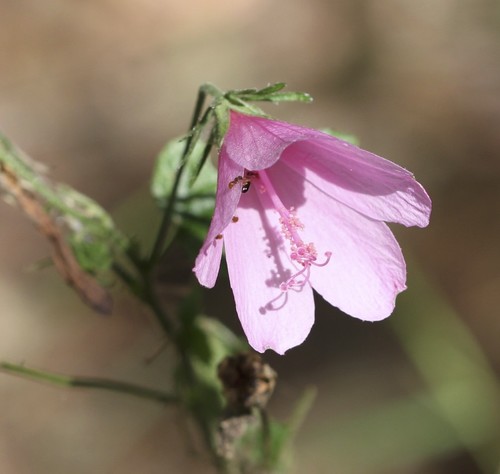
A slightly woody herb. The leaves are oval or heart shaped. They are 3-5 angled. They are 4-6 cm long by 5-7 cm wide. The flowers are in the axils. The fruit are round, smooth and do not have wings.
Edible Uses
The leaves are eaten raw, and the fruit is also edible.
Traditional Uses
The leaves are eaten raw.
This uses section is brief — help expand it
Distribution
A tropical plant. They grow in dry places.
Where It Grows
Africa, Asia, East Africa, India, Myanmar, Pakistan, SE Asia, Sri Lanka,
Notes
There are about 250 Pavonia species. They grow in the tropics and subtropics.
Synonyms
Also Known As
Avibattam, Bala, Balarakkasi, Chitti benda, Erra, Hribera, Kalavala, Kalowalo, Kotle ara, Kuruntotti, Kuti, Naguri ara, Peramutiberu, Peramutti, Sugandha-bala, Sukantha bala, Tige benda
References (6)
- Ambasta, S.P. (Ed.), 2000, The Useful Plants of India. CSIR India. p 435
- Burkill, I.H., 1966, A Dictionary of the Economic Products of the Malay Peninsula. Ministry of Agriculture and Cooperatives, Kuala Lumpur, Malaysia. Vol 2 (I-Z) p 1708
- Flora of Pakistan. www.eFloras.org
- Pullaiah, Y., Krishnamurthy, K. V. & Bahadur, B., (Eds.), 2016, Ethnobotany of India, Volume 1: Eastern Ghats and Deccan.
- Singh, H.B., Arora R.K.,1978, Wild edible Plants of India. Indian Council of Agricultural Research, New Delhi. p 32
Show all 6 references Hide references
- Sp. pl. 3(1):837. 1800