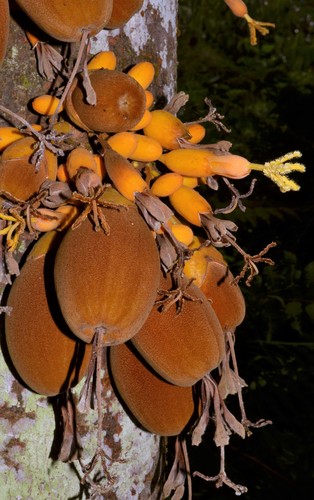
Grewia biloba subsp. parviflora
(Bunge.) Hand-Mazz.
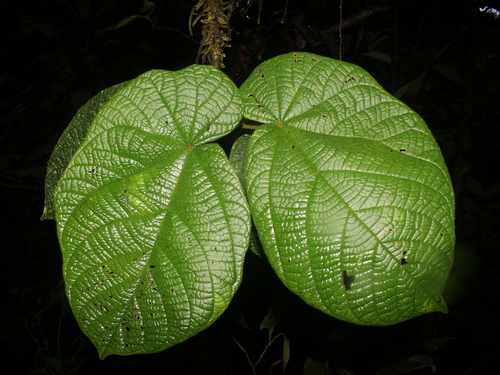
iNaturalist· cc-by-nc
(c) Shin-Ming Ku, some rights reserved (CC BY-NC), uploaded by Shin-Ming Ku
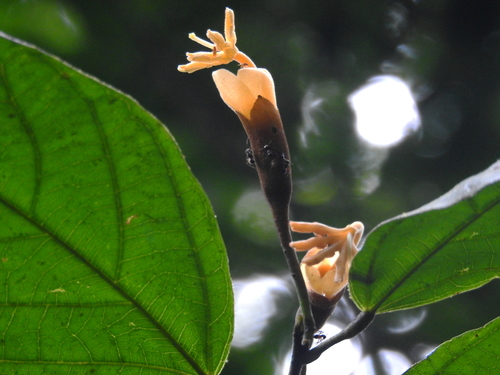
iNaturalist· cc-by-nc
(c) MP Zhou, some rights reserved (CC BY-NC), uploaded by MP Zhou
iNaturalist· cc-by-nc
(c) Chuangzao, some rights reserved (CC BY-NC), uploaded by Chuangzao
Description
A shrub or small tree. It grows 1 m tall but can be taller. The leaves are narrow and 4-9 cm long by 3-4 cm wide. They are hairy underneath. The fruit are red and have 2-4 lobes.
Edible Uses
The fruit are edible.
Distribution
It is a subtropical plant. In Sichuan and Yunnan.
Where It Grows
Asia, China, Korea,
Notes
There are about 200 Grewia species. They are mostly tropical. The fruit of most may be edible. These were in the Sparrmanniaceae and the Tiliaceae.
Synonyms
Grewia chanetii H. Lev.Grewia parviflora Bunge.
Also Known As
Gebengbeng
References (4)
- Hwang, H., et al, 2013, A Study on the Flora of 15 Islands in the Western Sea of Jeollanamdo Province, Korea. Journal of Asia-Pacific Biodiversity Vol. 6, No. 2 281-310 (As Grewia parviflora)
- Kang, Y., et al, 2012, Wild food plants and wild edible fungi in two valleys on the Qinling Mountains (Shaanxi, central China) Journal of Ethnobiology and Ethnomedicine; 9:26
- Plants for a Future database, The Field, Penpol, Lostwithiel, Cornwall, PL22 0NG, UK. http://www.scs.leeds.ac.uk/pfaf/
- Symb. sin. 7:612. 1933