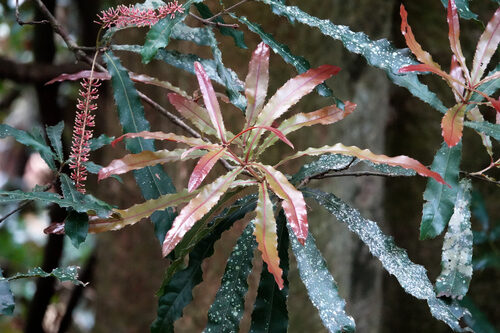
Grevillea annulifera
F. Muell.
Prickly Plume Grevillea
iNaturalist· cc-by-nc
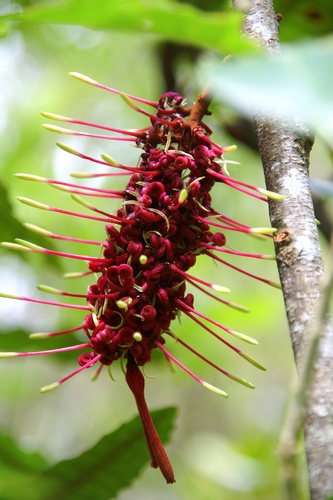
(c) jjudy, some rights reserved (CC BY-NC)
iNaturalist· cc-by-nc
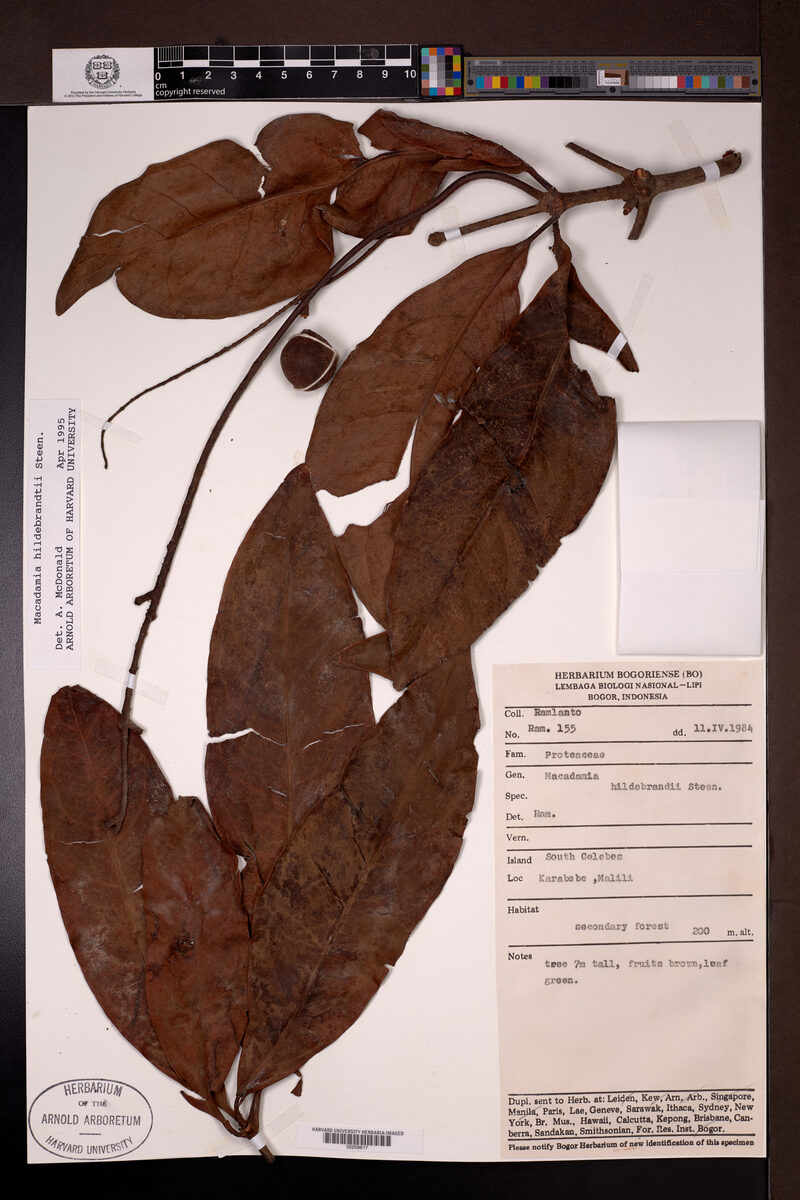
(c) jjudy, some rights reserved (CC BY-NC)
iNaturalist· cc-by-nc
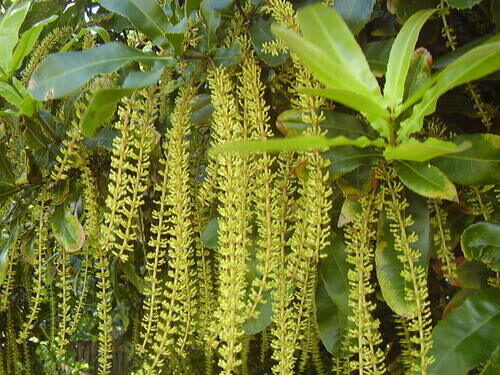
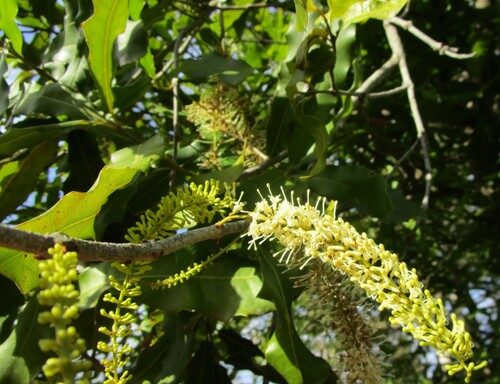
(c) gjoreilly, some rights reserved (CC BY-NC)
Summary
Source: WikipediaGrevillea annulifera, also known as prickly plume grevillea, is a species of flowering plant in the family Proteaceae and is endemic to northern Western Australia. It is a spreading to erect shrub with pinnatisect leaves with five to nine sharply-pointed, linear lobes, and cream-coloured to pale yellow flowers.
Description
A shrub. It grows 2-4 m high and spreads 1.5-3 m wide. It has many branches. The leaves are 6 cm long by 3.5 cm wide. The leaves are divided into narrow leaflets along the stalk. The leaves can be entire but divided into lobes. They have sharp tips. There are usually 5-9 segments 2.5 cm long. The flowers are creamy-white. The are borne in showy panicles at the ends of branches. The fruit are about 2 cm across. They break irregularly to loose 2 half round seeds.
Edible Uses
The almond-flavored kernels are eaten, and the nectar can be consumed. The seeds are nutritious.
Traditional Uses
The almond-favoured kernels are eaten.
This uses section is brief — help expand it
Known Hazards
Not easily grown commercially; seed set is poor.
Distribution
It suits light non limy soils. It suits temperate or semiarid places. It requires plenty of sunshine and very good drainage. Plants can tolerate light frosts.
Where It Grows
Australia*,
Cultivation
Plants can be grown from seed or cuttings. Cuttings are slow to form roots. The seed are very slow to germinate unless the corky layer is peeled off. Once this white embryo is revealed seed germinate in about 30 days.
Other Information
It is not easily grown under commercial conditions and seed sett is poor. The seeds are nutritious.
Notes
There are 250-340 Grevillea species. They are mostly in Australia.
References (8)
- Bodkin, F., 1991, Encyclopedia Botanica. Cornstalk publishing, p 507
- Elliot, W.R., & Jones, D.L., 1990, Encyclopedia of Australian Plants suitable for cultivation. Vol 5. Lothian. p 23
- Holliday, I., 1979, A Field Guide to Australian Native Shrubs. Rigby. p 98
- Lord, E.E., & Willis, J.H., 1999, Shrubs and Trees for Australian gardens. Lothian. p 165
- Menninger, E.A., 1977, Edible Nuts of the World. Horticultural Books. Florida p 22
Show all 8 references Hide references
- Olde, P & Marriott, N., 1995, The Grevillea Book. Kangaroo Press. Vol 2. p 29
- Paczkowska, G . & Chapman, A.R., 2000, The Western Australian Flora. A Descriptive Calatogue. Western Australian Herbarium. p 479
- Wickens, G.E., 1995, Edible Nuts. FAO Non-wood forest products. FAO, Rome. p146