Gnetum africanum
Welw.
Eru
iNaturalist· cc-by-nc
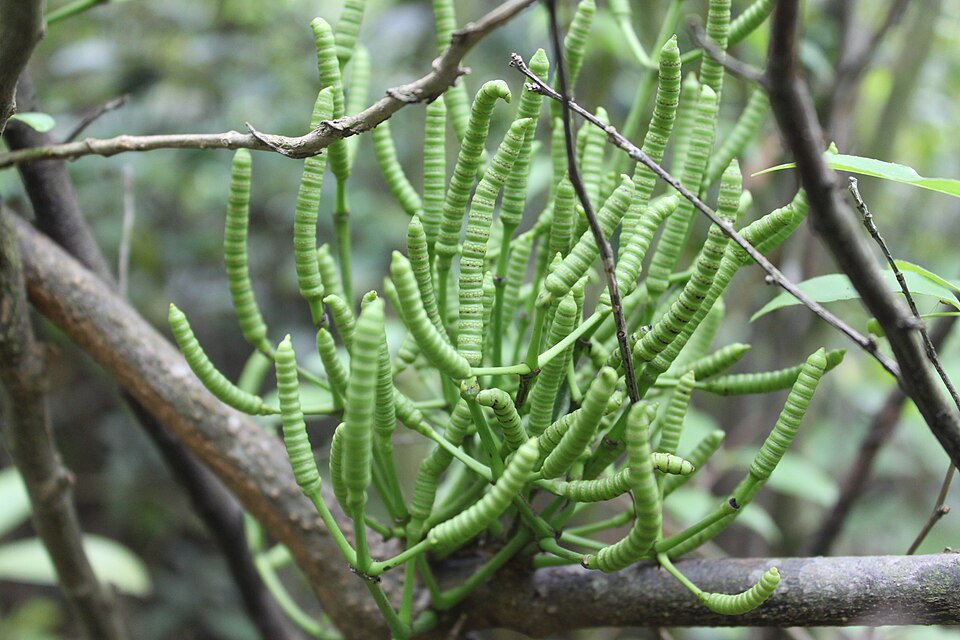
(c) Bart Wursten, some rights reserved (CC BY-NC), uploaded by Bart Wursten
iNaturalist· cc-by-nc
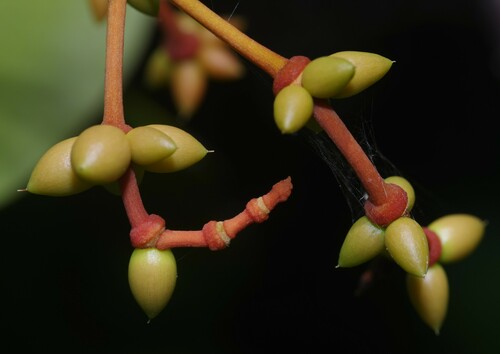
(c) Bart Wursten, some rights reserved (CC BY-NC)
Summary
Source: WikipediaGnetum africanum (eru or African jointfir) is a species of vine native to tropical Africa. Though bearing leaves, the genus Gnetum are gymnosperms, related to pine and other conifers. Gnetum africanum has numerous common names and is grown in various countries across Africa, including: Cameroon (Eru, okok, m'fumbua, or fumbua), Angola (KoKo), Nigeria (ukazi, "okazi", or afang), Gabon (Nkumu), Central African Republic (KoKo), Congo (KoKo), and the Democratic Republic of Congo (m'fumbua or fumbua). Gnetum africanum has also been referred to as a form of 'wild spinach' in English.
Description
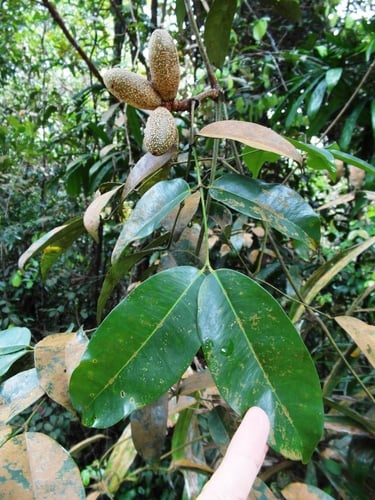
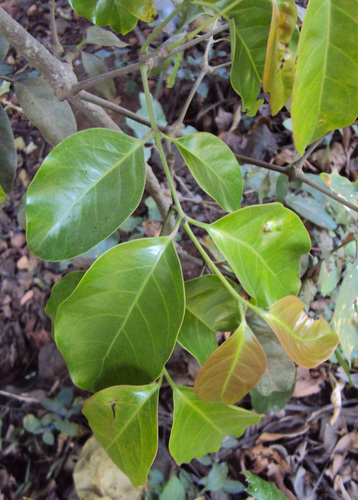
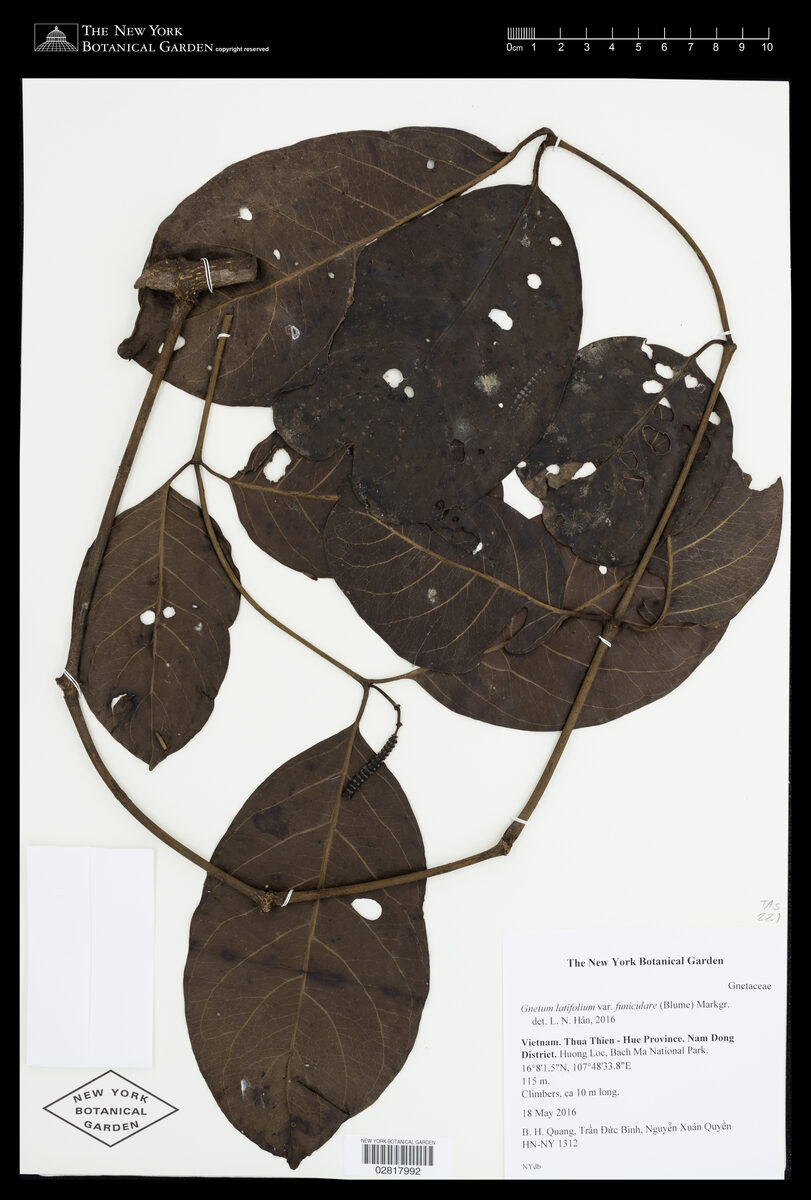
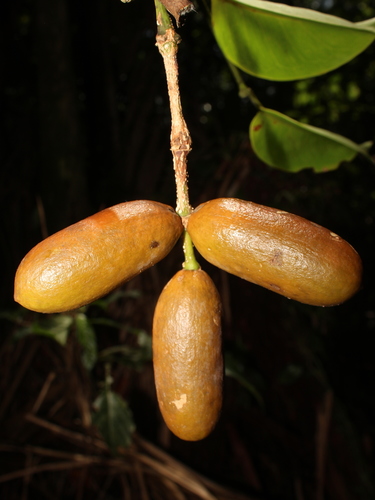
A woody climber. It can be 10 m long. The branches are thickened at the nodes. It is an evergreen plant. Plants are separately male and female. The leaf stalks are 1 cm long. The leaves are narrowly oval and opposite. They are simple. They taper to a short tip. They are 10-13 cm long by 4-5 cm wide. The male flowering shoot has male flowers close together and evenly spaced. The female flowering shoots have 2-3 flowers at each node and are 2 mm long. The seeds are fleshing and 10-15 mm long by 4-8 mm wide They have a fleshy envelope around them that turned orange or red when ripe.
Edible Uses
The leaves can be eaten raw or cooked and are valued throughout the parts of Africa where the plant grows. They are most commonly eaten finely shredded in soups or made into condiments, though they can also be consumed raw. Because the leaves are rather tough, they are often mixed with waterleaf (Talinum triangulare) to soften them. Shredded leaves can be dried and preserved for later use. Leafy stems remain fresh for at least a week after harvesting. The leaves have a high nutritional value, providing protein, essential amino acids, and mineral elements. Their dry matter content is notably higher than that of other dark or medium green leaf vegetables, giving them a firm texture that leads some consumers to treat them as a meat substitute. The leaves of this species are somewhat thinner and paler than those of the related Gnetum buchholzianum. The fruit pulp and seeds are also edible; the mature seed is 15–15mm long and enclosed in a somewhat drupaceous, orange-tinted envelope. The tubers are sometimes eaten, particularly in times of scarcity. Climbing members of this genus in Asia yield a potable sap, and this species may be worth investigating in that regard as well.
Traditional Uses
The young leaves are eaten raw or cooked and are also used in sauces. The leaves can be tough and can be softened with leaves such as Talinum. The leaves can be shredded and dried and stored for later use. The seeds and fruit are eaten. They can be stored for 8 months or longer.
Medicinal Uses
The leaf is used to treat enlarged spleen, sore throat, piles, and high blood pressure, and acts as a cathartic. It is eaten to counter nausea and is considered antidotal against arrow-poison derived from Parquetina nigrescens. The leaves are chewed to reduce the effects of drunkenness and taken as an enema against constipation. Externally, chopped leaf is applied as a dressing on warts and boils to hasten maturation. The stem is cut into small pieces and infused to make a tisane taken to ease childbirth and reduce pain.
Known Hazards
Subsistence agriculturalists in Cameroon may be able to improve their nutritional, environmental, social, and economic situations by growing this vine. Nutrition can be improved by using the plant for medicinal purposes as well as through edible consumption. Primarily, Gnetum africanum leaves are used as a vegetable for soups and stews, commonly called eru soup, okazi soup or afang soup. The leaves of the vine are sold in markets throughout the year and may be used in soups and stews or eaten raw. The leaves may further be used as a remedy for nausea, sore throats, or as a dressing for warts. The stem of the plant may also be eaten for medicinal purposes, including the reduction of pain during childbirth. Furthermore, Gnetum africanum produces a root tuber that may be used as a source of famine food, and is similar to that of a yam. Finally, the seeds of the vine may also be eaten cooked. Gnetum africanum is a good source of protein and is strong in essential and non-essential amino acids. It is high in glutamic acid, leucine, and aspartic acid, with low levels of histidine, and cysteine, while there appears to be trace amounts of tryptophan in the plant. The content of amino acids found in Gnetum africanum is similar to recommended levels by the FAO. It has also been found that the levels of iodine are also high in the vine. Fibre levels average approximately 33.4 g/100 g of dried Gnetum africanum leaves, while recommended daily intake of fibre is 30 g. Gnetum africanum has been noted as an anti-inflammatory, anticarcinogenic and antioxidant.
Distribution
It is a tropical plant. It grows in the rain-forest in West Africa. It can be found from sea level to 1,200 m above sea level. It grows in areas with a rainfall of about 3,000 mm. It needs shade to grow well.
Where It Grows
Africa, Angola, Cameroon, Central Africa, Central African Republic, CAR, Congo DR, Congo R, East Africa, Equatorial-Guinea, Gabon, Mozambique, Nigeria, West Africa,
Cultivation
It grows best in areas where the annual rainfall is around 3,000 mm. Succeeds in dappled shade in the woodland. Plants growing in full sun produce thinner leaves which are not so well liked by consumers. The plant tolerates a range of habitats and environmental conditions. Cultivated plants need to be given some support, such as a tree, to grow into. The plant forms two distinct types of stem. Growing up from the base, the stems produce only small, scale-like leaves, and they grow rapidly towards the light. Higher up, side shoots are formed with fully-developed leaves. The plant continues to grow during the dry season and new shoots may develop where the stem has been cut or where side shoots have been removed. New shoots are also formed from rhizomes that spread along the forest floor. Current methods of harvest from wild stands are very destructive. Controlled harvesting, in which only side shoots or parts of stems are collected, allows new shoots to develop where a stem has been cut or where side shoots have been removed. Preliminary observations indicate that 3 - 4 harvests per year are possible, still allowing for substantial regrowth. More frequent harvesting will result in thin leaves that are considered inferior. The first harvest may take place 6 - 9 months after planting. The total lifespan of the plant is estimated at over 10 years. Preliminary observation indicates that in cultivation during the first harvest year the fresh leaf yield may reach 20 t/ha. This may double in subsequent years. Under wild conditions, the plant grows and forms underground tubers or roots that store plant food reserves. These can remain alive for many years when the vegetation and the plant growth above ground are cleared and the soil surface is laid bare. A dioecious species, both male and female forms need to be grown if fruit and seed are required. Female plants are often have stronger stems, and are more vigorous and productive than male plants.
Propagation
Seed is difficult to germinate under nursery conditions, though plants self-sow successfully in the wild. Seeds are thought to require pre-treatment — such as passing through the digestive tract of a bird, fruit bat, squirrel, or other animal — before they will germinate. Seed is normally found only in the tree canopy, making collection difficult and cultivation rare. Vegetative propagation using leafy stem cuttings has recently been developed; trimming the leaf blades of cuttings by half is recommended. Nursery beds made of well-decomposed sawdust or fine river sand, kept under shade, are suitable for propagation. Ectomycorrhizae assist nutrient absorption, with Scleroderma sinnamarense being the most commonly reported species. After about 6 weeks, rooted cuttings are transferred to polythene sleeves, bamboo pots, or other containers for a further 2–3 months. The soil mixture for containers consists of 25% sand with some compost, supplemented with forest soil. Field planting takes place at the start of the rainy season, preferably next to a young tree or shrub.
Other Uses
The stem is supple and strong, used as rope, fashioned into traps and nooses for catching game, and made into straps for porterage.
Production
It is possible to harvest leaves 2-3 times per year. Vines should preferably not be damaged in the process. Plants probably can last 10 years.
Other Information
It is an important and commonly eaten vegetable in Africa. It is sold in markets. Up to 4,000 tons are exported to Nigeria and dried to overseas markets. It is an endangered plant due to excessive harvesting from the wild. Dried leaves are available in stores in Australia.
Notes
There are about 28-35 Gnetum species. It is a significant source of protein (16.5% dry wt.) carbohydrates (70.6% dry wt.), essential amino acids (isoleucine, leucine, lysine, methionine, phenylalanine, threonine, tryptophan and valine), non essential amino acids (aspartic acid, serine, glutamic acid, proline,glycine, alanine, cysteine, tyrosine histidine and arginine) and mineral constituents i.e. macro and micro-elements (7.0% dry wt.).
Nutrition
| Part | Moisture | kJ | kcal | Protein | Vit A | Vit C | Iron | Zinc |
|---|---|---|---|---|---|---|---|---|
| Seeds | 31.6 | — | 449 | 17.5 | — | — | 1.5 | 1.1 |
| Leaves | 37.4 | — | — | 10.2 | — | — | 5.3 | 0.5 |
Synonyms
Also Known As
Afang, Ajakobale, Anoh, Coco, Eru, Eruru, Fumbwa, Koko, Mfumbwa, Nkoko, Nkoumou, Nkumu, Okasi, Okazi, Okok
References (40)
- Akoroda M.O., 1990, Ethnobotany of Telfairia occidentalis (Cucurbitaceae) among Igbos of Nigeria. Economic Botany. 44(1) pp 29-39
- Ali F., Assanta M.A. and Robert C. (2011), Gnetum africanum: A Wild Food Plant from the African Forest with many Nutritional and Medicinal Purposes, Journal of Medicinal Food 14, no.11, pp. 1290-1291.
- Billong Fils, P. E., et al, 2020, Ethnobotanical survey of wild edible plants used by Baka people in southeastern Cameroon. Journal or Ethnobiology and Ethnomedicine. 16:64 p 8
- Burkill, H. M., 1985, The useful plants of west tropical Africa, Vol. 2. Kew.
- Busson, 1965,
Show all 40 references Hide references
- Gallois, S., et al, 2020, Methodological priorities in assessing wild edible plant knowledge and use – a case study among the Baka in Cameroon.
- Grubben, G. J. H. and Denton, O. A. (eds), 2004, Plant Resources of Tropical Africa 2. Vegetables. PROTA, Wageningen, Netherlands. p 301
- Hamzah, R. U. et al, Antioxidant Properties of Selected African Vegetables, Fruits and Mushrooms: A Review. In book Mycotoxin and Food Safety in Developing Countries.
- Harris, D. J., 2002, The vascular plants of the Dzanga-Sangha Reserve, Central African Republic. National Botanic Garden of Belgium, 2002. – 274 pages p 34
- Hoare A. L., 2007, The Use of Non-timber Forest Products in the Congo Basin. Constraints and Opportunities. Rainforest Foundation. p 21
- Iponga, D. M., et al, 2016, The contribution of NTFP-gathering to rural people’s livelihoods around two timber concessions in Gabon. Agroforest Syst. Springer
- Isong, E. U., et al, 1999, Nutiritional and phytogeriatological studies of three varieties of Gnetum africanum ('afang'). Food Chemistry 64: 489-493
- Jardin, C., 1970, List of Foods Used In Africa, FAO Nutrition Information Document Series No 2.p 43, 79
- Koni, J. M. & Bostein, K., 2008, Noms et usages des plantes utiles chez les Nsong, DR Congo. University of Gothenburg. Department of Oriental and African Languages. p 40
- Latham, P., 2004, Useful Plants of Bas-Congo province. Salvation Army & DFID p 141
- Lautenschläger, T., et al, 2018, First large-scale ethnobotanical survey in the province of Uíge, northern Angola. Journal of Ethnobiology and Ethnomedicine (2018) 14:51
- Leakey, R. R. B., & Asaah, E. K., 2013, Underutilised Species as the Backbone of Multifunctional Agriculture – the Next Wave of Crop Domestication. Proc. 2nd Int. Symp. on Underutilized Plants Species “Crops for the Future – Beyond Food Security”. Acta Hort. 979, ISHS p 293
- Martin, F.W. & Ruberte, R.M., 1979, Edible Leaves of the Tropics. Antillian College Press, Mayaguez, Puerto Rico. p 193
- Mawunu, M., et al, 2020, First Survey of the Edible Non-Wood Forest Products Sold in Uige Province, Northern Angola. European Journal of Agriculture and Food Sciences. Vol. 2, No. 6
- Mawunu, M., et al, 2022, Ethnobotanical uses of wild edible plants of Mucuba municipality, Angola. Natural Resources for Human Health. 2022, 0:1-10
- Mercy, N. A., et al, 2016, Survey of Wild Vegetables in the Lebialem Highlands of South Western Cameroon. Journal of Plant Sciences 4(6): 172-184
- Moutsambote, J., 1996, Vegetation forestiere et plantes alimentaires de la region de la Sangha. Chp. 11 of Bien Manger et Bien Vivre. ORSTOM p 119
- Nkeoua, G. & Boundzanga, G. C., 1999, Donnees sur les produits forestieres non ligneux en Republique du Congo. FAO. p 28
- Okafor, J. C., Conservation and use of traditional vegetables from woody forest species in southeastern Nigeria. FAO
- Okerulu, I. O. and Onyema, C. T. (2015), Comparative Assessment of Phytochemicals, Proximate and Elemental Composition of Gnetum africanum (Okazi) Leaves, American Journal of Analytical Chemistry, 6, pp. 604-606.
- Okigbo, B.N., Vegetables in Tropical Africa, in Opena, R.T. & Kyomo, M.L., 1990, Vegetable Research and development in SADCC countries. Asian Vegetable Research and development Centre. Taiwan. p 38
- Onuminya, T. O., et al, 2017, Comparative proximate and Phytochemical Analysis of leafy vegetables in Lagos State. Nig. J. Pure and Applied Sci. Vol. 30 Issue 3: p 3097f
- Peters, C. R., O'Brien, E. M., and Drummond, R.B., 1992, Edible Wild plants of Sub-saharan Africa. Kew. p 7
- Sneyd, L. Q., 2013. Wild Food, Prices, Diets and Development: Sustainability and Food Security in Urban Cameroon. Sustainability 2013, 5, 4728-4759
- Sunderland, T. C. H., et al, 2002, Distribution, Utilisation and Sustainability of the Non-timber forest products of the Takamanda Forest Reserve, Cameroon. PROFA
- Terra, G.J.A., 1973, Tropical Vegetables. Communication 54e Royal Tropical Institute, Amsterdam, p 49
- Termote, C., et al, 2011, Eating from the wild: Turumbu, Mbole and Bali traditional knowledge of non-cultivated edible plants, District Tshopo, DRCongo, Gen Resourc Crop Evol. 58:585-618
- Termote, C., et al, 2012, Wild Edible Plant Markets in Kisangani, Democratic Republic of Congo. Human Ecology 40:269-285
- Trans. Linn. Soc. London 27:73. 1869
- Udo, E. S., et al, 2009, Life-form and Density of Valuable Non-timber Plants in Ukpom Community Forest, Akwa Ibom State, Nigeria. African Research Review 3(3) p 8
- USDA, ARS, National Genetic Resources Program. Germplasm Resources Information Network - (GRIN). [Online Database] National Germplasm Resources Laboratory, Beltsville, Maryland. Available: www.ars-grin.gov/cgi-bin/npgs/html/econ.pl (10 April 2000)
- van Wyk, B., 2005, Food Plants of the World. An illustrated guide. Timber press. p 203
- Wiersema, J. H. & Leon, B., 2013, World Economic Plants. A Standard Reference CRC Press. 2nd Ed. p 328
- World Checklist of Useful Plant Species 2020. Royal Botanic Gardens, Kew
- www.worldagroforestrycentre.org/sea/products/afdbases/af/asp/SpeciesInfo.asp?SpID=1758