Artocarpus tonkinensis
A. Chev. ex Gagnepain
Chay bac bo, Yan zhi, Wo pie
iNaturalist· cc-by-nc
(c) watermargin, some rights reserved (CC BY-NC)
Description
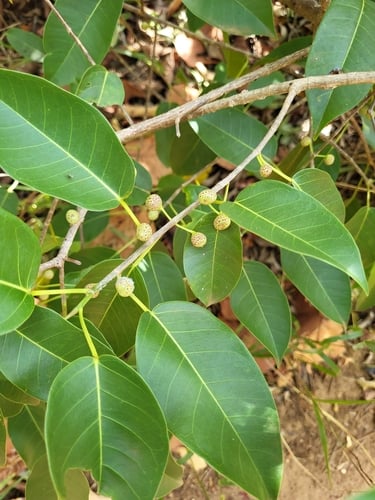
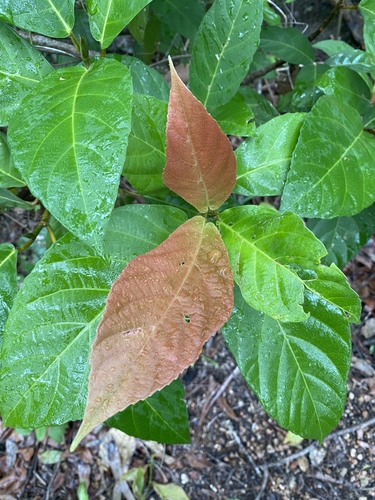
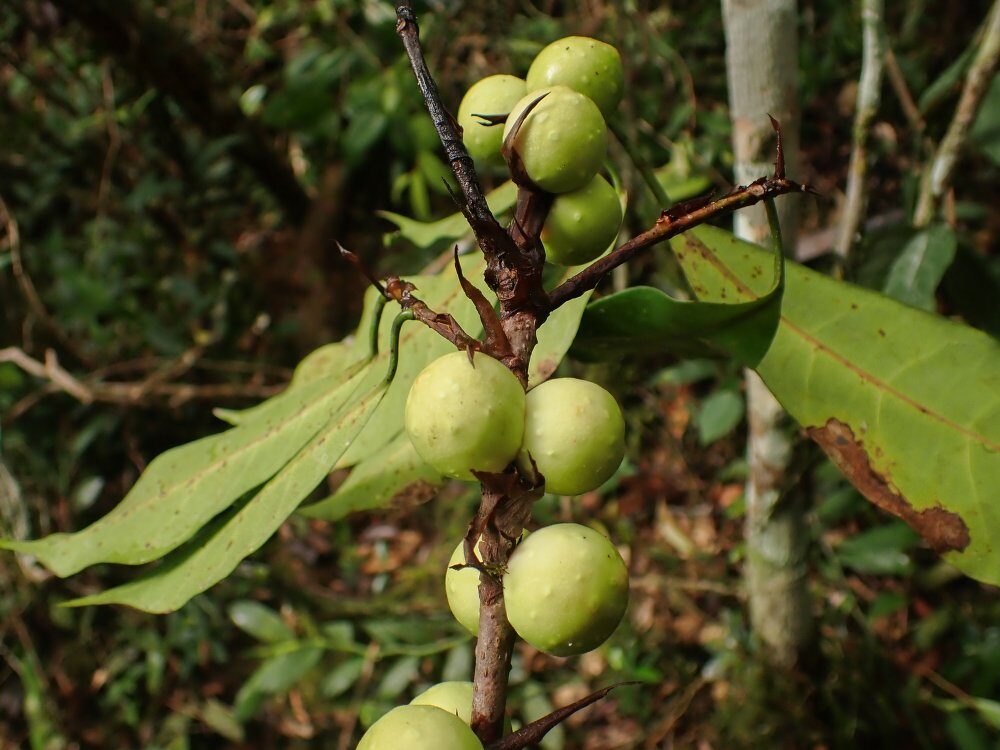
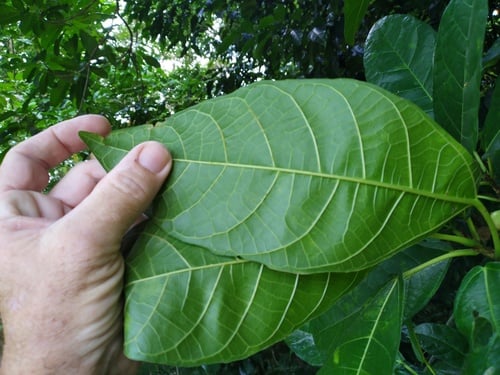
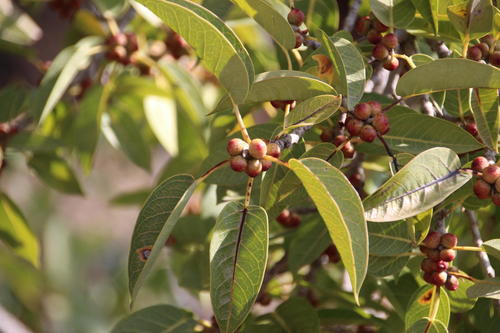
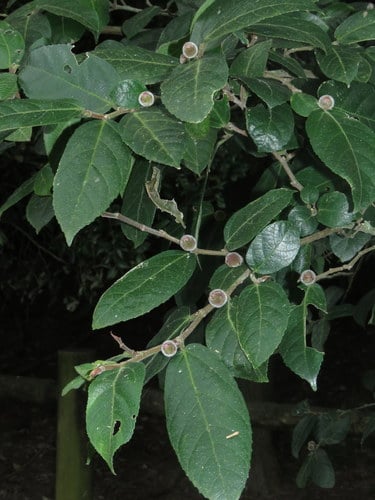
A medium sized tree. It grows 20-25 m high. The trunk is 30 cm across. The bark is dark brown and coarse. The young branches are pale reddish brown and with curly bent hairs. The leaf stalk is 4-10 mm long. The leaf blade is narrowly oval and 8-20 cm long by 4-10 cm wide. It is leathery. They are hairy underneath. The male flower is round and 1-1.5 cm long by 0.8-1.5 cm wide. The female flowers are round and the bracts shield shaped. The fruit are yellow when mature. They are 6.5 cm across. The fruit stalk is 3-4 cm long.
Edible Uses
Several species in the genus bear edible fruit and are commonly cultivated: Breadfruit (Artocarpus altilis), Cempedak (Artocarpus integer), Jackfruit (Artocarpus heterophyllus), Kwai Muk (Artocarpus parvus), Lakoocha (Artocarpus lakoocha), Pudau (Artocarpus kemando), Anjily (a.k.a. Jungle Jack) (Artocarpus hirsutus), Chaplaish (Artocarpus chama), and Marang (Artocarpus odoratissimus). Breadfruit and jackfruit are cultivated widely in the tropical Southeast Asia. Other species are cultivated locally for their timber, fruit or edible seeds. Anjily, A. hirsutus, is grown for fruit and timber in the Western Ghats.
Traditional Uses
The ripe fruit is eaten. The sap from the stems is used as chewing gum.
This uses section is brief — help expand it
Distribution
A tropical plant. It needs light and humidity. It usually grows below 700 m altitude. It grows on sunny mountain slopes at low elevations in S China.
Where It Grows
Asia, Cambodia, China, Indochina, Laos, SE Asia, Vietnam,
Cultivation
In general, species in this genus prefer a deep, well-drained soil; young plants need some shade, but need increasing light levels as they mature.
Other Uses
The wood is very hard.
Notes
There are about 50 Artocarpus species. They are in the tropics and subtropics of Asia and the Pacific.
Also Known As
Ci gan gan nu
References (11)
- Bircher, A. G. & Bircher, W. H., 2000, Encyclopedia of Fruit Trees and Edible Flowering Plants in Egypt and the Subtropics. AUC Press. p 43
- Bull. Soc. Bot. France 73:90. 1926
- Ferns, Useful Tropical Plants
- Flora of China. Vol. 5, p 34 and Flora of China. www.eFloras.org
- Fu, Yongneng, et al, 2003, Relocating Plants from Swidden Fallows to Gardens in Southwestern China. Economic Botany, 57(3): 389-402
Show all 11 references Hide references
- Luo, B., et al, 2019, Wild edible plants collected by Hani from terraced rice paddy agroecosystem in Honghe Prefecture, Yunnan, China. Journal of Ethnobiology and Ethnomedicine 15:56
- USDA, ARS, National Genetic Resources Program. Germplasm Resources Information Network - (GRIN). [Online Database] National Germplasm Resources Laboratory, Beltsville, Maryland. Available: www.ars-grin.gov/cgi-bin/npgs/html/econ.pl (10 April 2000)
- Van Sam, H. et al, 2008, Uses and Conservation of Plant Species in a National Park. A case study of Ben En, Vietnam. Economic Botany 62:574-593
- Wiersema, J. H. & Leon, B., 2013, World Economic Plants. A Standard Reference CRC Press. 2nd Ed. p 74
- World Checklist of Useful Plant Species 2020. Royal Botanic Gardens, Kew
- www.eFloras.org Flora of China