Gaylussacia frondosa
(L.) Torr. & A. Gray
Dangleberry, Tangleberry, Blue tengle, Dwarf huckberry
iNaturalist· cc-by-nc
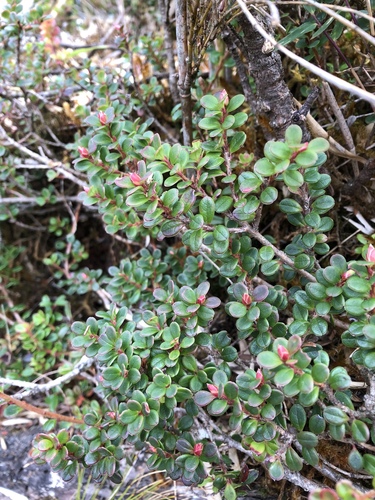
(c) Sharleen, some rights reserved (CC BY-NC), uploaded by Sharleen
iNaturalist· cc-by
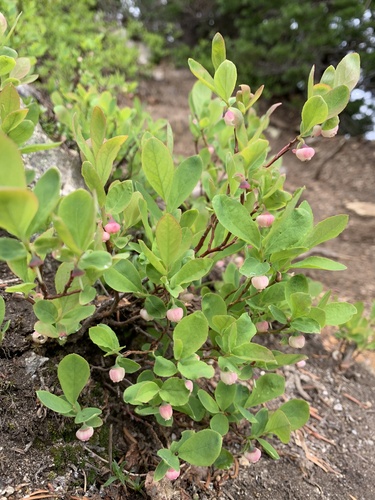
(c) Sandy Wolkenberg, some rights reserved (CC BY)
iNaturalist· cc-by
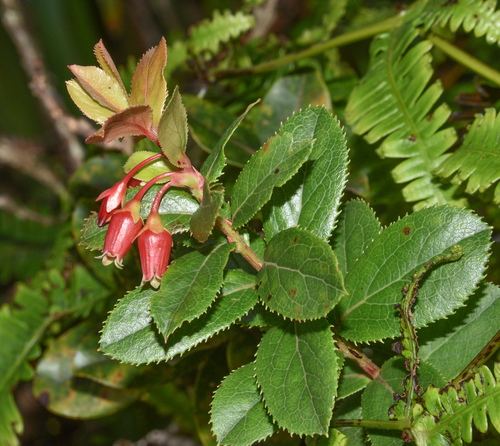
(c) Sandy Wolkenberg, some rights reserved (CC BY)
Summary
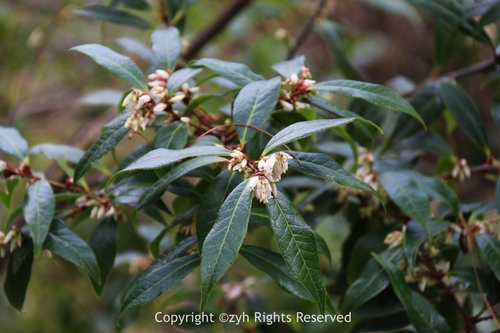
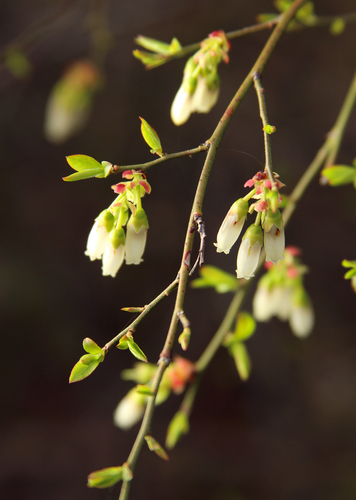
Source: WikipediaGaylussacia frondosa is a species of flowering plant in the heath family known by the common names dangleberry and blue huckleberry. It is native to the eastern United States, where it occurs from New Hampshire to South Carolina. This shrub grows up to two meters (80 inches) tall. The plant spreads via rhizome, sprouting up new stems to form colonies. The leaves are up to 6 centimeters (2.4 inches) long by 3 cm (1.2 inches) wide. They are hairy and glandular. The inflorescence contains 1 to 4 flowers that hang on pedicels up to 2 centimeters (0.8 inch) long. The flower is bell-shaped and greenish white. The fruit is a juicy, sweet-tasting drupe which is usually blue but may be black or white. This plant grows on the Atlantic coastal plain. It grows in wooded areas and next to bogs and swamps. It is common in the pine barrens of New Jersey. It grows on acidic soils low in nutrients. It grows with other related plants such as highbush blueberry (Vaccinium corymbosum), hillside blueberry (V. pallidum), Lyonia spp., sheep-laurel (Kalmia angustifolia), wintergreen (Gaultheria procumbens), dwarf huckleberry (Gaylussacia dumosa), and black huckleberry (G. baccata). Many animals eat the berries and disperse the seeds.
Description
A small shrub. It grows 1-2 m tall. The stems are long and arching. The flowers are small and pinkish-green. The fruit are large, bluish and rather acid.
Edible Uses
The fruit can be eaten raw or cooked — sweet and juicy, it is good to eat. The fruit is about 8mm in diameter.
Traditional Uses
The fruit can be eaten raw. They are also used in puddings, fruit salads and jellies.
This uses section is brief — help expand it
Medicinal Uses
None known.
Distribution
It is a temperate plant.
Where It Grows
North America*, USA,
Propagation
Seed is best sown in autumn in a cold frame. Stored seed requires 1 month of warm stratification followed by 2 months cold. Once large enough to handle, prick seedlings out into individual pots of lime-free compost and grow on in light shade in a greenhouse or cold frame for at least their first winter. Plant out into permanent positions in late spring or early summer when at least 15cm tall. Cuttings of half-ripe wood can be taken in July/August in a frame. Layering and division in spring are also suitable methods.
Other Uses
None known.
Notes
There are about 42 Gaylussacia species in tropical America.
Synonyms
References (12)
- Elias, T.S. & Dykeman P.A., 1990, Edible Wild Plants. A North American Field guide. Sterling, New York p 167
- Facciola, S., 1998, Cornucopia 2: a Source Book of Edible Plants. Kampong Publications, p 96
- Glowinski, L., 1999, The Complete Book of Fruit Growing in Australia. Lothian. p 166
- Hedrick, U.P., 1919, (Ed.), Sturtevant's edible plants of the world. p 326
- John, L., & Stevenson, V., 1979, The Complete Book of Fruit. Angus & Robertson p 286
Show all 12 references Hide references
- Kermath, B. M., et al, 2014, Food Plants in the Americas: A survey of the domesticated, cultivated and wild plants used for Human food in North, Central and South America and the Caribbean. On line draft. p 386
- Lyle, S., 2006, Discovering fruit and nuts. Land Links. p 222
- Plants for a Future database, The Field, Penpol, Lostwithiel, Cornwall, PL22 0NG, UK. http://www.scs.leeds.ac.uk/pfaf/
- J. Torrey, Fl. New York 1:449. 1843
- USDA, ARS, National Genetic Resources Program. Germplasm Resources Information Network - (GRIN). [Online Database] National Germplasm Resources Laboratory, Beltsville, Maryland. Available: www.ars-grin.gov/cgi-bin/npgs/html/econ.pl (10 April 2000)
- Wiersema, J. H. & Leon, B., 2013, World Economic Plants. A Standard Reference CRC Press. 2nd Ed. p 319
- World Checklist of Useful Plant Species 2020. Royal Botanic Gardens, Kew