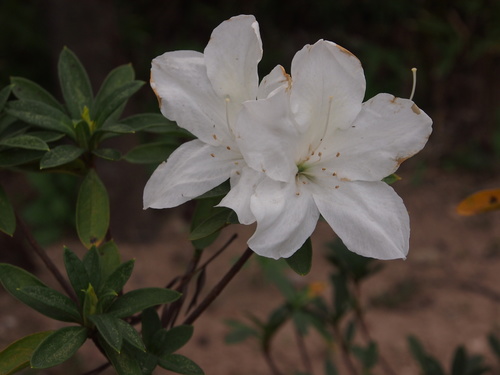
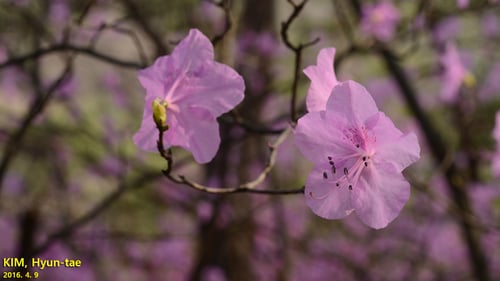
Styphelia triflora
Andrews
Pink Fivecorners
iNaturalist· cc-by
(c) John Tann, some rights reserved (CC BY)
iNaturalist· cc-by-nc-nd
(c) Matthew Stevens, some rights reserved (CC BY-NC-ND)
iNaturalist· cc-by-nc
(c) Jason van Weenen, some rights reserved (CC BY-NC)
Summary
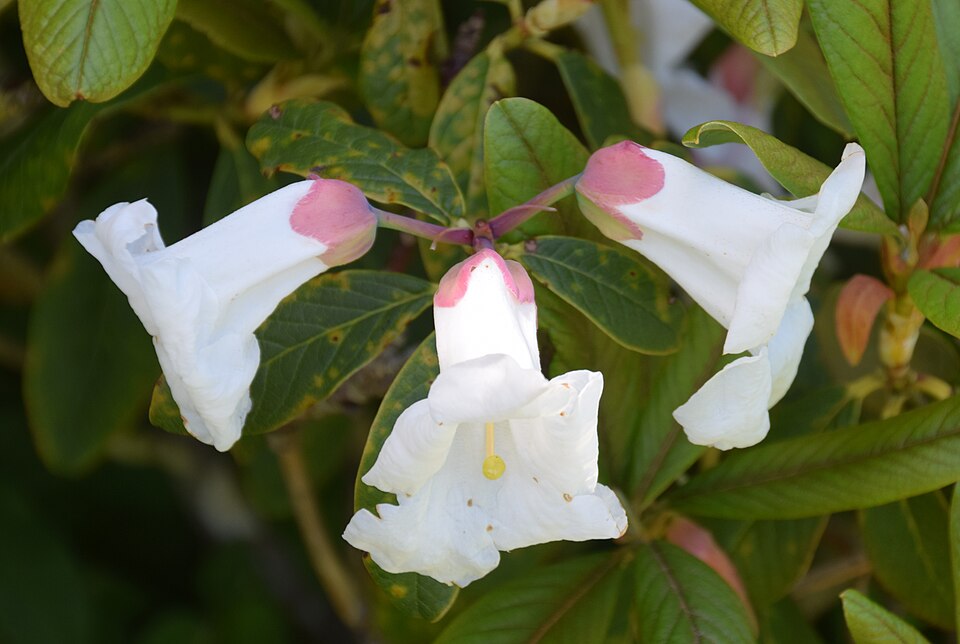
Source: WikipediaStyphelia triflora, commonly known as pink five-corners, is a flowering plant in the heath family Ericaceae. It is an erect, spreading shrub with broad leaves with a spiky tip, and usually pink tubular flowers with the petals rolled back revealing the fluffy insides. It is found in New South Wales and Queensland growing on loam or sandy soils.
Description
A small bushy shrub. It can grow up to 2 m tall. The leaves are small and overlap. The flowers are pink and tube shaped. The fruit are green and 1 cm across. The fruit have sweetish flesh around a large seed.
Edible Uses
The fruit is edible raw or cooked, with a sweetish flesh, though the seed is large relative to the fruit. The berries are approximately 8–10mm long.
Traditional Uses
The fruit are eaten.
This uses section is brief — help expand it
Medicinal Uses
None known.
Distribution
It is a subtropical plant.
Where It Grows
Australia*,
Cultivation
Requires a peaty sandy soil and very careful watering. Succeeds in poor soils. Plants tolerate temperatures down to about -7°c in Australian gardens, though this cannot be translated directly to British gardens because of our cooler summers and longer colder and wetter winters. Plants are only likely to succeed outdoors in the mildest parts of the country.
Propagation
Seed is probably best sown as soon as ripe in a greenhouse, as it can be very slow to germinate. Prick out seedlings into individual pots as soon as they are large enough to handle and grow on in the greenhouse for at least the first winter before planting out in early summer. Cuttings can be taken, though sufficient material is often hard to find.
Other Uses
None known.
Also Known As
Moocrum, Mukrum
References (10)
- Bodkin, F., 1991, Encyclopedia Botanica. Cornstalk publishing, p 957
- Brickell, C. (Ed.), 1999, The Royal Horticultural Society A-Z Encyclopedia of Garden Plants. Convent Garden Books. p 987
- Cherikoff V. & Isaacs, J., The Bush Food Handbook. How to gather, grow, process and cook Australian Wild Foods. Ti Tree Press, Australia p 196
- Cribb, A.B. & J.W., 1976, Wild Food in Australia, Fontana. p 60
- Cronin, L., 1989, The Concise Australian Flora. Reed. p 43
Show all 10 references Hide references
- Facciola, S., 1998, Cornucopia 2: a Source Book of Edible Plants. Kampong Publications, p 94
- Low, T., 1991, Wild Food Plants of Australia. Australian Nature FieldGuide, Angus & Robertson. p 129
- Low, T., 1992, Bush Tucker. Australia’s Wild Food Harvest. Angus & Robertson. p 43
- McKerney, M. & White, H., 2011, Bush Tucker, Boomerangs & Bandages. Border River-Gwyder Catchment Management Authority p 121
- Uphof,