Gaultheria procumbens
L.
Wintergreen, Checkerberry, Teaberry
iNaturalist· cc-by-nc-sa
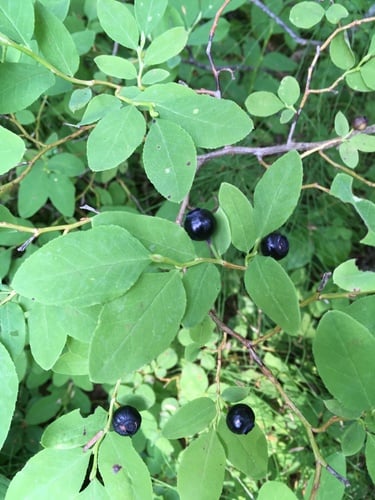
(c) Leo Papandreou, some rights reserved (CC BY-NC-SA)
iNaturalist· cc-by-nc
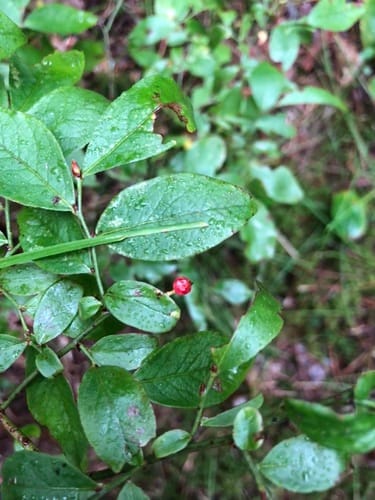
(c) jonathonalsop, some rights reserved (CC BY-NC)
iNaturalist· cc-by-nc
(c) jonathonalsop, some rights reserved (CC BY-NC)
Summary
Source: WikipediaGaultheria procumbens, also called the eastern teaberry, the checkerberry, the boxberry, or the American wintergreen, is a species of Gaultheria native to northeastern North America from Newfoundland west to southeastern Manitoba, and south to Alabama. It is a member of the Ericaceae (heath family).
Description
A small shrub. It grows 15 cm high and spreads 90 cm wide. The leaves are glossy green and 5 cm long. They turn red in winter. The flowers are white or pale pink and in long clusters. The fruit is 12 mm across and red. The fruit has a fragrance when crushed.
Edible Uses
The fruit can be eaten raw or cooked and grows up to 15mm in diameter. It has a strong, spicy taste and is best after a frost; fruit will hang on the plant until spring if not taken by birds. The fruits can also be used in pies or made into jams. Very young leaves can be eaten raw as a pleasant wayside nibble, though they are dry and powdery. A very agreeable tea is made from the fresh leaves, and a stronger version can be brewed by first fermenting the bright red leaves. Oil of wintergreen, distilled from this plant, is used to flavour beer, sweets, and chewing gum.
Traditional Uses
The leaves are used to make tea. The young leaves and berries can be added to salads. They are spicy. The berries are eaten in pies. The oil is extracted from the leaves and used to flavour foods. The fruit are cooked and used for pies and jam. CAUTION: The medicinal methyl salicylate common to wintergreen can be poisonous in large quantities
Medicinal Uses
Checkerberry leaves were widely used by native North American Indians to treat aches and pains and to aid breathing while hunting or carrying heavy loads. An essential oil extracted from the leaves — known as oil of wintergreen — contains methyl salicylate, which is closely related to aspirin and acts as an effective anti-inflammatory. This species was once a major source of methyl salicylate, though it is now mainly synthesised. The leaves and oil are analgesic, anti-inflammatory, aromatic, astringent, carminative, diuretic, emmenagogue, stimulant, and tonic. An infusion of the leaves is used to relieve flatulence and colic. The plant, particularly as the essential oil, is most useful applied externally for acute rheumatism, sciatica, myalgia, sprains, neuralgia, and catarrh. The oil is sometimes used to treat cellulitis, a bacterial infection causing skin inflammation. Some caution is advised, especially with internal use, as the essential oil is toxic in excess and can cause liver and kidney damage. It should not be used by patients who are hypersensitive to salicylates (aspirin). Leaves can be gathered any time from spring to early autumn and dried for use in infusions or distilled to produce the oil.
Known Hazards
Essential oil is toxic in excess, causing liver and kidney damage. Not suitable for those hypersensitive to salicylates or aspirin.
Distribution
It is a temperate plant. It grows in poor soils and in forest clearings. It suits moist, shady locations. It is very cold hardy. It can tolerate drought once established. It can grow on poor acid soils. It suits hardiness zones 4-9.
Where It Grows
Australia, Bhutan, Britain, Canada, Europe, Himalayas, India, North America*, Turkey, Türkiye, USA,
Cultivation
Plants can be grown from seed. The seed should be washed before planting. Stored seed needs 2-3 months of cold treatment before they will grow. Seeds germinate in 6 weeks at 20°C. Seedlings are planted out after a year. Semi-ripe cuttings can be used. Stems can be pegged down into the soil and take 12 months to form roots.
Propagation
Seed requires cold stratification — pre-chill for 4–10 weeks, then surface sow in lime-free compost in a shady part of the greenhouse and keep the compost moist. Germination is usually good, typically within 1–2 months at 20°C, but seedlings are prone to damping off. Water carefully, ensure good ventilation, and watering with a garlic infusion can also help prevent damping off. Prick out seedlings into individual pots when about 25mm tall and grow on in light shade in the greenhouse for at least their first winter. Plant out in late spring or early summer; seedlings are susceptible to spring frosts and may need protection for their first few years outdoors. Leaves remain very small for the first few years. Take cuttings of half-ripe wood 3–6cm long in July/August in a shaded frame; roots form in late summer or spring with a good success rate. Division can be carried out at almost any time of year but is best done in spring just before new growth begins. Larger clumps can go directly into permanent positions, though smaller clumps are best potted up and grown on in a cold frame until rooting well, then planted out in spring.
Other Uses
An essential oil is obtained from the leaves by steam distillation; the leaves must be steeped in water for 12–24 hours beforehand. The oil is used as a food flavouring, medicinally as the original source of wintergreen liniment for aching muscles, and in perfumery and toothpastes. In large doses it can be toxic. Makes a good ground cover for shady positions, though it requires weeding for the first year or so. It forms a dense, tuft-like carpet, rooting as it spreads, and should be spaced about 45cm apart each way. Acts as a dynamic accumulator, gathering minerals and nutrients from the soil and storing them in a more bioavailable form suitable for use as fertiliser or mulch improver.
Other Information
The fruit are eaten especially by children. The fruit are sold in markets.
Notes
There are about 170 Gaultheria species. It produced methyl salicylate used as a linament.
Synonyms
Also Known As
Alpine wintergreen, Creeping wintergreen, Mountain tea
References (31)
- Ambasta, S.P. (Ed.), 2000, The Useful Plants of India. CSIR India. p 233
- Beckstrom-Sternberg, Stephen M., and James A. Duke. "The Foodplant Database." http://probe.nalusda.gov:8300/cgi-bin/browse/foodplantdb.(ACEDB version 4.0 - data version July 1994)
- Bodkin, F., 1991, Encyclopedia Botanica. Cornstalk publishing, p 488
- Bremness, L., 1994, Herbs. Collins Eyewitness Handbooks. Harper Collins. p 104
- Brickell, C. (Ed.), 1999, The Royal Horticultural Society A-Z Encyclopedia of Garden Plants. Convent Garden Books. p 458
Show all 31 references Hide references
- Brown, D., 2002, The Royal Horticultural Society encyclopedia of Herbs and their uses. DK Books. p 221
- Cundall, P., (ed.), 2004, Gardening Australia: flora: the gardener's bible. ABC Books. p 626
- Duke, J.A., 1992, Handbook of Edible Weeds. CRC Press. p 102
- Elias, T.S. & Dykeman P.A., 1990, Edible Wild Plants. A North American Field guide. Sterling, New York p 150
- Etherington, K., & Imwold, D., (Eds), 2001, Botanica's Trees & Shrubs. The illustrated A-Z of over 8500 trees and shrubs. Random House, Australia. p 344
- Facciola, S., 1998, Cornucopia 2: a Source Book of Edible Plants. Kampong Publications, p 96
- Fisk, J. R. & Hoover, E., 2015, Wild Fruits of Minnesota. A Field Guide. University of Minnesota p 25
- Flowerdew, B., 2000, Complete Fruit Book. Kyle Cathie Ltd., London. p 189
- Glowinski, L., 1999, The Complete Book of Fruit Growing in Australia. Lothian. p 180
- Hedrick, U.P., 1919, (Ed.), Sturtevant's edible plants of the world. p 325
- Jackes, D. A., Edible Forest Gardens
- Kiple, K.F. & Ornelas, K.C., (eds), 2000, The Cambridge World History of Food. CUP p 1883
- Lyle, S., 2006, Discovering fruit and nuts. Land Links. p 220
- MacKinnon, A., et al, 2009, Edible & Medicinal Plants of Canada. Lone Pine. p 118
- Moerman, D. F., 2010, Native American Ethnobotany. Timber Press. p 243
- Plants for a Future database, The Field, Penpol, Lostwithiel, Cornwall, PL22 0NG, UK. http://www.scs.leeds.ac.uk/pfaf/
- Saunders, C.F., 1948, Edible and Useful Wild Plants. Dover. New York. p 102, 147, 165
- Seidemann J., 2005, World Spice Plants. Economic Usage, Botany, Taxonomy. Springer. p 162
- Self, M., 199, Phoenix Seeds catalogue. p 17
- Slocum, P.D. & Robinson, P., 1999, Water Gardening. Water Lilies and Lotuses. Timber Press. p 119
- Sp. pl. 1:395. 1753
- Toupal, R. S. & Hollenback, K., 2009, An Ethnobotany of Indiana Dunes National Lakeshore: Plant Uses of the Ojibwa People. Bureau of Applied Research in Anthropology. University of Arizona
- Uprety, Y., et al, 2016, Traditional use and management of NTFPs in Kangchenjunga Landscape: implications for conservation and livelihoods. Journal of Ethnobiology and Ethnomedicine (2016) 12:19
- Wiersema, J. H. & Leon, B., 2013, World Economic Plants. A Standard Reference CRC Press. 2nd Ed. p 319
- World Checklist of Useful Plant Species 2020. Royal Botanic Gardens, Kew
- www.desert-tropicals.com