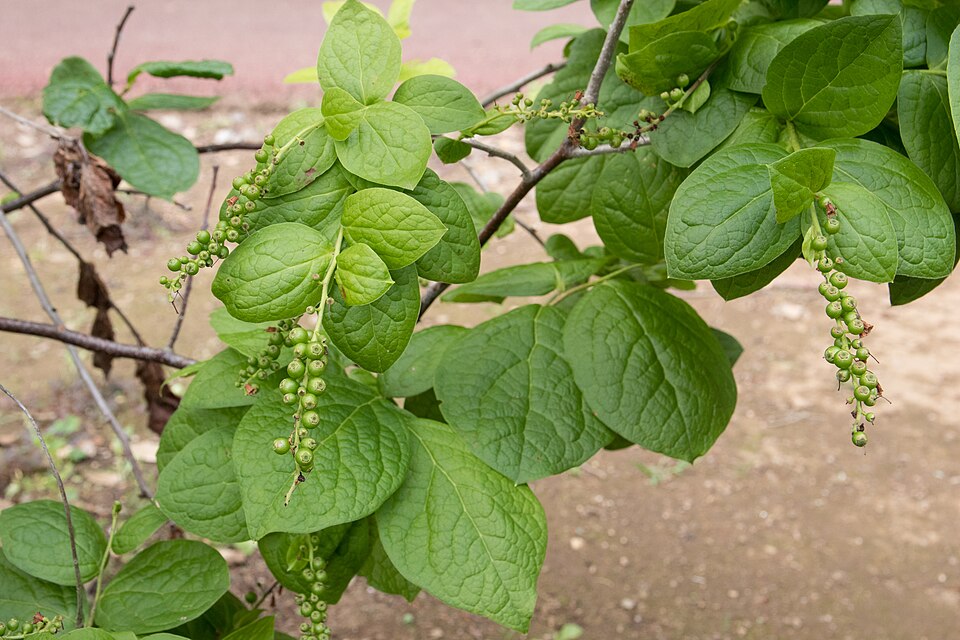
Gaultheria fragrantissima
Wall.
Wintergreen Tea, Fragrant wintergreen
iNaturalist· cc-by-nc
(c) karllammushroomman, some rights reserved (CC BY-NC)
iNaturalist· cc-by-nc
(c) karllammushroomman, some rights reserved (CC BY-NC)
iNaturalist· cc-by-nc
(c) karllammushroomman, some rights reserved (CC BY-NC)
Summary
Source: WikipediaGaultheria fragrantissima is a species of flowering plant native to southern and southeastern Asia. It is commonly known as fragrant wintergreen or dhasingre.
Description
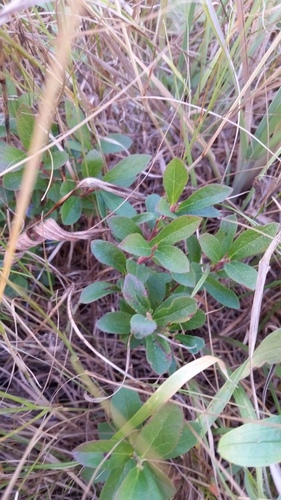
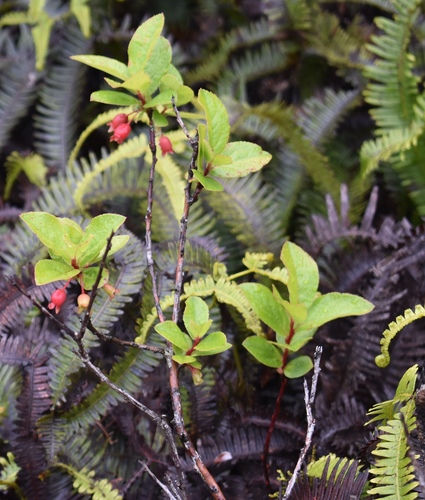
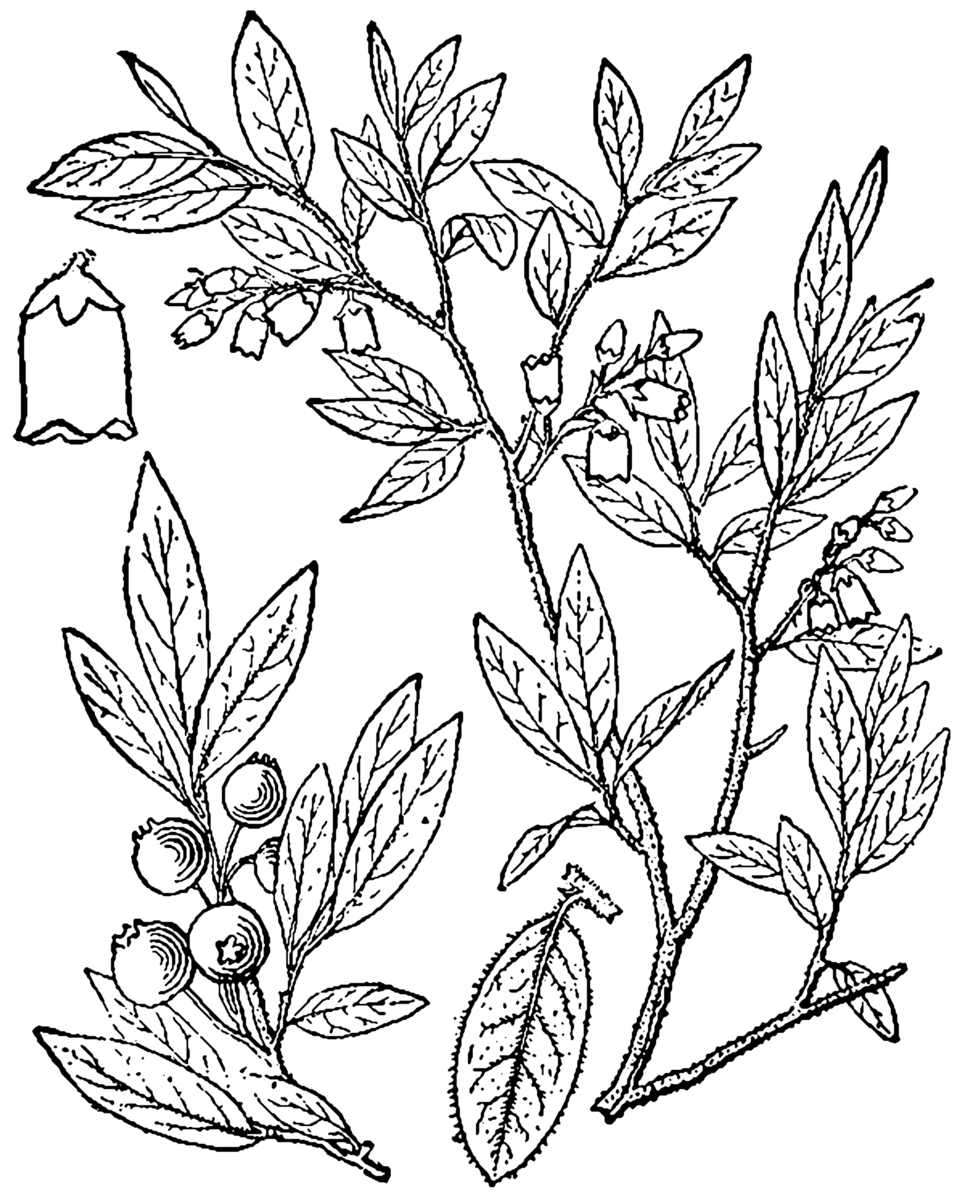
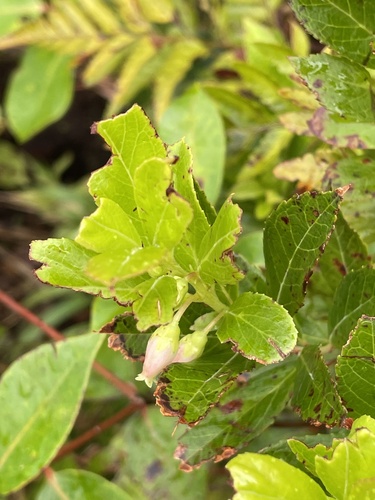
A shrub. It grows to about 3 m tall. The leaves are 3-13.5 cm long and 1.5-5 cm wide. They are sword shaped and taper to the tip. They are leathery and have teeth along the edge. They are bright green but develop a brown underside. They have a smell of wintergreen when crushed. The flowers are bell shaped. They are 6 mm wide. The flowers are whitish. They have a scent. The fruit are round and purplish when ripe.
Edible Uses
The purplish-blue fruit can be eaten raw or cooked and measures about 8mm in diameter. The leaves can be eaten raw and are chewed, apparently to relieve thirst. An essential oil extracted from the leaves is used as a flavouring, and the leaves can also be brewed into a tea.
Traditional Uses
The ripe fruit are eaten raw.
This uses section is brief — help expand it
Medicinal Uses
The essential oil from the leaves is antiseptic, aromatic, carminative, and stimulant. It is used in the treatment of rheumatism, scabies, and neuralgia, and is taken internally to treat hookworm infections. Leaf juice is used to treat coughs, and both the juice and whole leaves serve as an anthelmintic effective against hookworms. Unripe fruits are chewed or made into a juice to treat stomach complaints.
Distribution
A tropical plant. In Nepal they grow between 1200-2600 m altitude. In Northeastern India it grows between 2,000-2,800 m above sea level. The grow on rocky hillsides in forested areas. It suits hardiness zones 9-10.
Where It Grows
Asia, India, Bhutan, China, Himalayas, India, Indochina, Indonesia, Malaysia, Myanmar, Nepal, Northeastern India, SE Asia, Sikkim, Sri Lanka, Vietnam,
Cultivation
Prefers a moist but not boggy humus rich soil in shade or semi-shade. A peat and moisture loving species, it requires a lime-free soil. This species is not very hardy in Britain, it only succeeds outdoors in the milder areas of the country. It grows well in Cornwall. Plants in this genus are notably resistant to honey fungus. The bruised leaves have a powerful camphor-like scent. The flowers are scented like lily of the valley (Convallaria majalis). This species is highly variable in the size and shape of leaves. In general these varieties are the result of habitat differences. If in forest understories or at forest margins, it is a large shrub or small tree with large leaves. If on sunny slopes or among thickets, it is often a small shrub with narrow leaves.
Propagation
Seed requires cold stratification — pre-chill for 4–10 weeks, then surface sow in lime-free compost in a shady part of the greenhouse, keeping the compost moist. Germination usually occurs within 1–2 months at 20°C, but seedlings are prone to damping off. Water carefully, ensure good ventilation, and consider watering with a garlic infusion to reduce damping off. Prick out seedlings into individual pots at about 25mm tall and grow on in light shade in the greenhouse for at least the first winter. Plant out in late spring or early summer. Protect from spring frosts for the first few years outdoors, as seedlings are susceptible. Leaves remain very small for the first few years. Cuttings of half-ripe wood, 3–6cm long, taken July/August in a shaded frame; roots form in late summer or spring, with a good success rate. Divide in spring just before new growth begins — larger clumps can go straight to permanent positions, though smaller clumps are best potted up in a cold frame until rooting well, then planted out in spring. Layering is also possible.
Other Uses
The leaves yield around 1.25% essential oil, which is used as a wintergreen substitute in perfumery, as a hair oil, and medicinally.
Production
In India plants flower December to January and fruit May to October.
Notes
There are about 170 Gaultheria species.
Nutrition
| Part | Moisture | kJ | kcal | Protein | Vit A | Vit C | Iron | Zinc |
|---|---|---|---|---|---|---|---|---|
| Fruit | — | — | — | — | 67.6 | — | — | — |
Synonyms
Also Known As
Akyawsi-bin, Chanchhewaa, Chauthy, Dhasingar, Dhasingre, Gandapuro, Gantien thom, Goenhli, Indian wintergreen, Jathyroid, Jirhap, Kaloma, Kalombar, Khwuno, Machino, Musikane, Qia k dou xi, Shagsinmrep, Shep-Sheng, Sohling-thrait, White heather, Yenna annu
References (23)
- Ambasta, S.P. (Ed.), 2000, The Useful Plants of India. CSIR India. p 233
- Asiat. Res. 13:397. 1820
- Bajracharya, D., 1980, Nutritive Values of Nepalese Edible Wild Fruits. Z. Lebensm. Unters. Forsch. 171: 363-366
- Burkill, I.H., 1966, A Dictionary of the Economic Products of the Malay Peninsula. Ministry of Agriculture and Cooperatives, Kuala Lumpur, Malaysia. Vol 1 (A-H) p 1080
- Chase, P. & Singh, O. P., 2016, Bioresources of Nagaland: A Case of Wild 4 Edible Fruits in Khonoma Village Forest. in J. Purkayastha (ed.), Bioprospecting of Indigenous Bioresources of North-East India. p 50
Show all 23 references Hide references
- Cheng, Z., et al, 2022, Ethnobotanical study on wild edible plants used by Dulong people in northwestern Yunnan, China. Journal of Ethnobiology and Ethnomedicine (2022) 18:3
- Dangol, D. R. et al, 2017, Wild Edible Plants in Nepal. Proceedings of 2nd National Workshop on CUAOGR, 2017.
- Etherington, K., & Imwold, D., (Eds), 2001, Botanica's Trees & Shrubs. The illustrated A-Z of over 8500 trees and shrubs. Random House, Australia. p 343
- Manandhar, N.P., 2002, Plants and People of Nepal. Timber Press. Portland, Oregon. p 242
- Martin, F.W. & Ruberte, R.M., 1979, Edible Leaves of the Tropics. Antillian College Press, Mayaguez, Puerto Rico. p 107
- Nayaham, M. C., et al, 1993, Less Known Edible Fruit - Yielding plants of Nilgiris. Ancient Science of Lif. Vol. X11 Nos. 3 & 4, pp 363-376
- Panda, S., 2015, Diversity of the genus Gaultheria L. (Ericaceae) with special reference to the Eastern Himalayas of India, Nepal and Bhutan. In Hartmann, M. & J. Weipert: Biodiversität & Naturausstattung im Himalaya, Bd. V. p 9
- Pham-Hoang Ho, 1999, An Illustrated Flora of Vietnam. Nha Xuat Ban Tre. p 628
- Plants for a Future database, The Field, Penpol, Lostwithiel, Cornwall, PL22 0NG, UK. http://www.scs.leeds.ac.uk/pfaf/
- Sasi, R. & Rajendran, A., 2012, Diversity of Wild Fruits in Nilgiri Hills of the Southern Western Ghats - Ethnobotanical Aspects. IJABPT, 3(1) p 82-87
- Savita, et al, 2006, Studies on wild edible plants of ethnic people in east Sikkim. Asian J. of Bio Sci. (2006) Vol. 1 No. 2 : 117-125
- Singh, H.B., Arora R.K.,1978, Wild edible Plants of India. Indian Council of Agricultural Research, New Delhi. p 61
- Singh, V. B., et al, (Ed.) Horticulture for Sustainable Income and Environmental Protection. Vol. 1 p 217
- Sundriyal, M., et al, 1998, Wild edibles and other useful plants from the Sikkim Himalaya, India. Oecologia Montana 7:43-54
- Sundriyal, M., et al, 2004, Dietary Use of Wild Plant Resources in the Sikkim Himalaya, India. Economic Botany 58(4) pp 626-638
- Tsering, J., et al, 2017, Ethnobotanical appraisal on wild edible plants used by the Monpa community of Arunchal Pradesh. Indian Journal of Traditional Knowledge. Vol 16(4), October 2017, pp 626-637
- Uprety, Y., et al, 2016, Traditional use and management of NTFPs in Kangchenjunga Landscape: implications for conservation and livelihoods. Journal of Ethnobiology and Ethnomedicine (2016) 12:19
- Young, J., (Ed.), 2001, Botanica's Pocket Trees and Shrubs. Random House. p 407