Gaultheria depressa
Hook.f.
Creeping waxberry, Mountain snowberry
iNaturalist· cc-by-nc-sa
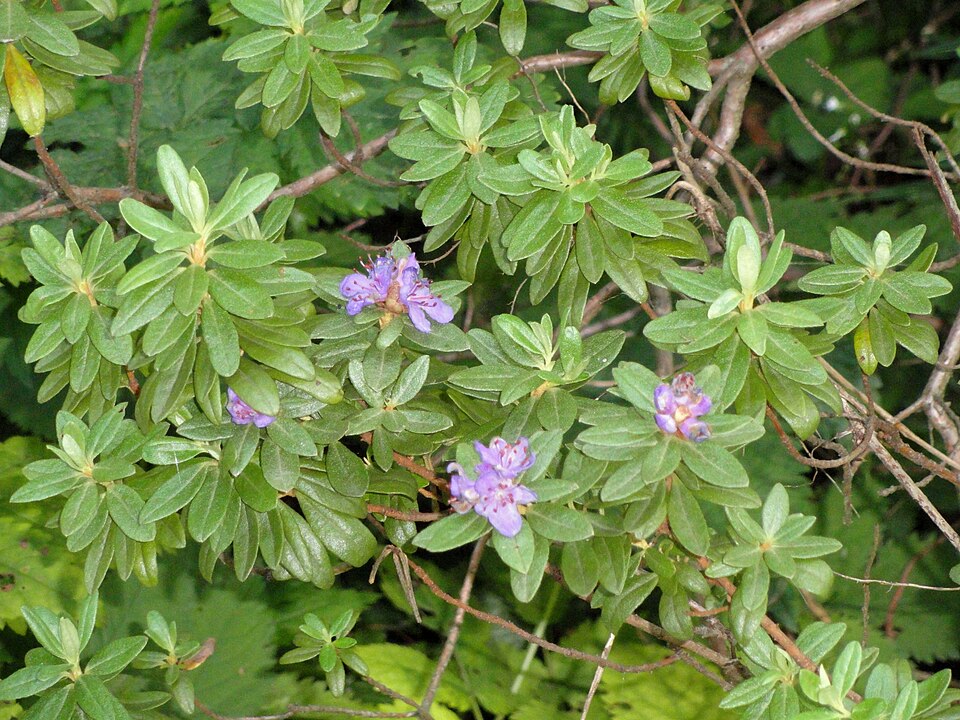
(c) Nuytsia@Tas, some rights reserved (CC BY-NC-SA)
iNaturalist· cc-by-nc
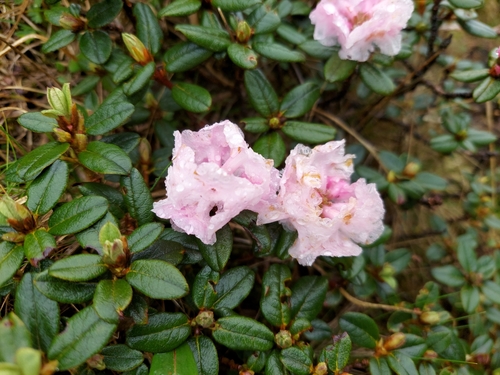
(c) Rowan Hindmarsh-Walls, some rights reserved (CC BY-NC)
Summary
Source: WikipediaGaultheria depressa, commonly known as the mountain snowberry or alpine wax berry, is a small ground-hugging shrub of the heath family Ericaceae native to rocky alpine areas of Tasmania, Australia, and New Zealand.
Description
A herb or small shrub. It is low growing and creeping. It is 10-20 cm high and spreads 30-75 cm across. The leaves are small and 1 cm long. They are rounded and dark green. The upper surface is shiny. The edges have blunt teeth and there are bristles along the edges. The leaves have short stalks. The flowers are white and bell shaped. They grow in the axils of the leaves near the ends of the stem. The fruit is a capsule with a white or red fleshy covering. They are 8-10 mm across.
Edible Uses
The fruit can be eaten raw or cooked. It is sweet and juicy but tends to become rather dry later in the season. Each fruit is about 8–15mm in diameter.
Medicinal Uses
None known.
Distribution
It is a warm temperate plant. It grows in the mountains. It often grows in grassy or boggy locations. It is also often in sheltered rocky outcrops. It needs well drained acid soil. It suits hardiness zones 8-9. Tasmania Herbarium.
Where It Grows
Australia*, Tasmania*, New Zealand*,
Cultivation
Prefers a moist but not boggy humus rich soil in sun or semi-shade. A peat and moisture loving species, it requires a lime-free soil. Plants are not very hardy in Britain and tend to be short-lived in cultivation. The plant can make a good nesting place for mice, these mice then eat the bark of the stems in winter causing die-back. Plants in this genus are notably resistant to honey fungus.
Propagation
Seed requires cold stratification — pre-chill for 4–10 weeks, then surface sow in lime-free compost in a shady part of the greenhouse, keeping the compost moist. Germination usually occurs within 1–2 months at 20°C, but seedlings are prone to damping off. Water carefully, ensure good ventilation, and consider watering with a garlic infusion to reduce damping off. Prick out seedlings into individual pots at about 25mm tall and grow on in light shade in the greenhouse for at least the first winter. Plant out in late spring or early summer. Protect from spring frosts for the first few years outdoors, as seedlings are susceptible. Leaves remain very small for the first few years. Cuttings of half-ripe wood, 3–6cm long, taken July/August in a shaded frame; roots form in late summer or spring, with a good success rate. Divide in spring just before new growth begins — larger clumps can go straight to permanent positions, though smaller clumps are best potted up in a cold frame until rooting well, then planted out in spring. Layering is also possible.
Other Uses
Suitable as ground cover for areas in full sun or light shade.
Notes
There are about 170 Gaultheria species.
Synonyms
References (9)
- Crowe, A., 1997, A Field Guide to the Native Edible Plants of New Zealand. Penguin. p 53
- Cundall, P., (ed.), 2004, Gardening Australia: flora: the gardener's bible. ABC Books. p 626
- Etherington, K., & Imwold, D., (Eds), 2001, Botanica's Trees & Shrubs. The illustrated A-Z of over 8500 trees and shrubs. Random House, Australia. p 343
- Kirkpatrick, J., 1997, Alpine Tasmania, An Illustrated guide to the flora and vegetation. Oxford, p 53
- London J. Bot. 6:267. 1847
Show all 9 references Hide references
- Plants for a Future database, The Field, Penpol, Lostwithiel, Cornwall, PL22 0NG, UK. http://www.scs.leeds.ac.uk/pfaf/
- Skinner, G. & Brown, C., 1981, Simply Living. A gatherer's guide to New Zealand's fields, forests and shores. Reed. p 39
- Tasmanian Herbarium Vascular Plants list p 28
- Whiting, J. et al, 2004, Tasmania's Natural Flora. Tasmania's Natural Flora Editorial Committee PO Box 194, Ulverstone, Tasmania, Australia 7315 p 153