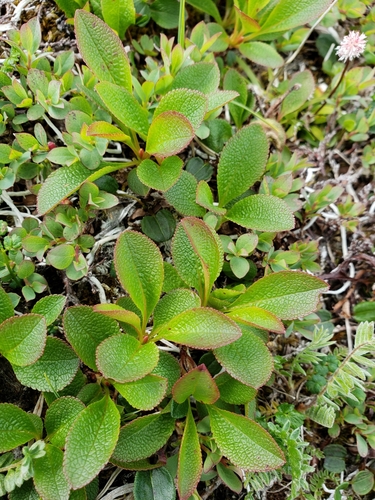
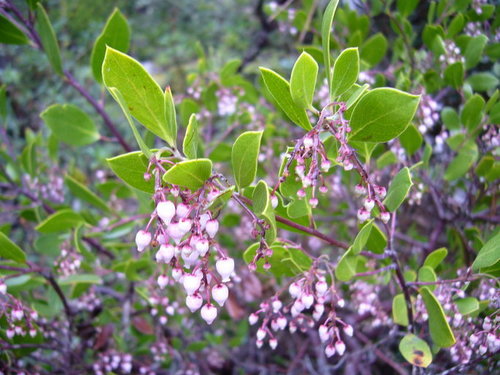
Gaultheria erecta
Vent.
Erect wintergreen
iNaturalist· cc-by-nc
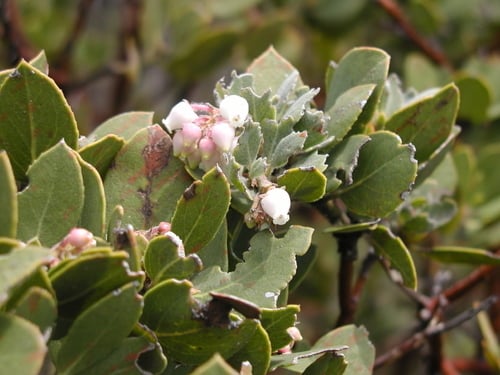
(c) jwagner1960, some rights reserved (CC BY-NC)
iNaturalist· cc-by-nc
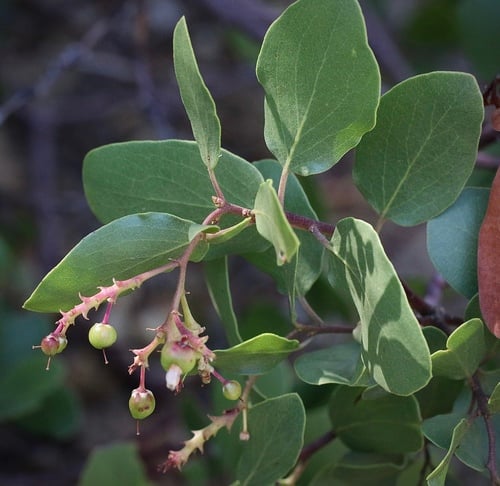
(c) Sergio, some rights reserved (CC BY-NC)
iNaturalist· cc-by-nc
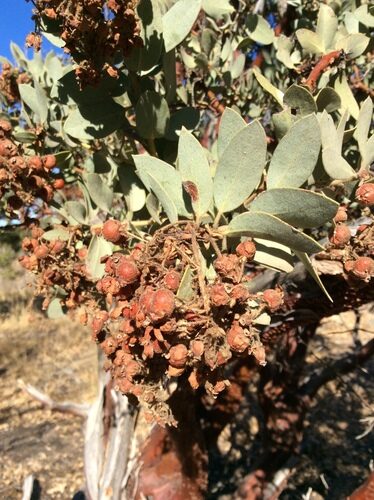
(c) Madeleine (Magsy) Lombard, some rights reserved (CC BY-NC)
Description
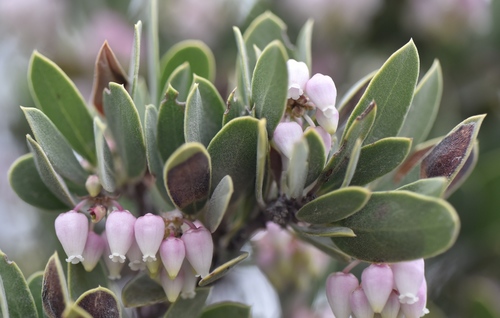
A shrub or small tree. It can be erect or arch over. It grows 0.5-3 m or more tall. It can have a white coating and be rusty coloured at the base. The leaves are oval and 5-11 cm long by 3-7 cm wide. There are small teeth along the edge. The fruit are 7-12 mm across.
Edible Uses
The fruit is edible.
Medicinal Uses
Several species are grown as ornamental shrubs in gardens, particularly G. mucronata (Pernettya mucronata) from southern Chile and Argentina and G. shallon (salal) from the Pacific Northwest of North America. Many of the smaller species are suitable for rock gardens. Like most other ericaceous plants, Gaultheria species do best in peaty soil that never fully dries out. The fruit of many Gaultheria species is edible, particularly that of salal, which can be used to make jelly. One, the American wintergreen or eastern teaberry, G. procumbens, is the traditional source of wintergreen flavouring; it is called the eastern teaberry because its leaves can be used to make a tea, and its berries can be eaten without preparation. The fruit of most other Gaultheria species is insipid in flavour and not extensively consumed. One variety of G. leucocarpa shows anti-inflammatory properties and is used in Chinese herbal medicine for the treatment of rheumatoid arthritis, swelling, and pain.
Distribution
It is a tropical plant. In Argentina it grows between 1,000-3,500 m above sea level.
Where It Grows
Andes, Argentina, Belize, Brazil, Central America, Colombia, Costa Rica, Ecuador, El Salvador, Guatemala, Guyana, Honduras, Mexico, Nicaragua, North America, Panama, Peru, South America*, Venezuela,
Synonyms
Also Known As
Ajate'es, An-dzits, Arrayar, Axocopa, Cacaito, Huevito de gallina, Lala de encino, Macha macha, Melotera, Monte blanco, Monte pespita, Mortino, Mullaca, Note negro, Pachin, Papacusa, Pasas, Pejoa, Pejua macho, Pesgua, Persgua, Pesjua, Quemadero, Tzobet, Urbalai, Uva, Yana sara
References (10)
- Grandtner, M. M., 2008, World Dictionary of Trees. Wood and Forest Science Department. Laval University, Quebec, Qc Canada. (Internet database http://www.wdt.qc.ca)
- Grandtner, M. M. & Chevrette, J., 2013, Dictionary of Trees, Volume 2: South America: Nomenclature, Taxonomy and Ecology. Academic Press p 261
- Kermath, B. M., et al, 2014, Food Plants in the Americas: A survey of the domesticated, cultivated and wild plants used for Human food in North, Central and South America and the Caribbean. On line draft. p 383
- Lopez-Diago, D. & Garcia, N., 2021, Wild edible fruits of Colombia. Biota ColomBiana 22 (2) p 35
- Pascual-Mendoza, S. et al, 2021, Traditional knowledge of edible plants in an indigenous community in the Sierra Norte of Oaxaca, Mexico. Plant Biosystems - An International Journal Dealing with all Aspects of Plant Biology
Show all 10 references Hide references
- Reis, S. V. and Lipp, F. L., 1982, New Plant Sources for Drugs and Foods from the New York Botanical Garden herbarium. Harvard. p 227 (As Gaultheria odorata)
- Roa, J. A. G. & Boada, D. S. G., 2018, Fundación para el Fortalecimiento de la Fruticultura y Plantas Alimenticias no Convencionales en Colombia.
- Segura, S., et al, 2018, The edible fruit species in Mexico. Genet Resour Crop Evol (2018) 65:1767–1793
- Torre, de la, L., et al, 2008, Enciclopedia de las Plantas Útiles del Ecuador. Herbario QCA. Pontificia Universidad Católica del Ecuador. p 312
- Van den Eynden, V., et al, 2003, Wild Foods from South Ecuador. Economic Botany 57(4): 576-603