Garuga floribunda
Decne
Garuga
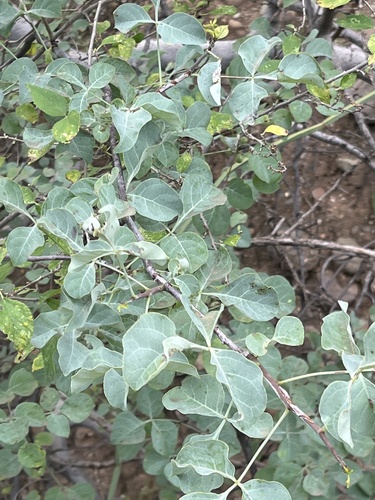
iNaturalist· cc-by-nc
(c) Alan McArthur, some rights reserved (CC BY-NC)
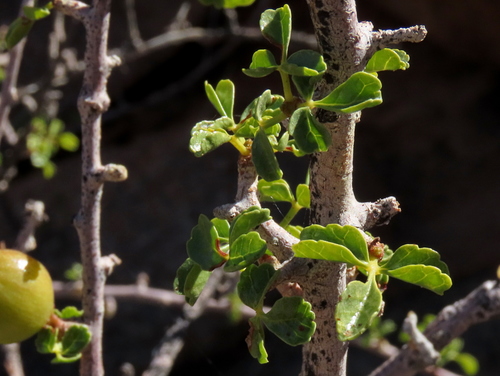
iNaturalist· cc-by
(c) coenobita, some rights reserved (CC BY), uploaded by coenobita
Summary
Source: WikipediaGaruga floribunda, commonly known as garuga, is a plant in the frankincense and myrrh family Burseraceae, with a broad distribution from northeastern India through southeast Asia and northern Australia to the southwestern Pacific. It is a tree up to 36 m (118 ft) tall and a trunk diameter up to 90 cm (35 in). The compound leaves are about 38 cm (15 in) long, arranged spirally and clustered near the tips of the branches. The leaflets are odd in number, with dentate margins, and measure up to 10 cm (3.9 in) long by 5 cm (2.0 in) wide. The inflorescence is a branched panicle carrying numerous flowers, each about 5 mm (0.20 in) long with five sepals and five white to yellow petals. There are ten stamens and a single style. The fruit is a drupe up to 17 mm (0.7 in) long and 25 mm (1.0 in) wide, green to black, containing a jelly-like flesh and up to five seeds.
Description
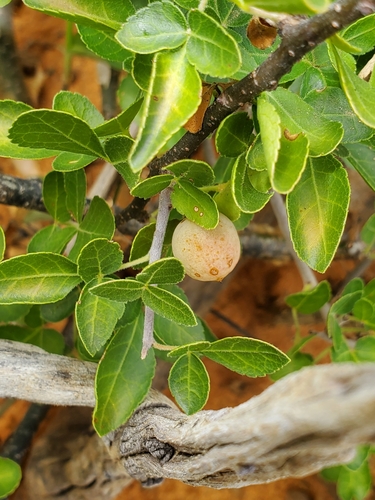
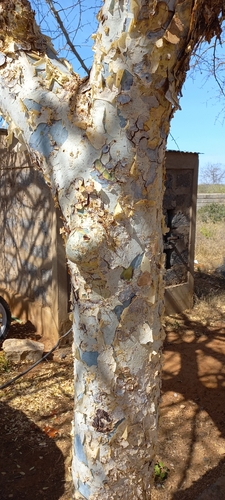
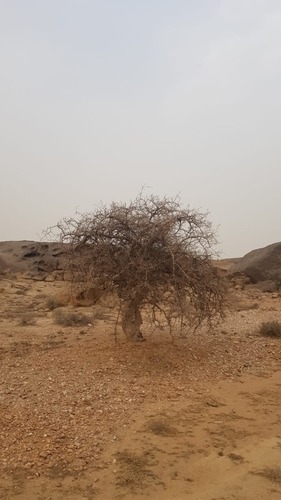
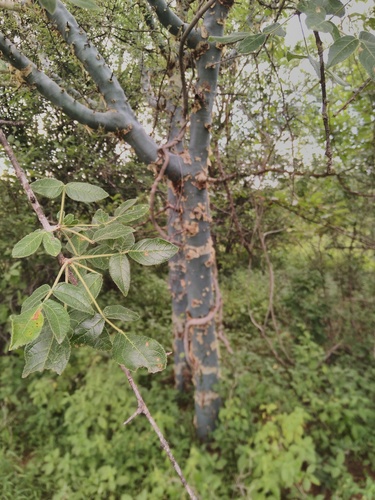
A small tree. It grows 8-12 m tall and spreads 5-10 m wide. The branches are thick and have scars left where the leaves have fallen. The leaves are crowded at the ends of branches. The leaves are 10-30 cm long and divided into leaflets along the central stalk. There are 14-16 leaflets and these are 4-8 cm long by 2-4 cm across. They are oval or sword shaped. They are leathery and dark green on the upper surface and paler underneath. They taper towards the tip and have unequal slanting sides at the base. Young leaves often have a reddish tinge. The flower branch is 20-30 cm across and occurs at the ends of small branches. They flowers are greenish white and hairy and 1 cm across. The fruit is fleshy with a woody shell around the seed inside. The fruit is about 2.5 cm across. It is oval and rough. The fruit is edible.
Edible Uses
The fruit and leaves are eaten.
Traditional Uses
The fruit is eaten.
This uses section is brief — help expand it
Medicinal Uses
A decoction of the bark has been given after childbirth.
Distribution
A tropical plant. It suits coastal regions in tropical places. It is very sensitive to cold. They need an open sunny position and well drained soil. It grows from sea level to 450 m altitude in Samoa. It is often in seasonally wet and dry regions. In XTBG Yunnan.
Where It Grows
American Samoa, Asia, Australia, Bangladesh, China, East Timor, Fiji, Himalayas, India, Indochina, Indonesia, Laos, Malaysia, Pacific, Papua New Guinea, PNG, Philippines, Samoa, SE Asia, Solomon Islands, Timor-Leste, Tonga, Vanuatu, West Timor,
Cultivation
They are grown from seed which should be sown while fresh. The seed germinate irregularly. To break the seed coat it may pay to scratch the seed then soak in water before sowing.
Other Uses
A decoction of the leaves has been used to dye mats made from Corypha leaves black. The wood is used for general construction, bridge building, posts, light duty flooring, furniture and cabinet work, interior trim, mouldings, shelving, skirting, sporting goods, agricultural implements, boxes and crates, carvings, toys and novelties, and turnery. It is also used for the production of veneer and plywood. The wood is used for fuel. Occasionally planted as a shade tree. It is grown as a living fence around plantations, and as a boundary marker.
Notes
There are 4 Garuga species.
Synonyms
Also Known As
Kabo, Kagi, Magaui, Malauhi, Pohon garuga, Pohon kilangit, Tingulong, Vi vao
References (28)
- Altschul, S.V.R., 1973, Drugs and Foods from Little-known Plants. Notes in Harvard University Herbaria. Harvard Univ. Press. Massachusetts. no. 2000
- Bircher, A. G. & Bircher, W. H., 2000, Encyclopedia of Fruit Trees and Edible Flowering Plants in Egypt and the Subtropics. AUC Press. p 69 (As Bursera javanica)
- Cabalion, P. and Morat, P., 1983, Introduction le vegetation, la flore et aux noms vernaculaires de l'ile de Pentcoste (Vanuatu), In: Journal d'agriculture traditionnelle et de botanique appliquee JATBA Vol. 30, 3-4
- Clarke, W.C. & Thaman, R.R., 1993, Agroforestry in the Pacific Islands: Systems for sustainability. United Nations University Press. New York. p 239
- Cooper, W. and Cooper, W., 2004, Fruits of the Australian Tropical Rainforest. Nokomis Editions, Victoria, Australia. p 96
Show all 28 references Hide references
- Cowie, I, 2006, A Survey of Flora and vegetation of the proposed Jaco-Tutuala-Lore National Park. Timor-Lests (East Timor) www.territorystories.nt/gov.au p 45
- Elliot, W.R., & Jones, D.L., 1992, Encyclopedia of Australian Plants suitable for cultivation. Vol 4. Lothian. p 336
- Franklin, J., Keppel, G., & Whistler, W., 2008, The vegetation and flora of Lakeba, Nayau and Aiwa Islands, Central Lau Group, Fiji. Micronesica 40(1/2): 169–225, 2008
- French, B.R., 2010, Food Plants of Solomon Islands. A Compendium. Food Plants International Inc. p
- Havel, J.J., 1975, Forest Botany, Volume 3 Part 2 Botanical taxonomy. Papua New Guinea Department of Forests, p 124
- Hedrick, U.P., 1919, (Ed.), Sturtevant's edible plants of the world. p 140 (As Bursera javanica)
- http://palaeoworks.anu.edu.au/Nuno_PhD/04.pdf
- Johns, R.J., 1976, Common Forest Trees of Papua New Guinea. Part 5 Angiospermae, Forestry College Bulolo, PNG p 194
- Leenhouts, P.W., 1955, Burseraceae in Flora Malesiana Vol 5 p 215
- Paczkowska, G. & Chapman, A.R., 2000, The Western Australian Flora. A Descriptive Catalogue. Western Australian Herbarium. p 189
- Peekel, P.G., 1984, (Translation E.E.Henty), Flora of the Bismarck Archipelago for Naturalists, Division of Botany, Lae, PNG. p 283, 282
- Smith, A.C., 1985, Flora Vitiensis Nova: A New flora of Fiji, Hawai Botanical Gardens, USA Vol 3 p 465
- Soepadmo, E. and Wong, K. M., 1995, Tree Flora of Sabah and Sarawak. Forestry Malaysia. Volume One. p 74
- Sosef, M. S. M., Hong, L. T., & Prawirohatmodjo, S., (Eds.), 1998, Timber tree: Lesser-known timbers. Plant Resources of South-East Asia, 5(3), p 231
- Sukarya, D. G., (Ed.) 2013, 3,500 Plant Species of the Botanic Gardens of Indonesia. LIPI p 303
- Thaman, R. and W. Clarke, Paper on Agroforestry on Aneityum and Tanna, Vanuatu from Internet
- Townsend, K., 1994, Across the Top. Gardening with Australian Plants in the tropics. Society for Growing Australian Plants, Townsville Branch Inc. p 223
- Walter, A. & Sam C., 2002, Fruits of Oceania. ACIAR Monograph No. 85. Canberra. p 280
- Wheeler, J.R.(ed.), 1992, Flora of the Kimberley Region. CALM, Western Australian Herbarium, p 656
- Whistler, W.A., 2004, Rainforest Trees of Samoa. Isle Botanica Honolulu, Hawaii. p 37
- World Checklist of Useful Plant Species 2020. Royal Botanic Gardens, Kew
- www.worldagroforestrycentre.org/sea/products/afdbases/af/asp/SpeciesInfo.asp?SpID=18155
- Yuncker, T.G., 1959, Plants of Tonga, Bernice P. Bishop Museum, Hawaii, Bulletin 220. p 155