Coffea racemosa
Lour.
Mozambique coffee
iNaturalist· cc-by-nc
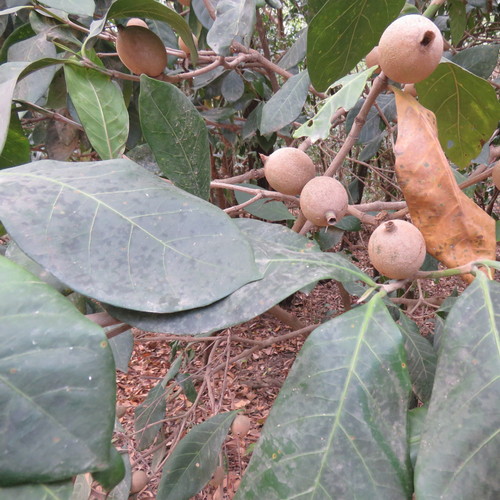
(c) Graeme White, some rights reserved (CC BY-NC), uploaded by Graeme White
iNaturalist· cc-by-nc
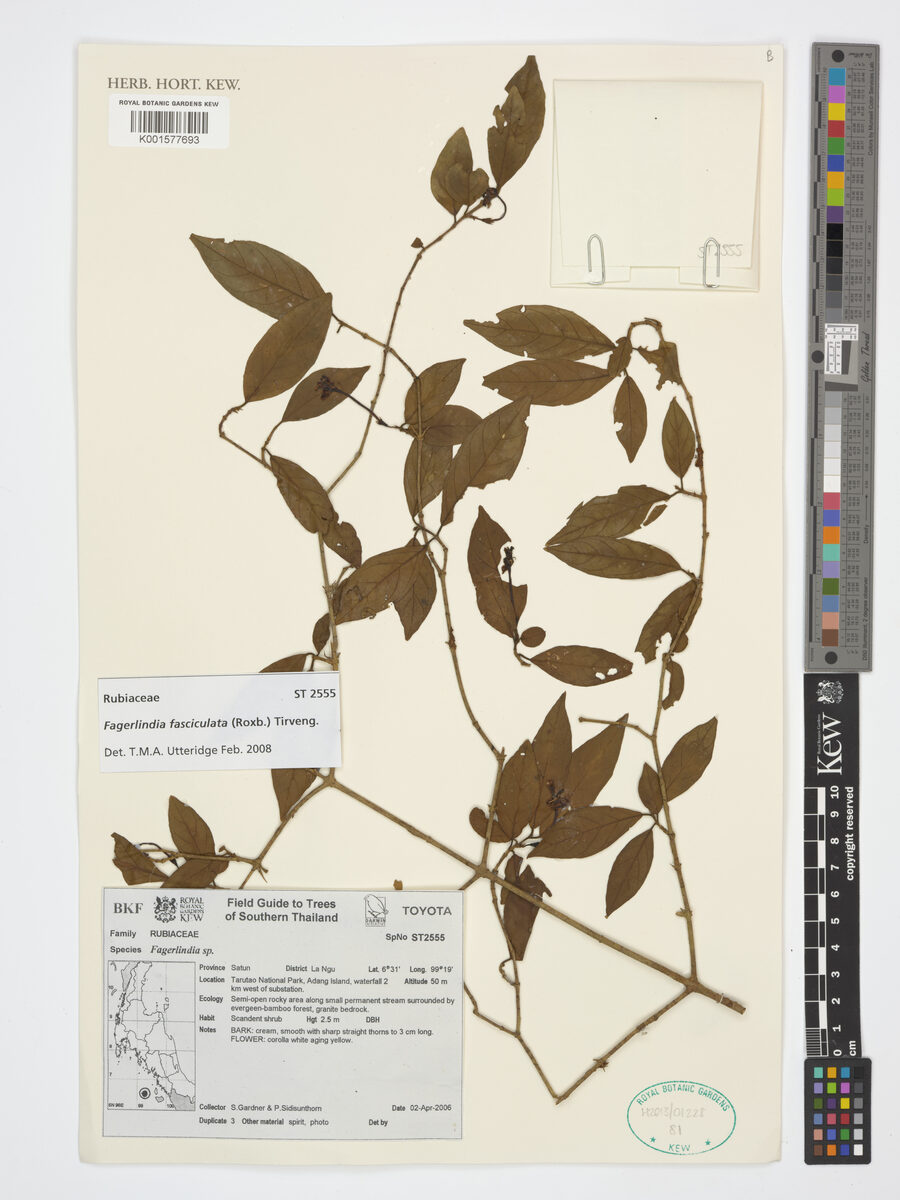
(c) Graeme White, some rights reserved (CC BY-NC)
Summary
Source: WikipediaCoffea racemosa, also known as racemosa coffee and Inhambane coffee, is a species of flowering plant in the family Rubiaceae. It has naturally low levels of caffeine, less than half of that found in Coffea arabica, and a quarter of that in Robusta coffee. Coffea racemosa is endemic to the coastal forest belt between northern KwaZulu-Natal in South Africa and Mozambique, found in an area less than 150 km2 (58 sq mi) in size. It was widely cultivated by the Portuguese during the 1960–1970s in Mozambique; currently there are only two plantations, at Ibo Island and in Hluhluwe, which remain.
Description
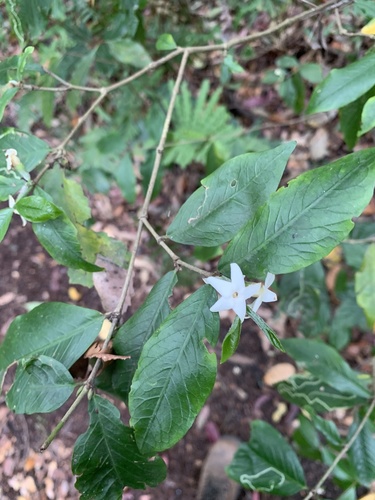
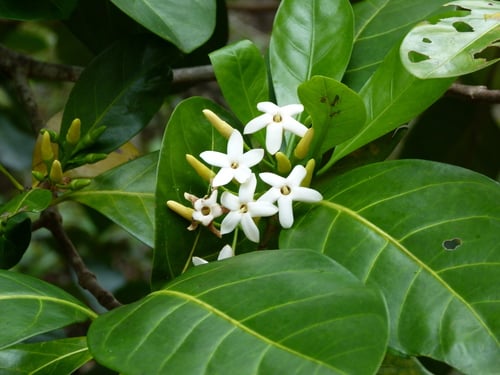
A small much-branched tree. It grows up to 6 m high. It often has a single stem. The leaves are shiny and in opposite pairs. They are 9 cm long by 6 cm wide. They are oval or sword shaped. They narrow to both ends. The edges are somewhat wavy. The flowers are 1.6 cm long by 1 cm wide. They are white with twisted petals. They occur in groups in the axils of leaves towards the ends of branches. The fruit are oval or round and about 1 cm long. They are red when ripe and contain 2 seeds. The seeds are grooved like other coffee beans.
Edible Uses
The seed is used to make coffee. Roasted and ground to a powder then used to make coffee. A bit of salt is sometimes sprinkled over them as they are roasted.
Traditional Uses
The seeds are roasted, ground and used as coffee.
This uses section is brief — help expand it
Distribution
A tropical plant. It occurs at low altitude in hot dry woodland and on rocky outcrops. It can be along rivers and in dune forest. They are hardy and resistant to disease.
Where It Grows
Africa, East Africa, Mozambique, South Africa, Southern Africa, Zimbabwe,
Cultivation
Plants are cultivated.
Other Information
They are exported from Mozambique. It is a commonly used fruit in Mozambique.
Notes
There are about 40 Coffea species.
Synonyms
Also Known As
Inhambane coffee, Wild coffee
References (10)
- Facciola, S., 1998, Cornucopia 2: a Source Book of Edible Plants. Kampong Publications, p 212
- Fl. cochinch. 1:145. 1790
- Fox, F. W. & Young, M. E. N., 1982, Food from the Veld. Delta Books. p 329
- Palgrave, K.C., 1996, Trees of Southern Africa. Struik Publishers. p 892
- Palmer, E and Pitman, N., 1972, Trees of Southern Africa. Vol. 2. A.A. Balkema, Cape Town p 2112
Show all 10 references Hide references
- Peters, C. R., O'Brien, E. M., and Drummond, R.B., 1992, Edible Wild plants of Sub-saharan Africa. Kew. p 169
- Tredgold, M.H., 1986, Food Plants of Zimbabwe. Mambo Press. p 65
- Uphof,
- Welcome, A. K. & Van Wyk, B.-E., 2019, An inventory and analysis of the food plants of southern Africa. South African Journal of Botany 122 (2019) 136–179
- World Checklist of Useful Plant Species 2020. Royal Botanic Gardens, Kew