Coffea stenophylla
G. Don
Highland coffee, Sierra Leone coffee
wikimedia· cc-by-sa
Wikimedia Commons - Ji-Elle
wikimedia· cc-by-sa
Wikimedia Commons - Krzysztof Ziarnek, Kenraiz
Summary
Source: WikipediaCoffea stenophylla, also known as highland coffee or Sierra Leone coffee, is a species of Coffea originating in West Africa. As of 2020, it is not commercially cultivated, because its low yield and small berries make it inferior to the two economically dominant species Coffea arabica and Coffea canephora (robusta). Research is being done to evaluate the sensory and agronomic benefits of commercially cultivating it as a method of expanding the genetic diversification of global coffee stock and increasing resilience to both climate change and crop disease pressures.
Description
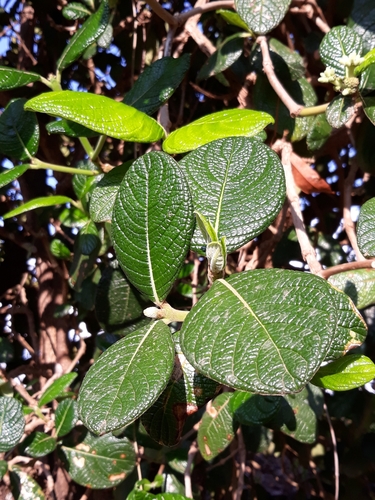
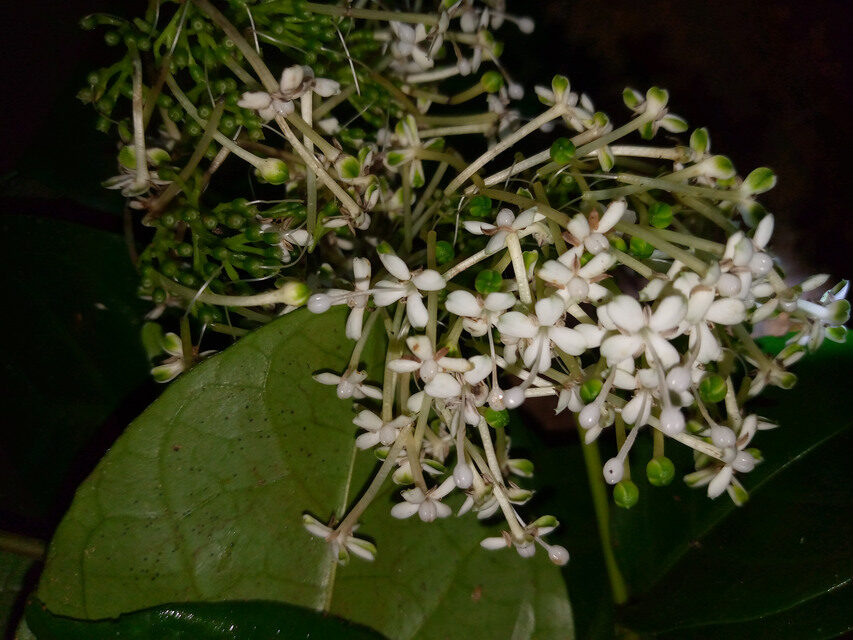
An evergreen shrub. It can grow 6 m high. The young leaf shoots are pink. The leaves are 10-15 cm long by 3-4 cm wide. They are bright green and shiny but are paler underneath. The flowers are large and white. The fruit are fleshy and bluish-black. They are oval and 12-13 mm long by 8-10 mm wide.
Edible Uses
A fairly good quality coffee can be prepared from the seeds (generally referred to as coffee beans), although reports on its flavour are contradictory. The coffee produced from this seed is said to be of superior quality.
Traditional Uses
The seeds are roasted and ground and used as coffee.
This uses section is brief — help expand it
Distribution
A tropical plant. It grows in the hills in Sierra Leone and Guinea. It suits moist warm forest regions.
Where It Grows
Africa, Asia, Australia, China, Côte d'Ivoire, Guinea, Guinée, India, Ivory Coast, Sao Tome and Principe, Sierra Leone, West Africa*,
Cultivation
Plants are grown from seed.
Propagation
Propagation is usually by seed. The viability of the seeds is comparatively short, depending upon conditions, and it is advisable to plant within 2 months of harvesting. The older the seeds, the longer they take to germinate and they lose viability. They can be planted with the parchment attached but germination is quicker when it is removed. Seedlings can be raised in shaded nurseries, planting them out into their permanent positions when 6 - 12 months old. Layering Air layering Budding. For rooting of coffee cuttings, the single leaf-bud cutting is commonly used.
Notes
There are about 40 Coffea species.
References (10)
- Ambasta, S.P. (Ed.), 2000, The Useful Plants of India. CSIR India. p 135
- Burkill, I.H., 1966, A Dictionary of the Economic Products of the Malay Peninsula. Ministry of Agriculture and Cooperatives, Kuala Lumpur, Malaysia. Vol 1 (A-H) p 636
- Dalziel, 1937,
- Facciola, S., 1998, Cornucopia 2: a Source Book of Edible Plants. Kampong Publications, p 212
- Gen. hist. 3:581. 1834
Show all 10 references Hide references
- Hibbert, M., 2002, The Aussie Plant Finder 2002, Florilegium. p 71
- Peters, C. R., O'Brien, E. M., and Drummond, R.B., 1992, Edible Wild plants of Sub-saharan Africa. Kew. p 169
- Recher, P, 2001, Fruit Spirit Botanical Gardens Plant Index. www.nrg.com.au/~recher/ seedlist.html p 1
- Wiersema, J. H. & Leon, B., 2013, World Economic Plants. A Standard Reference CRC Press. 2nd Ed. p 190
- World Checklist of Useful Plant Species 2020. Royal Botanic Gardens, Kew