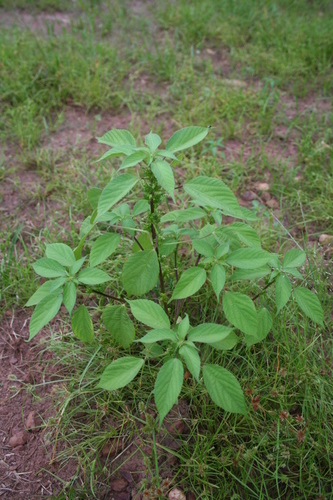
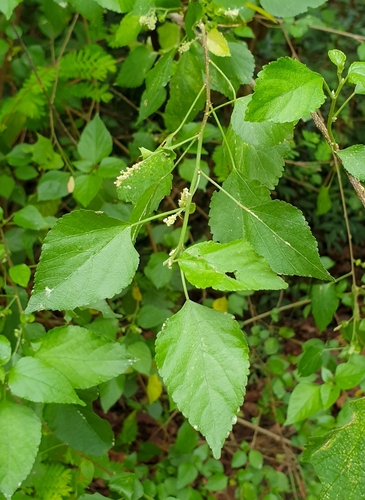
Vernicia fordii
(Hemsley) Airy Shaw
Tung Oil Tree, Chinese wood oil tree
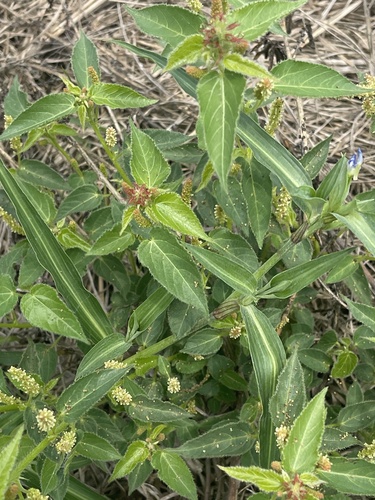
iNaturalist· cc-by-nc
(c) Alvin Diamond, some rights reserved (CC BY-NC), uploaded by Alvin Diamond
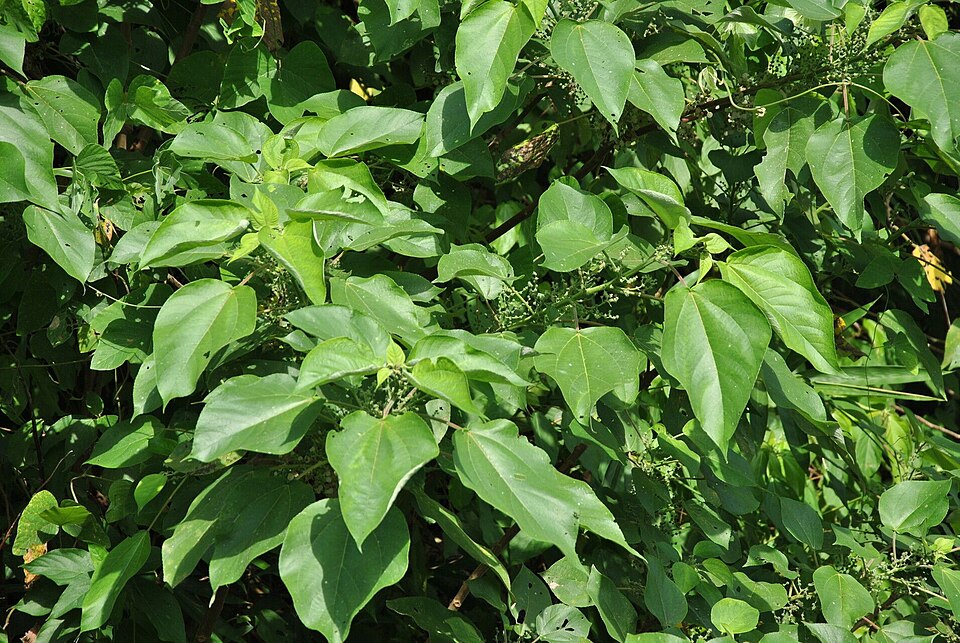
iNaturalist· cc-by-nc
(c) JCE, some rights reserved (CC BY-NC), uploaded by JCE
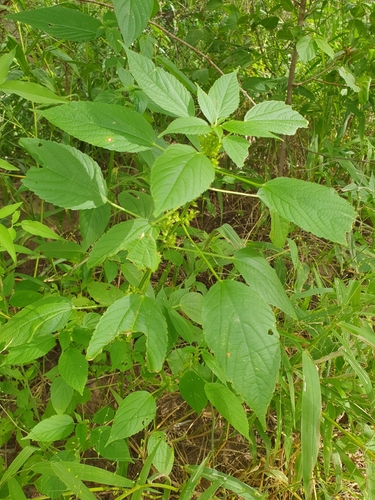
iNaturalist· cc-by-nc
(c) vshoultz, some rights reserved (CC BY-NC)
Summary
Source: WikipediaVernicia fordii, usually known as the tung tree (Chinese: 桐, tóng) and also as the tung-oil or tungoil tree (油桐), the kalo nut tree, and the China wood-oil tree, is a species of flowering plant in the spurge family Euphorbiaceae. It is native to southern China, Myanmar, and northern Vietnam.
Description
An evergreen tree which grows to 7 m high. It spreads to 3 m across. The stem is erect and stout. The leaves are light green and heart shaped. They have 3 lobes and are pointed at the tip. Leaves are 25 cm long and are often arranged in whorls or layers. The flowers occur in long sprays and are pink. These flower sprays are 10-15 cm long. The fruit are thick shelled nuts. They are round and greenish brown. Fruit are 6-7 cm across.
Edible Uses
The seed is listed as edible, though this report should be treated with caution given that the oil from the seed is said to be poisonous.
Traditional Uses
CAUTION The seed contain saponins which are poisonous but are poorly absorbed by the body. Such plants should not be eaten in large amounts. The seed are reported as being eaten.
Medicinal Uses
The seed oil is used externally to treat parasitic skin diseases, burns, scalds, and wounds. The poisonous oil is said to penetrate skin and muscle; when applied to surgical wounds it reportedly causes inflammation to subside within 4–5 days and leaves no scar tissue after suppressing infection. The plant is emetic, antiphlogistic, and vermifuge. Extracts from the fruit are antibacterial.
Known Hazards
The oil from the seed is poisonous. The leaves and seeds contain a toxic saponin. Although poisonous, saponins are poorly absorbed by the human body and so most pass through without harm. Saponins are quite bitter and can be found in many common foods such as some beans. They can be removed by carefully leaching in running water. Thorough cooking, and perhaps changing the cooking water once, will also normally remove most of them. However, it is not advisable to eat large quantities of food that contain saponins. Saponins are much more toxic to some creatures, such as fish, and hunting tribes have traditionally put large quantities of them in streams, lakes etc in order to stupefy or kill the fish.
Distribution
A tropical plant. It grows naturally at the base of foothills especially in rocky places up to 1000 metres in Western China. Plants can tolerate a wide range of soil conditions. It tolerates a pH in the range 5.3 to 7.3. It requires rich well drained soil. In needs an open sunny position. It is drought and frost tender. The need a minimum temperature above 5°C. In Argentina it grows below 200 m above sea level. It suits hardiness zones 8-11. In Sichuan and Yunnan.
Where It Grows
Africa, Argentina, Asia, Australia, Central America, China, Cuba, Dominican Republic, East Africa, Haiti, Hawaii, India, Indochina, Korea, Laos, Malawi, Mozambique, Myanmar, North America, Pacific, Paraguay, Papua New Guinea, PNG, SE Asia, Southern Africa, South America, USA, Vietnam, West Indies, Zimbabwe,
Cultivation
Plants can be grown from seed or cuttings of mature wood.
Propagation
Seed — sow in March/April in a warm greenhouse. Prick seedlings into individual pots when large enough and overwinter at least the first year under glass before planting out in early summer with cold protection for the first outdoor winter. Tung seed is normally short-lived and must be planted in the season following harvest. Hulling before planting is recommended as hulls retard germination. Hulled seed may be planted dry, but soaking in water for 5–7 days hastens germination. Stratification, cold treatment, or chemical treatment promotes more rapid and uniform germination. Dry-stored seed should be planted no later than February; stratified seed by mid-March; cold-treated or chemically treated seed by early April. Cuttings of mature wood can be rooted in a frame. Budding is most successful in late August using the simple shield method: a piece of budstock bark including a bud is fitted into a T-shaped cut made in the rootstock bark 5–7.5cm above ground level, the bark flaps loosened, the shield bud slipped inside, and the flaps tied tightly with rubber budding strips 12cm long, 0.6cm wide, and 0.002cm thick. After about 7 days the rubber strip is cut to prevent binding. As newly set buds are susceptible to cold injury, soil is mounded over them for winter. When growth begins in spring, soil is pulled back and each stock cut to within 3.5cm of the dormant bud; suckers are subsequently removed and trees kept well cultivated. Spring budding is done only as a last resort when trees could not be propagated the previous autumn.
Other Uses
The seed contains up to 58% of a superior quick-drying oil used in the manufacture of lacquers, varnishes, paints, linoleum, oilcloth, resins, artificial leather, felt-base floor coverings, greases, brake linings, and cleaning and polishing compounds. Tung oil products are used to coat containers for food, beverages, and medicines, and for insulating metallic surfaces in radios, radar, telephone, and telegraph equipment. During World War II, the Chinese used tung oil as motor fuel; because it tended to gum up engines, it was processed to make it compatible with gasoline. The oil is highly resistant to weathering and is reported to have insecticidal properties. The fruit is a hard, woody, pear-shaped drupe 4–8cm across, typically containing 4–5 large, oily seeds. The fruit contains 14–20% oil, the kernel 53–60%, and the nut 30–40%. The oil composition is approximately 75–80% alpha-eleostearic acid, 15% oleic acid, about 4% palmitic acid, and about 1% stearic acid. Tannins, phytosterols, and a poisonous saponin are also present. Trees yield 4.5–5 tonnes of fruit per hectare.
Other Information
It is not known if it is used for food in Papua New Guinea.
Notes
The tree is grown for Tung oil a drying oil used in paints. The oil is not used for edible purposes as it is laxative. There are 2-5 Aleurites species.
Synonyms
Also Known As
Oil Tong, Youtong
References (17)
- Ambasta S.P. (Ed.), 2000, The Useful Plants of India. CSIR India. p 26 (As Aleurites fordii)
- Bodkin, F., 1991, Encyclopedia Botanica. Cornstalk publishing, p 64 (As Aleurites fordii)
- Brickell, C. (Ed.), 1999, The Royal Horticultural Society A-Z Encyclopedia of Garden Plants. Convent Garden Books. p 94 (As Aleurites fordii)
- Burkill, I.H., 1966, A Dictionary of the Economic Products of the Malay Peninsula. Ministry of Agriculture and Cooperatives, Kuala Lumpur, Malaysia. Vol 1 (A-H) p 90 (As Aleurites fordii)
- Cobley, L.S. (rev. Steele, W.M.) 2nd Ed., 1976, An Introduction to the Botany of Tropical Crops. Longmans. p 294 (As Aleurites fordii)
Show all 17 references Hide references
- Cundall, P., (ed.), 2004, Gardening Australia: flora: the gardener's bible. ABC Books. p 123(As Aleurites fordii)
- Etherington, K., & Imwold, D., (Eds), 2001, Botanica's Trees & Shrubs. The illustrated A-Z of over 8500 trees and shrubs. Random House, Australia. p 85 (As Aleurites fordii)
- Henty, E.E., 1980, Harmful Plants in Papua New Guinea. Botany Bulletin No 12. Division Botany, Lae, Papua New Guinea. p 49 (As Aleurites fordii)
- Lazarides, M. & Hince, B., 1993, Handbook of Economic Plants of Australia, CSIRO. p 13 (As Aleurites fordii)
- Lord, E.E., & Willis, J.H., 1999, Shrubs and Trees for Australian gardens. Lothian. p 47 (As Aleurites fordii)
- Menninger, E.A., 1977, Edible Nuts of the World. Horticultural Books. Florida p 49 (As Aleurites fordii)
- Miguel, E., et al, 1989, A checklist of the cultivated plants of Cuba. Kulturpflanze 37. 1989, 211-357 (As Aleurites fordii)
- Plants for a Future database, The Field, Penpol, Lostwithiel, Cornwall, PL22 0NG, UK. http://www.scs.leeds.ac.uk/pfaf/ (As Aleurites fordii)
- Recher, P, 2001, Fruit Spirit Botanical Gardens Plant Index. www.nrg.com.au/~recher/ seedlist.html p 4 (As Aleurites fordii)
- Valder, P., 1999, The Garden Plants of China. Florilegium. p 265 (As Aleurites fordii)
- Wit, F., 1979, Tung, in Simmonds N.W.,(ed), Crop Plant Evolution. Longmans. London. p 74 (As Aleurites fordii)
- World Checklist of Useful Plant Species 2020. Royal Botanic Gardens, Kew