Garcinia pedunculata
Roxb. ex Buch.-Ham.
iNaturalist· cc-by-nc
(c) Cédric DEL RIO, some rights reserved (CC BY-NC), uploaded by Cédric DEL RIO
wikimedia· cc-by-sa
Wikimedia Commons - নিতুল বৰা
Summary
Source: WikipediaGarcinia pedunculata is an evergreen tree related to the purple mangosteen (Garcinia mangostana). The tree is endemic to the south-eastern regions of Asia such as parts of Myanmar, Bangladesh and north-eastern parts of India. It is popularly known in India as Amlavetasa, in Bangladesh as Thoikor or Taikor and in Assam as Bor Thekera(বৰ থেকেৰা ).
Description
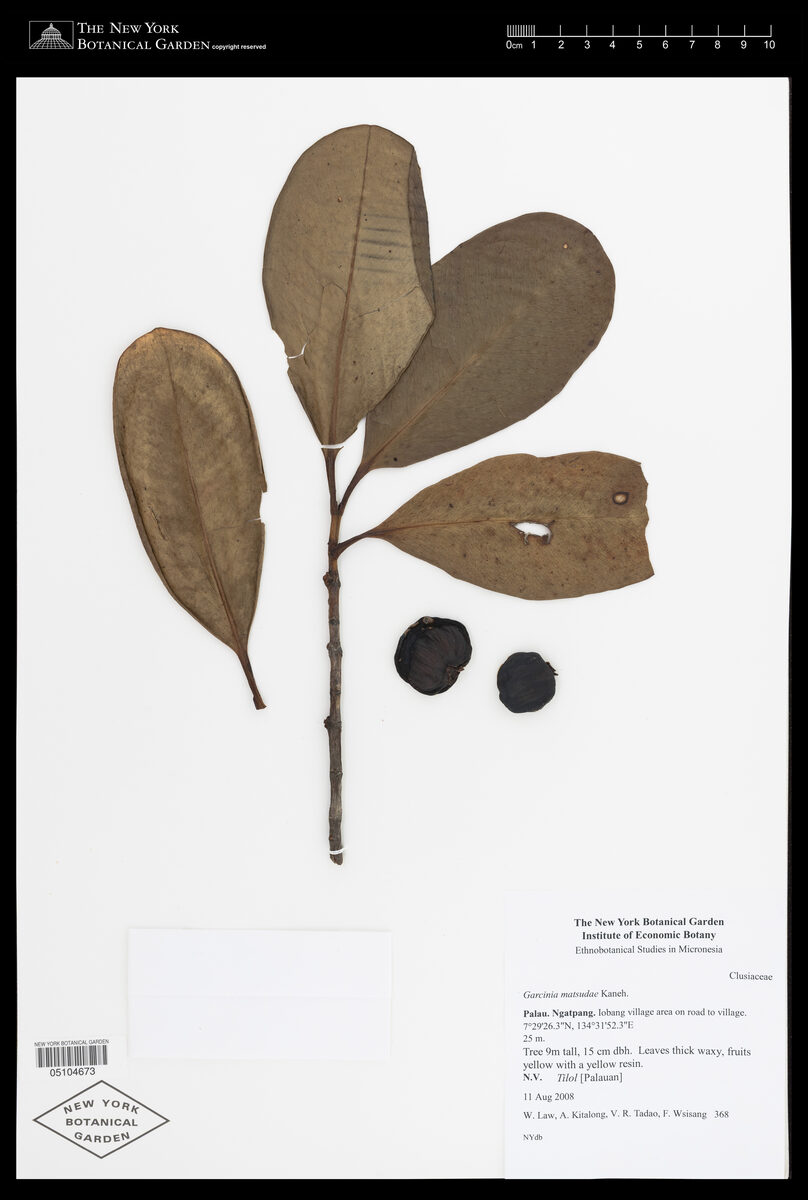
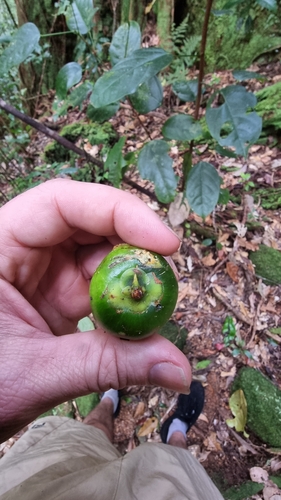
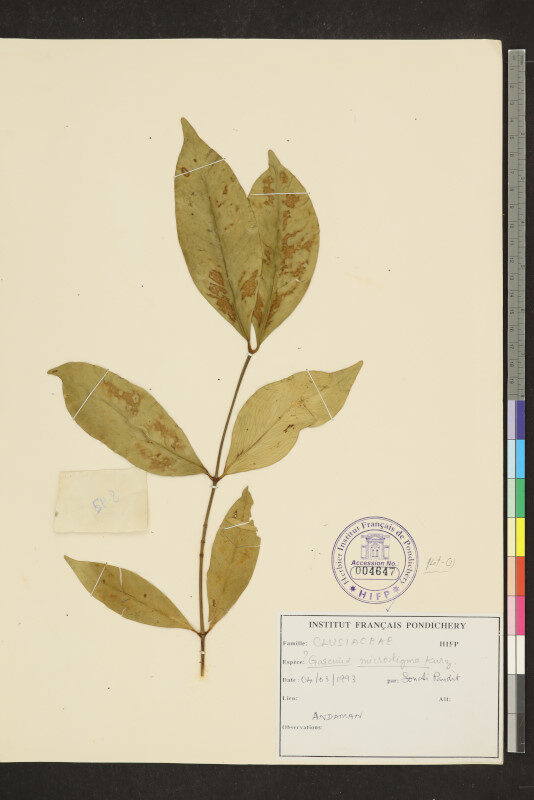
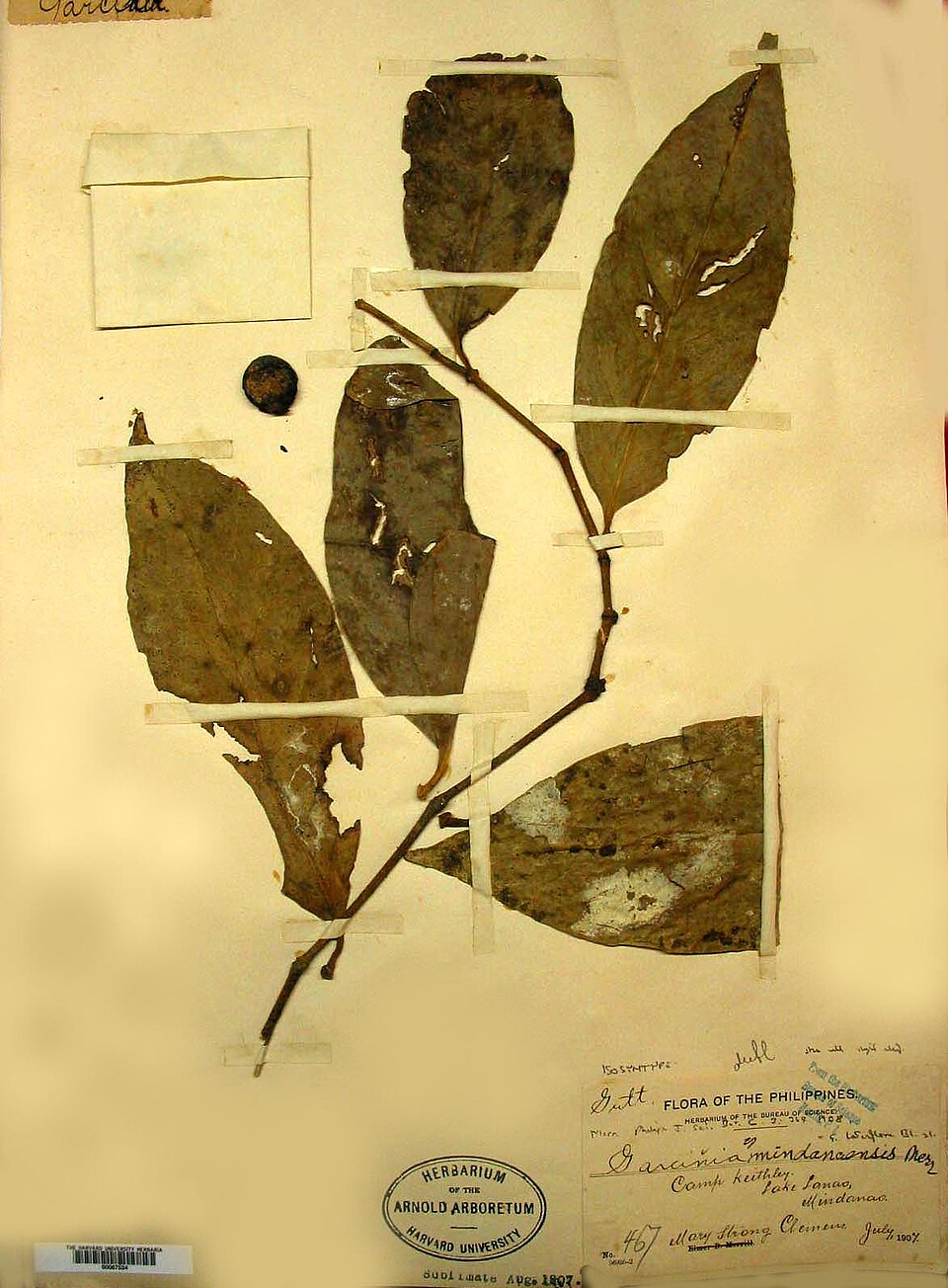
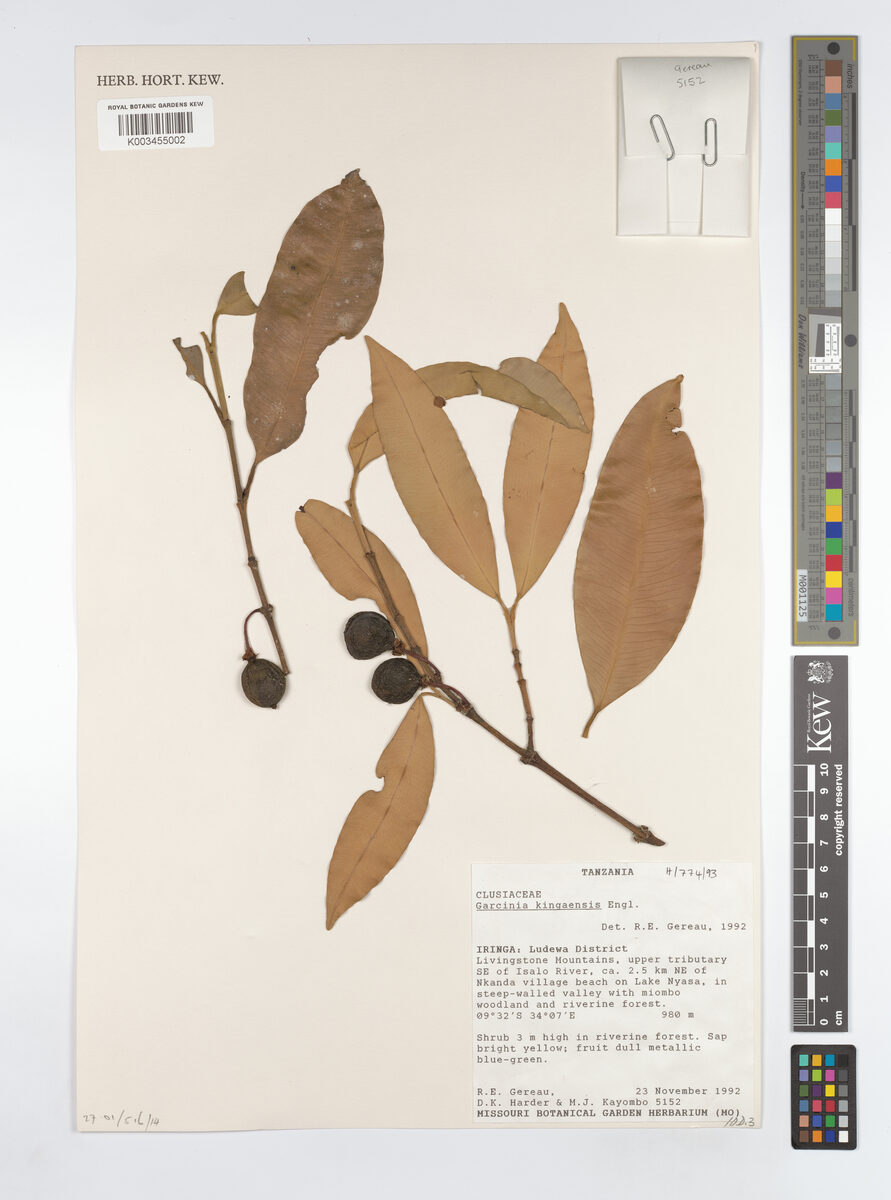
A large tree. It grows about 20 m high. It keeps its leaves throughout the year. The trunk is fluted. The branches are short and spreading. The small branches are 4 angled. The leaves are sword shaped. The leaves are 16-26 cm long by 7-10 cm wide. The flowers are green. The male flowers are in clusters of 8-12 flowers and the female flowers occur singly or in groups of 3. The fruit are 8-10 cm long and yellow-orange. There are 8-10 kidney shaped seeds.
Edible Uses
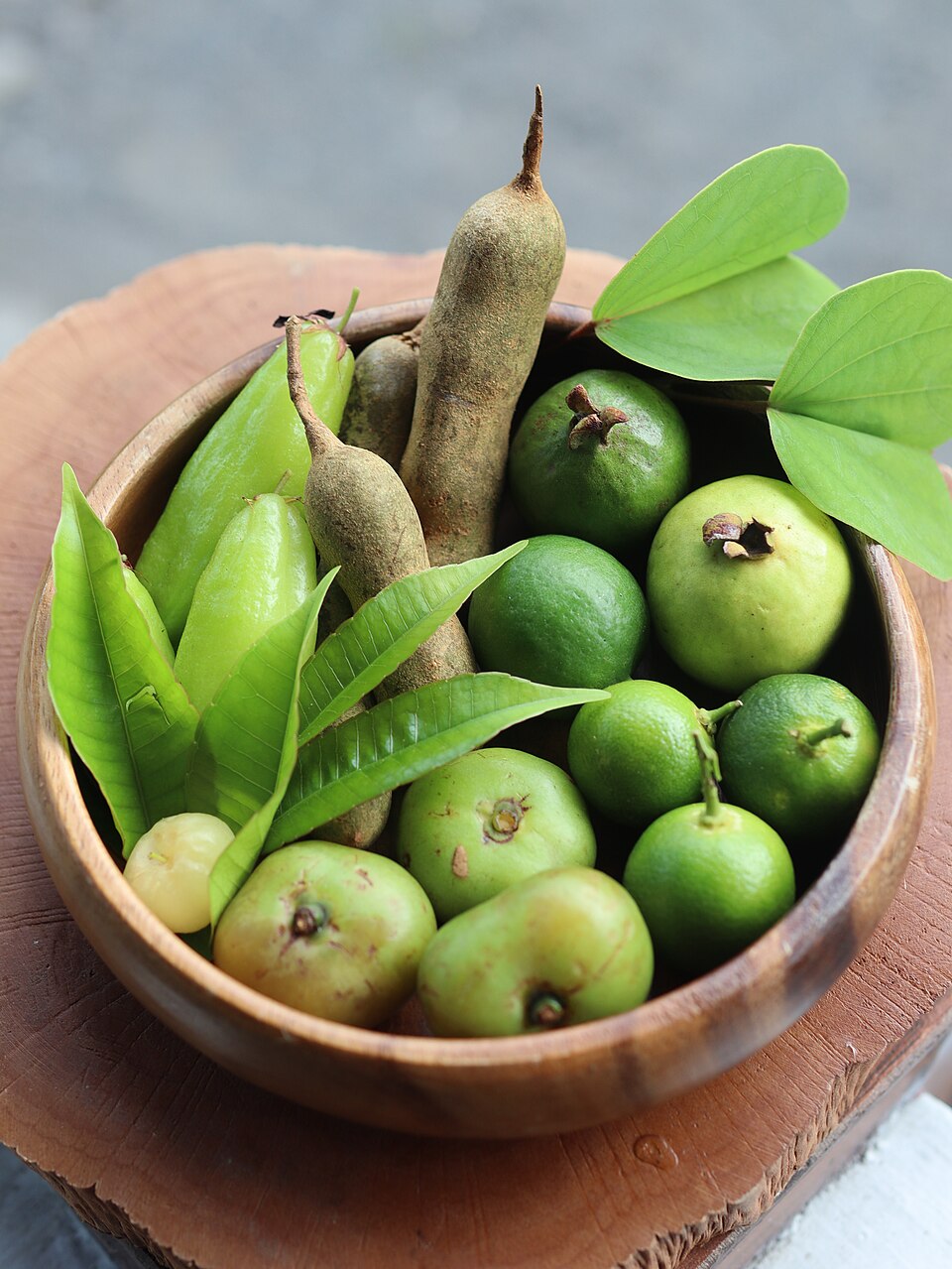
The ripe fruit is eaten cooked or raw. Usually the ripe or raw fruits are sliced, sun-dried and preserved. In the state of Assam the fruit is used in cooking to add a sour flavour.
Traditional Uses
The fruit are eaten raw or mixed with seasoning. They are sour. They are also made into drinks. It is also used cooked. It is mixed with curries. The ripe fruit are cut into slices and dried in the sun and then used for sour fish curry.
Medicinal Uses
The plant is used medicinally. The fruit helps to cure stomach problems, diarrhoea and dysentery, besides acting as digestive and cooling agent. The fruit contains malic acid.
Distribution
A tropical and subtropical plant. It grows in humid dense forests on hills between 200-400 m altitude and sometimes to 1500 m in southern China. In Yunnan.
Where It Grows
Africa, Asia, Bangladesh, China, East Africa, Himalayas, India, Indochina, Myanmar, Nepal, Northeastern India, SE Asia, Tibet, Thailand, Vietnam, Zambia,
Cultivation
A dioecious species, both male and female forms usually need to be grown if fruit and seed are required. At least some dioecious Garcinia species, however, are able to produce fertile seed even in the absence of fertilization (asexual reproduction). Such seeds would be expected to be genetically identical to the parent
Propagation
Seed - we have no specific information on this species, but the seed of most members of the genus can be slow to germinate, even if sown fresh, often taking 6 months or more.
Other Uses
The plant exudes almost no resin when cut. The raw or cooked fruit can be used as a fixative or as a mordant for saffron dye. The wood is moderately hard. A good timber, it is used for planks, beams etc.
Production
In NE India plants flower and fruit September to February.
Other Information
It is sold in local markets. It is cultivated.
Notes
There are about 300 Garcinia species.
Nutrition
| Part | Moisture | kJ | kcal | Protein | Vit A | Vit C | Iron | Zinc |
|---|---|---|---|---|---|---|---|---|
| Fruit | 86.5 | — | — | — | — | 5.9 | — | — |
Also Known As
Aghatsa, Amalbed, Ampri arong, Baikal, Borthekera, Bua cong, Da guo teng huang, Dieng-soh-danei, Gidir thaikha, Haibum, Heibung, Kor-mang, Metlin-chin, Mibia, Ngai-chi, Pranpre, Prumang, Sangsulasu, Sani, Sanmopua, Soh-danei, Tabing esing, Thaikhra gede, Thizou, Tikul, Tikur, Vawm-va-pui, Vomva
References (37)
- Ambasta, S.P. (Ed.), 2000, The Useful Plants of India. CSIR India. p 231
- Angami, A., et al, 2006, Status and potential of wild edible plants of Arunachal Pradesh. Indian Journal of Traditional Knowledge 5(4) October 2006, pp 541-550 (Typing error)
- Arora, R. K., 2014, Diversity in Underutilized Plant Species - An Asia-Pacific Perspective. Bioversity International. p 73
- Balkrishna, A., et al, 2022, Indigenous Uses of Plants among Forest-dependent Communities of Seijosa, Arunachal Pradesh. International Journal of Economic Plants 2022, 9(1):064-080
- Baro, D., Baruah, S. and Borthukar, S. K. 2015, Documentation on wild vegetables of Baksa district, BTAD (Assam). Scholars Research Library. Archives of Applied Science Research, 2015, 7 (9):19-27
Show all 37 references Hide references
- Brewster, Edinburgh J. Sci. 7:45, t. 1. 1827
- Chakraborty, S. & Chaturbedi, H. P., 2014, Some Wild Edible Fruits of Tripura- A Survey. Indian Journal of Applied research. (4) 9
- Devi, O.S., P. Komor & D. Das, 2010, A checklist of traditional edible bio-resources from Ima markets of Imphal Valley, Manipur, India. Journal of Threatened Taxa 2(11): 1291-1296
- Dobriyal, M. J. R. & Dobriyal, R., 2014, Non Wood Forest Produce an Option for Ethnic Food and Nutritional Security in India. Int. J. of Usuf. Mngt. 15(1):17-37
- Fowler, D. G., 2007, Zambian Plants: Their Vernacular Names and Uses. Kew. p 79
- Gardner, S., et al, 2000, A Field Guide to Forest Trees of Northern Thailand, Kobfai Publishing Project. p 52
- Hazarika, B. et al. (2020). An overview of the unexplored underutilized fruit crops of Assam, India. Journal of Applied and Natural Science, 12(3): 442 - 453.
- Hedrick, U.P., 1919, (Ed.), Sturtevant's edible plants of the world. p 325
- Jeeva, S., 2009, Horticultural potential of wild edible fruits used by the Khasi tribes of Meghalaya. Journal or Horticulture and Forestry Vol. 1(9) pp. 182-192
- Jin, Chen et al, 1999, Ethnobotanical studies on Wild Edible Fruits in Southern Yunnan: Folk Names: Nutritional Value and Uses. Economic Botany 53(1) pp 2-14
- Kar, A., et al, 2013, Wild Edible Plant Resources used by the Mizos of Mizoram, India. Kathmandu University Journal of Science, Engineering and Technology. Vol. 9, No. 1, July, 2013, 106-126
- Li, S., et al, 2020, Monpa, memory, and change: an ethnobotanical study of plant use in Mêdog County, South-east Tibet, China. Journal of Ethnobiology and Ethnomedicine. (2020) 16:5 p 16
- Li Xi-wen & Li Jie; Peter F. Stevens, Clusiaceae, Flora of China, Vol 13 p 43 and Flora of China. www.eFloras.org
- Maikhuri, R, K, and Gangwar, A. K., 1993, Ethnobiological Notes on the Khasi and Garo Tribes of Meghalaya, Northeast India, Economic Botany, Vol. 47, No. 4, pp. 345-357
- Medhi, P. & Borthakur, S. K., 2012, Phytoresources from North Cachur Hills of Assam -3: Edible plants sold at Hflong market. Indian Journal or Natural Products and Resources. 3(1) pp 84-109
- Medhi, P. & Borthakur, S. K., 2013, Wild edible plants sold by the Zeme Nagas at the makeshift market of Mahur, Dima Hasao district of Assam. Pleione 7(1): 84 - 93. 2013
- Medhi, P., Sarma, A and Borthakur, S. K., 2014, Wild edible plants from the Dima Hasao district of Assam, India. Pleione 8(1): 133-148
- Meitei, L. R., et al, 2022, An ethnobotanical study on the wild edible plants used by forest dwellers in Yangoupokpi Lokchao Wildlife Sanctuary, Manipur, India. Ethnobotany Research and Application 23:15
- Mozhui, R., et al, 2011, Wild edible fruits used by the tribals of Dimapur district of Nagaland, India. Pleione 5(1): 56 - 64.
- Murtem, G. & Chaudhrey, P., 2016, An ethnobotanical note on wild edible plants of Upper Eastern Himalaya, India. Brazilian Journal of Biological Sciences, 2016, v. 3, no. 5, p. 63-81.
- Pasha, M. K. & Uddin, S. B., 2019, Minor Edible Fruits of Bangladesh. Bangladesh J. Plant Taxon. 26(2): 299–313
- Patiri, B. & Borah, A., 2007, Wild Edible Plants of Assam. Geethaki Publishers. p 12
- Pegu, R., et al, 2013, Ethnobotanical study of Wild Edible Plants in Poba Reserved Forest, Assam, India. Research Journal of Agriculture and Forestry Sciences 1(3):1-10
- Pham-Hoang Ho, 1999, An Illustrated Flora of Vietnam. Nha Xuat Ban Tre. p 450
- Phangchopi, U., et al, 2015, Diversity of wild edible plants in Marat Longri Wildlife Sanctuary, Assam. Indian Journal of Natural Products and Resources Vol. 6(4), December 2015 pp. 305-313
- Sarma, H., et al, 2010, Updated Estimates of Wild Edible and Threatened Plants of Assam: A Meta-analysis. International Journal of Botany 6(4): 414-423
- Sawian, J. T., et al, 2007, Wild edible plants of Meghalaya, North-east India. Natural Product Radiance Vol. 6(5): p 417
- Singh, H.B., Arora R.K.,1978, Wild edible Plants of India. Indian Council of Agricultural Research, New Delhi. p 61, 76
- Singh, V. B., et al, (Ed.) Horticulture for Sustainable Income and Environmental Protection. Vol. 1 p 217
- Srivastava, R. C., 2010, Traditional knowledge of Nyishi (Daffla) tribe of Arunachal Pradesh. Indian Journal of Traditional Knowledge. 9(1):26-37
- Teron, R. & Borthakur, S. K., 2016, Edible Medicines: An Exploration of Medicinal Plants in Dietary Practices of Karbi Tribal Population of Assam, Northeast India. In Mondal, N. & Sen, J.(Ed.) Nutrition and Health among tribal populations of India. p 150
- Zeven, A. C. & de West, J. M. J., 1982, Dictionary of cultivated plants and their regions of diversity. Wageningen. p 56