Garcinia atroviridis
Griffith ex T. Anderson
iNaturalist· cc-by-nc-sa
(c) Min Sheng Khoo, some rights reserved (CC BY-NC-SA)
iNaturalist· cc-by-nc
(c) mercury9nine, some rights reserved (CC BY-NC)
Summary
Source: WikipediaGarcinia atroviridis, known as asam gelugur, asam gelugo, or asam keping (in Malay, Thai: ส้มแขก) is a large rainforest tree native to Peninsular Malaysia and Sumatra. This species grows wild throughout Peninsular Malaysia but is also widely cultivated, especially in the northern states, owing to its economic and medicinal value. Garcinia atroviridis is a large perennial plant commonly found in evergreen forests in the southern region of Thailand and Malaysia.
Description
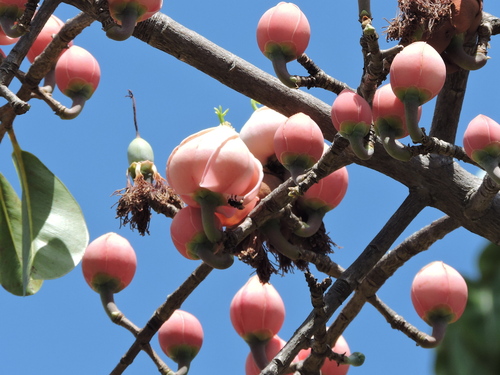
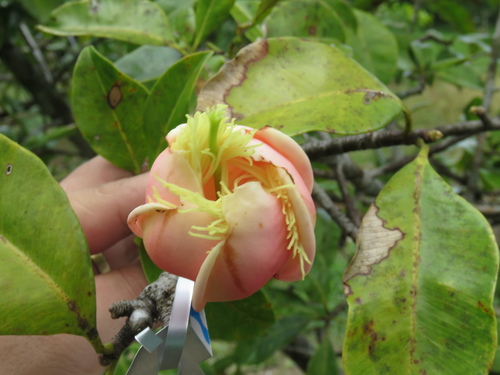
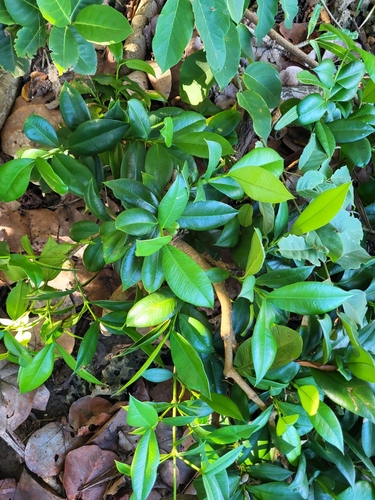
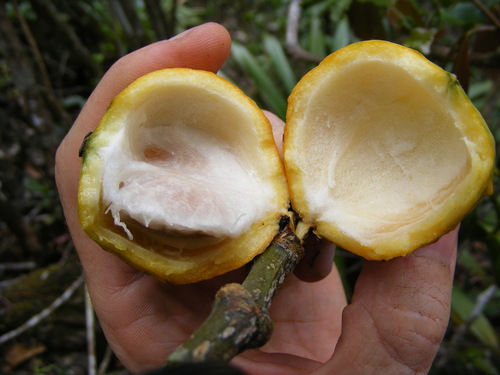
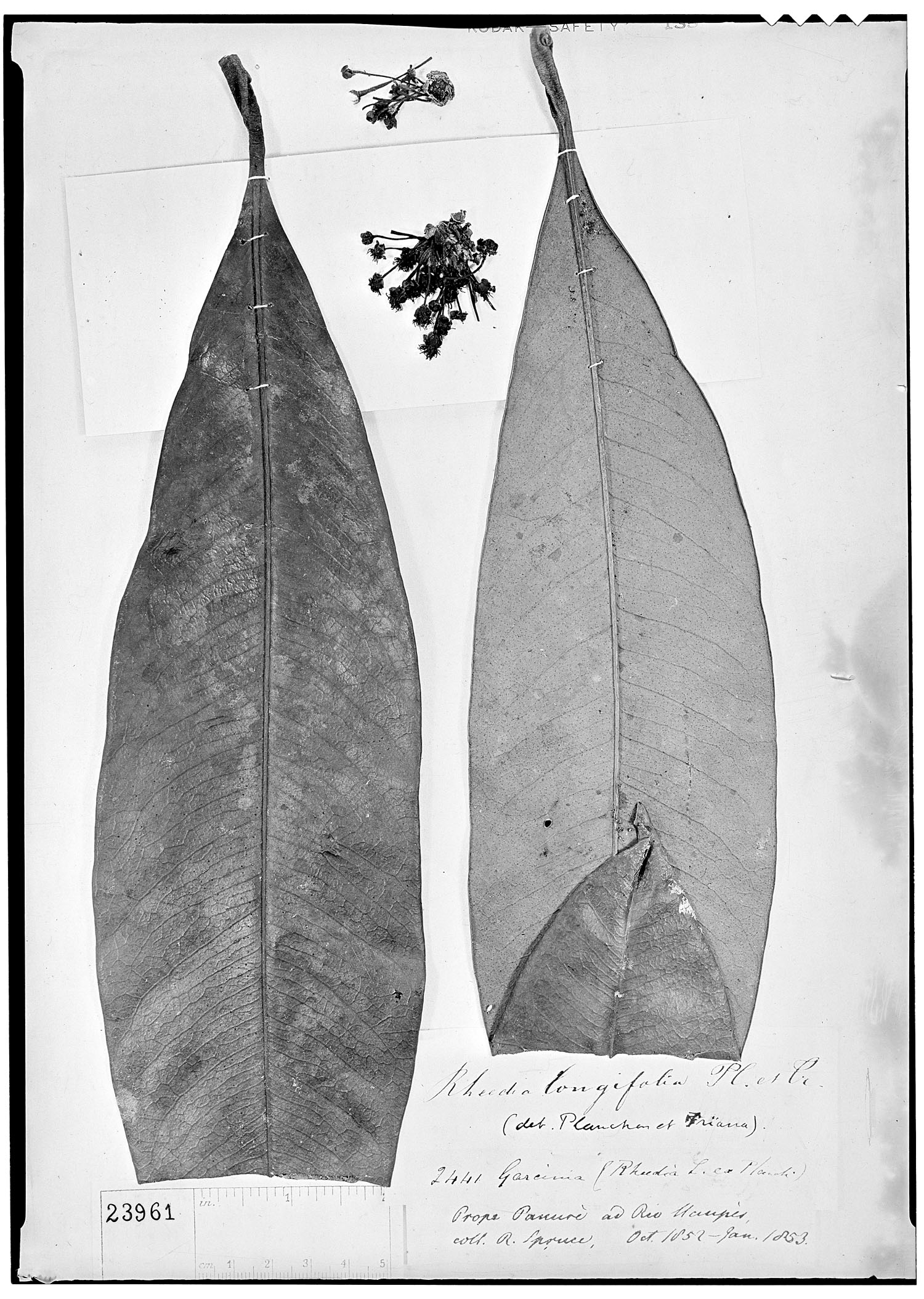
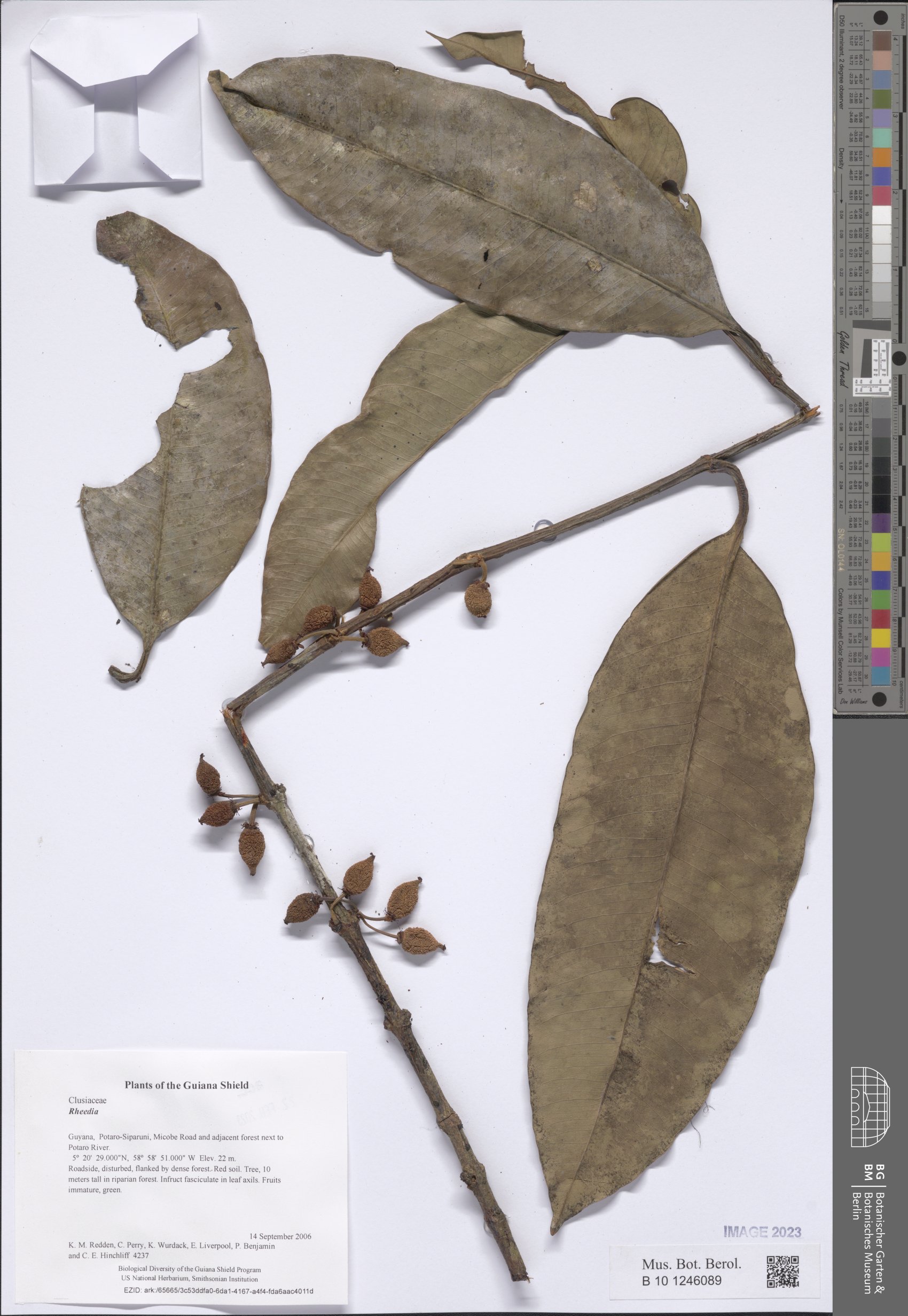
A tall tree. It grows up to 20 m tall. The bark is smooth and pale grey. The twigs and leaves droop down. The leaves are narrow and oblong. They can be 20-30 cm long by 6-7.5 cm wide. The leaves are red when young but turn dark green. They are glossy and leathery. The edges of the leaves turn up. The midrib is easy to see under the leaf. The leaf stalk is 2.5 cm long. Male and female flowers are separate. Male flowers occur as several together on the ends of twigs. They are uncommon. The female flowers occur singly. They are 4-5 cm wide. The sepals are green and the petals are red. The fruit are orange to yellow when ripe. They are round and about 7-10 cm across. There are 12-16 grooves from the top to bottom. The fruit stalk is 3-4 cm long. The skin is thin, smooth and bright orange-yellow. There can be none or several seeds. These are flattened and 1.5 cm long. They have a bright orange pulp around them.
Edible Uses
The fruit contains citric acid, tartaric acid, malic acid and ascorbic acid, hydroxycitric acid, and flavonoids. Ripe asam fruit is bright-yellow orange. Sun-dried slices of the fruit, locally known as "asam keping", are commercially available and are popularly used as a souring agent for curries and soups. Asam gelugor is a perennial fruit tree native to the tropical climate in Malaysia. The trees can also be found in other parts of South East Asia, particularly in Thailand where demand for the asam fruit is increasing.
Traditional Uses
The fruit is sliced, dried and used instead of tamarind in some Malaysian dishes. It is sundried. It is used in curries, soups, fish dishes, and spicy meat dishes. The fruit are sour and need to be cooked with sugar when used in pies. Immature fruit are used in chutneys.
Medicinal Uses
The dried fruit is used for improving blood circulation, as an expectorant, treatment of coughs and as a laxative. It is believed that the fruit extract can promote good health by reducing blood-cholesterol levels and enlarging the blood vessels, absorbing excess fat etc. It is commonly used in diets in southeast Asia. A decoction of leaves and roots is used in the treatment of ear aches.
Distribution
It is a tropical plant. At MARDI.
Where It Grows
Asia, Australia, India, Indochina, Indonesia, Malaysia, Myanmar, Northeastern India, Pacific, Philippines, SE Asia, Singapore, Sri Lanka, Thailand,
Cultivation
The plant is easily grown with almost no pest and disease problems and requires very little care.
Propagation
Seed - It has been observed, but not scientifically proven, that trees grown from seedlings resulted in more male than female trees. We have no specific information on this species, but the seed of most members of the genus can be slow to germinate, even if sown fresh, often taking 6 months or more. Grafting or inarching bud wood of known sex onto seedling trees may produce plants of the desired sex which can bear fruits within 4-5 years of grafting.
Other Uses
A thick, yellow, usually resinous latex is obtained from the bark, branches and fruits. The dried fruits are used as fixatives with alum for dyeing silk fabrics. An extract of the fruit is used as an ingredient in commercial cosmetic preparations as a skin conditioner. The wood is hard.
Other Information
It is occasionally cultivated.
Notes
There are about 300 Garcinia species. It has 9.4 mg per 100 g dry weight and 7.6 mg fresh weight of alpha-tocopherol (Vitamin E).
Also Known As
Asam gelungor, Boh no, Gelugor, Nayo, Sentola tilaba, Som khaek, Sommawon, Sompha-ngun, Som mawon
References (34)
- Ambasta, S.P. (Ed.), 2000, The Useful Plants of India. CSIR India. p 229
- Arora, R. K., 2014, Diversity in Underutilized Plant Species - An Asia-Pacific Perspective. Bioversity International. p 72
- Burkill, I.H., 1966, A Dictionary of the Economic Products of the Malay Peninsula. Ministry of Agriculture and Cooperatives, Kuala Lumpur, Malaysia. Vol 1 (A-H) p 1063
- Ching, L. S. & Mohamed, S., 2001, Alpha-Tocopherol Content in 62 Edible Tropical Plants. J. Agric. Food Chem. 2001, 49, 3101−3105
- Coronel, R.E., 1982, Fruit Collections in the Philippines. IBPGR Newsletter p 10
Show all 34 references Hide references
- Darley, J.J., 1993, Know and Enjoy Tropical Fruit. P & S Publishers. p 45
- Dobriyal, M. J. R. & Dobriyal, R., 2014, Non Wood Forest Produce an Option for Ethnic Food and Nutritional Security in India. Int. J. of Usuf. Mngt. 15(1):17-37
- Facciola, S., 1998, Cornucopia 2: a Source Book of Edible Plants. Kampong Publications, p 78
- Hanum, F. I., 1999, Plant Diversity and Conservation Value of Ayer Hitam Forest, Selangor, Peninsula Malaysia. Pertanika J. Trop. Agric. Sci. 22(2):73-83
- Hemphill, I, 2002, Spice Notes. Macmillan. p 215
- J. D. Hooker, Fl. Brit. India 1:266. 1874
- Hutton, W., 1997, Tropical Herbs and Spices of Indonesia. Periplus. p 11
- Uji, T., 2007, Keanekaragaman, Persebaran dan Potensi Jenis-jenis Garcinia. Berk. Penel. Hayati: 12 (129–135), 2007
- Kiple, K.F. & Ornelas, K.C., (eds), 2000, The Cambridge World History of Food. CUP p 1722
- Macmillan, H.F. (Revised Barlow, H.S., et al) 1991, Tropical Planting and Gardening. Sixth edition. Malayan Nature Society. Kuala Lumpur. p 300
- Martin, F.W. & Ruberte, R.M., 1979, Edible Leaves of the Tropics. Antillian College Press, Mayaguez, Puerto Rico. p 194
- Milow, P., et al, 2013, Malaysian species of plants with edible fruits or seeds and their evaluation. International Journal of Fruit Science. 14:1, 1-27
- Mozhui, R., et al, 2011, Wild edible fruits used by the tribals of Dimapur district of Nagaland, India. Pleione 5(1): 56 - 64.
- Norfaizal, , M., et al, 2014, Flora Diversity of Sungai Teris, Karu Wildlife reserve, Pahang, Malaysia. Journal of Wildlife and Parks (2014) 28 : 81-91
- Owen, S., 1993, Indonesian Food and Cookery, INDIRA reprints. p 47
- PROSEA (Plant Resources of South East Asia) handbook, Volume 2, 1991, Edible fruits and nut. p 175
- Samy, J., Sugumaran, M., Lee, K. L. W., 2009, Herbs of Malaysia, Marshall Cavendish. p 110
- Saw, L.G., LaFrankie, J. V. Kochummen, K. M., Yap S. K., 1991, Fruit Trees in a Malaysian Rain Forest. Economic Botany, Vol. 45, No. 1, pp. 120-136
- Seidemann J., 2005, World Spice Plants. Economic Usage, Botany, Taxonomy. Springer. p 161
- Singh, H.B., Arora R.K.,1978, Wild edible Plants of India. Indian Council of Agricultural Research, New Delhi. p 61, 76
- Singh, V. B., et al, (Ed.) Horticulture for Sustainable Income and Environmental Protection. Vol. 1 p 217
- Solomon, C., 2001, Encyclopedia of Asian Food. New Holland. p 2, 168
- Suwardi, A. B., et al, 2020, Wild edible fruits generate substantial income for local people of the Gunung Leuser National Park, Aceh Tamiang Region. Ethnobotany Research & Applications 20:11
- Terra, G.J.A., 1973, Tropical Vegetables. Communication 54e Royal Tropical Institute, Amsterdam, p 49
- van Wyk, B., 2005, Food Plants of the World. An illustrated guide. Timber press. p 199
- Wiersema, J. H. & Leon, B., 2013, World Economic Plants. A Standard Reference CRC Press. 2nd Ed. p 316
- World Checklist of Useful Plant Species 2020. Royal Botanic Gardens, Kew
- Zawiah, N. & Othaman, H., 2012, 99 Spesies Buah di FRIM. Institut Penyelidikan Perhutanan Malaysia. p 124
- Zeven, A. C. & de West, J. M. J., 1982, Dictionary of cultivated plants and their regions of diversity. Wageningen. p 56