Garcinia amboinensis
Spreng.
Kaya asam besar
gbif· cc0
Conveyor Belt
gbif· cc-by
The New York Botanical Garden
Description
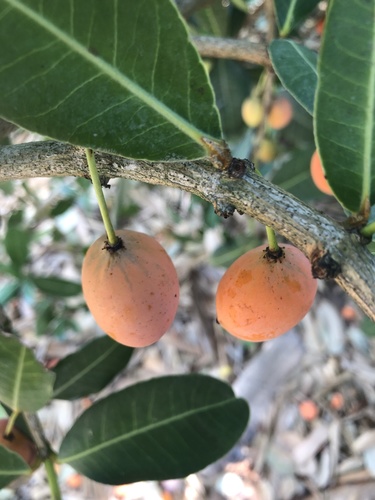
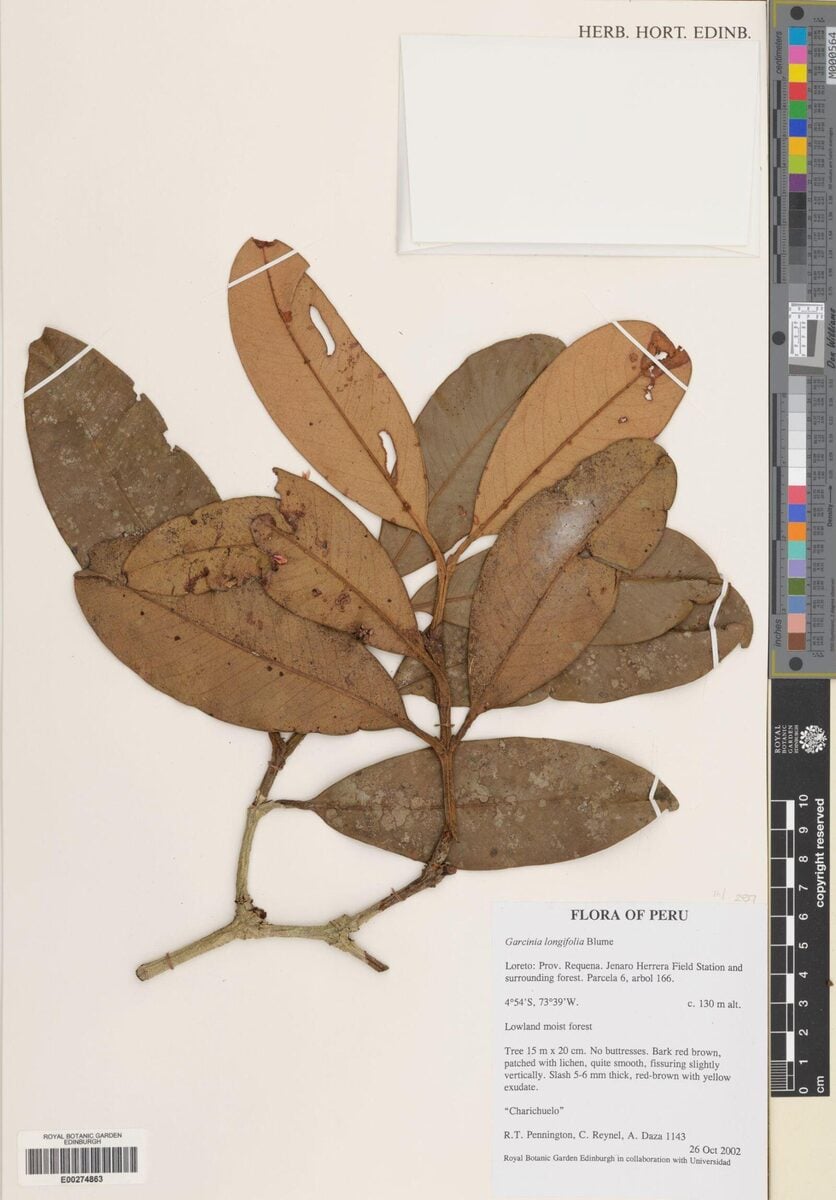
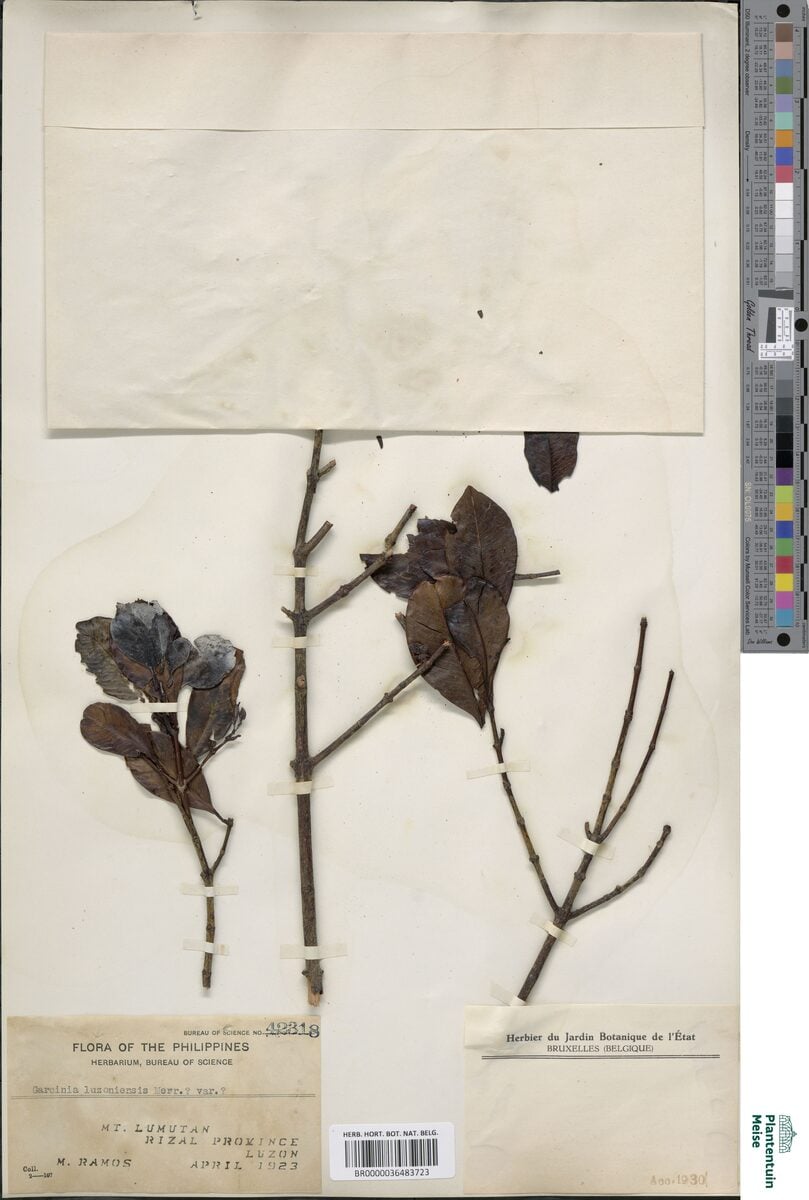
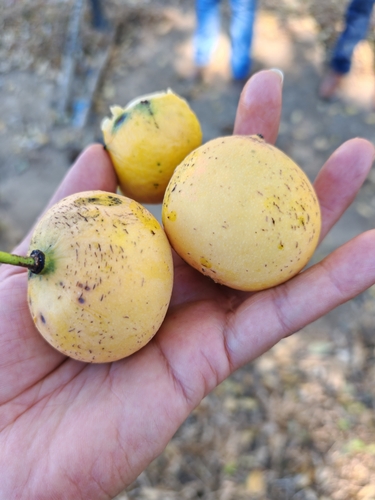
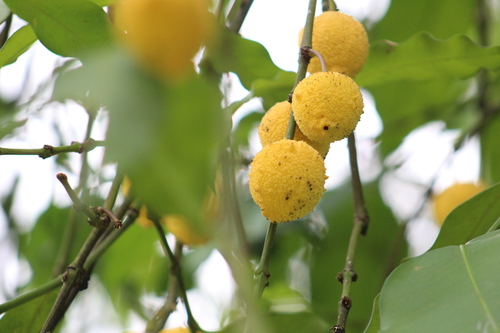
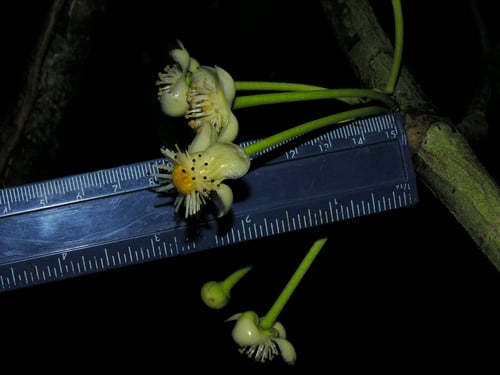
A small tree. It has stilt roots. The leaves are opposite and the leaf stalk is spoon shaped. The leaves are oval and 18-20 cm long by 8-10 cm wide. The male flowers are in flat topped groups and the female flowers are in the axils of leaves. The fruit are round or pear shaped.
Edible Uses
The leaves are eaten as a vegetable with fish. Pieces of the root are used as a flavouring to give a more bitter taste to palm wine.
Traditional Uses
Pieces of the root are used to give a more bitter taste to palm wine. The leaves are eaten as a vegetable with fish.
This uses section is brief — help expand it
Distribution
A tropical plant.
Where It Grows
Asia, Indonesia, SE Asia,
Propagation
Seed - we have no specific information on this species, but the seed of most members of the genus can be slow to germinate, even if sown fresh, often taking 6 months or more.
Notes
There are about 300 Garcinia species.
Also Known As
Ai lau asin, Mayurat
References (5)
- GRIN
- Syst. veg. 2:448. 1825
- Terra, G.J.A., 1973, Tropical Vegetables. Communication 54e Royal Tropical Institute, Amsterdam, p 49
- Vossen, H. A. M. van der & M. Wessel, eds. 2000. Stimulants. In: Faridah Hanum, I. & L. J. G. van der Maesen, eds., Plant Resources of South-East Asia (PROSEA). (Pl Res SEAs) 16:130.
- World Checklist of Useful Plant Species 2020. Royal Botanic Gardens, Kew