Fritillaria imperialis
L.
Crown imperial lily, Tears of Mary
iNaturalist· cc-by-nc
(c) Lotus Johnson, some rights reserved (CC BY-NC)
iNaturalist· cc-by-nc
(c) Arya Aras, some rights reserved (CC BY-NC)
Summary
Source: WikipediaFritillaria imperialis, the crown imperial, imperial fritillary, Kaiser's crown is a species of flowering plant in the lily family Liliaceae, native to a wide stretch of Asia including Turkey, Iran, Iraq, Afghanistan, Pakistan, Northern India, and the Himalayan foothills. It is also widely cultivated as an ornamental and reportedly naturalized in Austria, Sicily, and Washington State, USA. The common names and the epithet "imperialis", literally "of the emperor", refer to the large circle of golden flowers, reminiscent of an emperor's crown.
Description
A bulb plant. It grows 60-120 cm high and 20-30 cm wide. The leaves are glossy and twisted. They occur in rings or whorls around the stout stem. The flowers are at the top of the stem. They can be 8 nodding flowers. These can be 8 cm long. There is a green tuft at the top. The colour can vary from yellow to reddish-brown.
Edible Uses
The bulb is edible when cooked and serves as a minor source of starch. Some caution is advised, as there are reports of toxicity.
Traditional Uses
CAUTION: Fresh bulbs are poisonous. They contain a toxic alkaloid called imperialine. The bulbs are eaten after cooking.
This uses section is brief — help expand it
Medicinal Uses
The bulb is diuretic, emollient, and resolvent, and is also a cardiac poison. It has been used as an expectorant and to encourage increased breast milk production. The fresh plant contains the toxic alkaloid imperialine.
Known Hazards
The bulb is poisonous raw, it contains low concentrations of a toxic alkaloid.
Distribution
It is a cool temperate plant. It is frost hardy. It can grow on heavy soils. It is best in full sun. The soils should be well drained. It suits hardiness zones 4-7.
Where It Grows
Afghanistan, Australia, Asia, Britain, Central Asia, Europe, Himalayas, India, Iran, Iraq, Kashmir, Kurdistan, Middle East, Slovenia, Tajikistan, Tasmania, Turkey, Türkiye,
Cultivation
Easily grown in a moderately fertile soil. Prefers a heavy soil without any disturbance, not even hoeing. Requires a well-drained soil and a sunny position or the shade of deciduous trees or shrubs. Succeeds in drier soils and is drought tolerant once established. Plants succeed in most fertile soils, avoiding pure chalk, heavy clay and boggy sites. The dormant bulbs are very hardy and will withstand soil temperatures down to at least -10°c. A very ornamental plant, there are some named varieties. The flowers smell of wet fur and garlic. Bulbs should be planted 10 - 12 cm deep in July on their side with sharp sand beneath them to ensure that they do not rot.
Propagation
Seed is best sown as soon as ripe in a cold frame, where it should germinate in spring. Protect from frost. Stored seed should be sown as soon as possible and may take a year or more to germinate. Sow thinly to avoid the need to prick out seedlings. After germination, give occasional liquid feeds to prevent mineral deficiency. When plants die down at the end of their second growing season, divide the small bulbs and plant 2–3 per 8cm deep pot. Grow on for at least another year in light shade in the greenhouse before planting out while dormant. Divide offsets in August — larger bulbs can go directly into permanent positions, while smaller ones are best potted and grown on in a cold frame for a year before autumn planting. Propagation by bulb scales is also possible.
Other Uses
None known.
Other Information
It is a cultivated plant.
Notes
There are about 100 Fritillaria species.
Also Known As
Cesarski tulipan
References (10)
- Ambasta, S.P. (Ed.), 2000, The Useful Plants of India. CSIR India. p 228
- Burnie, G.(Ed.), 2003, Annuals and Bulbs. The Gardener's Handbooks. Fog City Press. p 267
- Cundall, P., (ed.), 2004, Gardening Australia: flora: the gardener's bible. ABC Books. p 614
- Hibbert, M., 2002, The Aussie Plant Finder 2002, Florilegium. p 104
- Joyce, D., 1998, The Garden Plant Selector. Ryland, Peters and Small. p 291
Show all 10 references Hide references
- Marinelli, J. (Ed), 2004, Plant. DK. p 236
- Morley, B. & Everard, B., 1970, Wild Flowers of the World. Ebury press. Plate 41
- Plants for a Future database, The Field, Penpol, Lostwithiel, Cornwall, PL22 0NG, UK. http://www.scs.leeds.ac.uk/pfaf/
- Sp. pl. 1:303. 1753
- Zeven, A. C. & de West, J. M. J., 1982, Dictionary of cultivated plants and their regions of diversity. Wageningen. p 84
More from Liliaceae
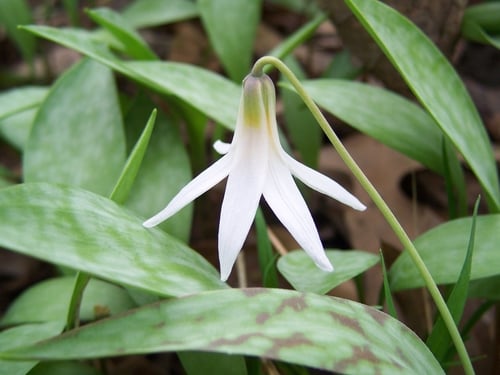
Erythronium albidum var. mesochoreum
Fawnlily
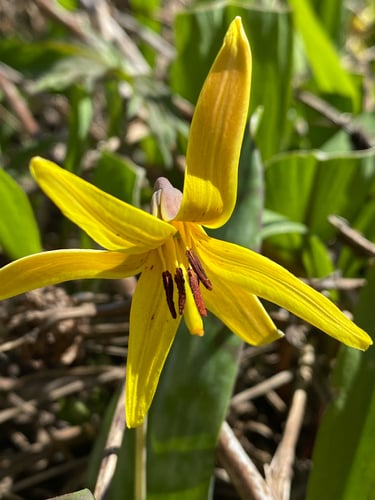
Erythronium americanum
Trout lily, Dog tooth violet, Prairie fawnlily, Snake lily, Yellow adder's tongue, Amberbell
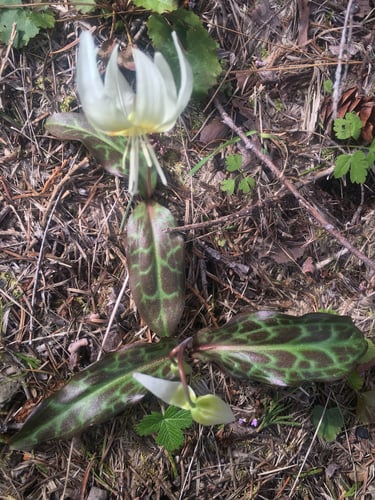
Erythronium californicum
Fawn lily
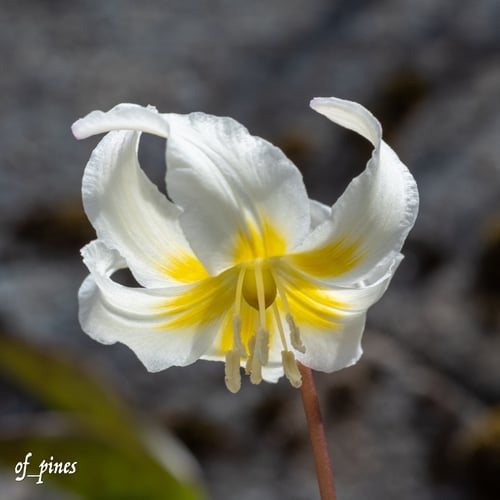
Erythronium citrinum
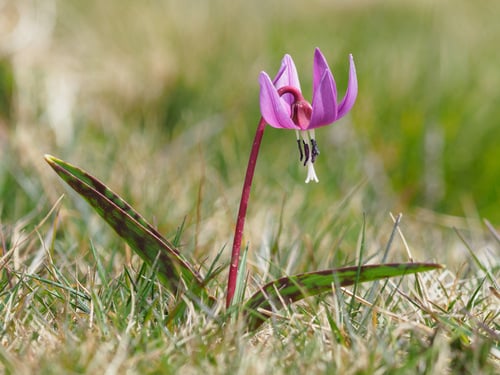
Erythronium dens-canis
Dog's-tooth violet
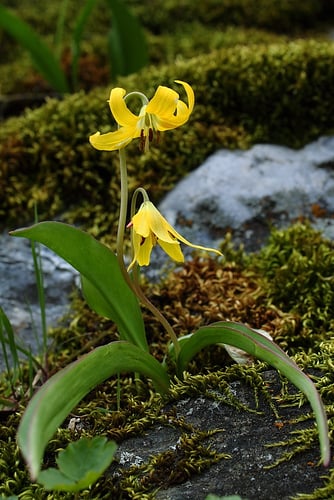
Erythronium grandiflorum
Avalanche lily, Dog's-tooth violet, Glacier lily