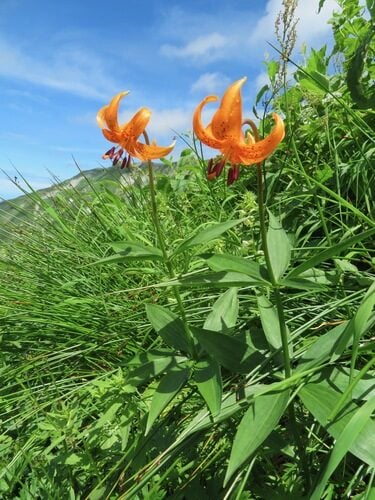
Fritillaria cirrhosa
D.Don
iNaturalist· cc-by
(c) Siddarth Machado, some rights reserved (CC BY), uploaded by Siddarth Machado
iNaturalist· cc-by
(c) Siddarth Machado, some rights reserved (CC BY)
Summary
Source: WikipediaFritillaria cirrhosa, common name yellow Himalayan fritillary, is an Asian species of herbaceous plant in the lily family, native to China (Gansu, Qinghai, Sichuan, Tibet, Yunnan), the Indian subcontinent (Nepal, Pakistan, India, Bhutan), and Myanmar. It is in danger of extinction, due to be being aggressively collected to make a traditional Chinese medicine, Bulbus fritillariae cirrhosae or Chuan-bei-mu. It is a Class III protected species in China's National Protected Medicinal Plants Red-List
Description
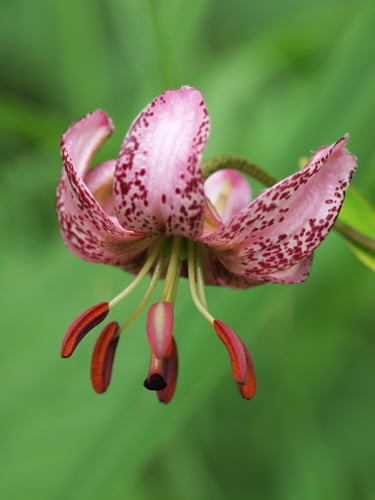
A bulb plant. It is an erect herb. The bulb has 2 scales and is 1-2 cm across. The plant grows to about 75 cm high. There are 7-11 leaves. The leaves do not have leaf stalks. They are narrow. The lower leaves are opposite but the upper leaves are in a ring. The uppermost leaves have a thin string like tip. The flowers occur singly and droop. They are yellow with dark purple spots. The fruit is a capsule with wings.
Edible Uses
The bulb, which is about 2cm in diameter, can be boiled or roasted as a vegetable. It has a bitter-sweet flavour.
Traditional Uses
The roots are boiled or roasted and eaten. The female flower parts are chewed. Caution: Most fritillarias are poisonous if eaten.
This uses section is brief — help expand it
Medicinal Uses
The bulbs of Chuan bei mu are antitussive, astringent, demulcent, expectorant, febrifuge, and pectoral. They contain fritimine, which lowers blood pressure, diminishes excitability of respiratory centres, paralyses voluntary movement, and counters the effects of opium. The dried bulb is used internally for coughs, bronchitis, pneumonia, asthma, feverish illnesses, and abscesses. The bulbs also have a folk history of use against breast and lung cancer in China. This remedy should only be used under the supervision of a qualified practitioner, as excessive doses can cause breathing difficulties and heart failure. Bulbs are harvested in winter while dormant and dried for later use.
Distribution
It is a temperate plant. In Nepal they grow from 3000-4500 m altitude. The grow in exposed, alpine grassland. It grows in forests and alpine thickets and moist places in China between 3200-4600 m. It is often on limestone soils. It needs humus-rich, moisture retaining soil. It needs cool damp summers. It suits hardiness zones 4-9. In Sichuan and Yunnan.
Where It Grows
Asia, Australia, Bhutan, China, Himalayas, India, Indochina, Myanmar, Nepal, Northeastern India, SE Asia, Sikkim, Tibet,
Cultivation
Succeeds in a well-drained loamy soil. Prefers peat bed conditions, the plant should not be allowed to dry out. In cultivation at Kew and thriving in a sunny stony bed at Keillour Castle in Perthshire, this species does not, however, do well in all gardens. It is much valued as a herbal remedy in China. This species is closely related to F. meleagris.
Propagation
Seed is best sown as soon as ripe in a cold frame, where it should germinate in spring. Protect from frost. Stored seed should be sown as soon as possible and may take a year or more to germinate. Sow thinly to avoid the need to prick out seedlings. After germination, give occasional liquid feeds to prevent mineral deficiency. When plants die down at the end of their second growing season, divide the small bulbs and plant 2–3 per 8cm deep pot. Grow on for at least another year in light shade in the greenhouse before planting out while dormant. Divide offsets in August — larger bulbs can go directly into permanent positions, while smaller ones are best potted and grown on in a cold frame for a year before autumn planting. Propagation by bulb scales is also possible.
Other Uses
None known.
Notes
There are about 100 Fritillaria species. The bulbs are used in medicine.
Synonyms
Also Known As
Ban lasun, Chuan bei mu, Kakoli, Tak tak
References (8)
- Ambasta, S.P. (Ed.), 2000, The Useful Plants of India. CSIR India. p 228
- Chen Xinqi, Liang Songyun, Xu Jiemei, Tamura M.N., Liliaceae. Flora of China. p 57
- Cundall, P., (ed.), 2004, Gardening Australia: flora: the gardener's bible. ABC Books. p 614
- Guo, C., et al, 2022, An Ethnobotany Survey of Wild Plants Used by the Tibetan People of the Yadong River Valley, Tibet, China. Journal of Ethnobiology and Ethnomedicine p 24
- Manandhar, N.P., 2002, Plants and People of Nepal. Timber Press. Portland, Oregon. p 239
Show all 8 references Hide references
- Plants for a Future database, The Field, Penpol, Lostwithiel, Cornwall, PL22 0NG, UK. http://www.scs.leeds.ac.uk/pfaf/
- Prodr. fl. nepal. 51. 1825
- Uprety, Y., et al, 2016, Traditional use and management of NTFPs in Kangchenjunga Landscape: implications for conservation and livelihoods. Journal of Ethnobiology and Ethnomedicine (2016) 12:19