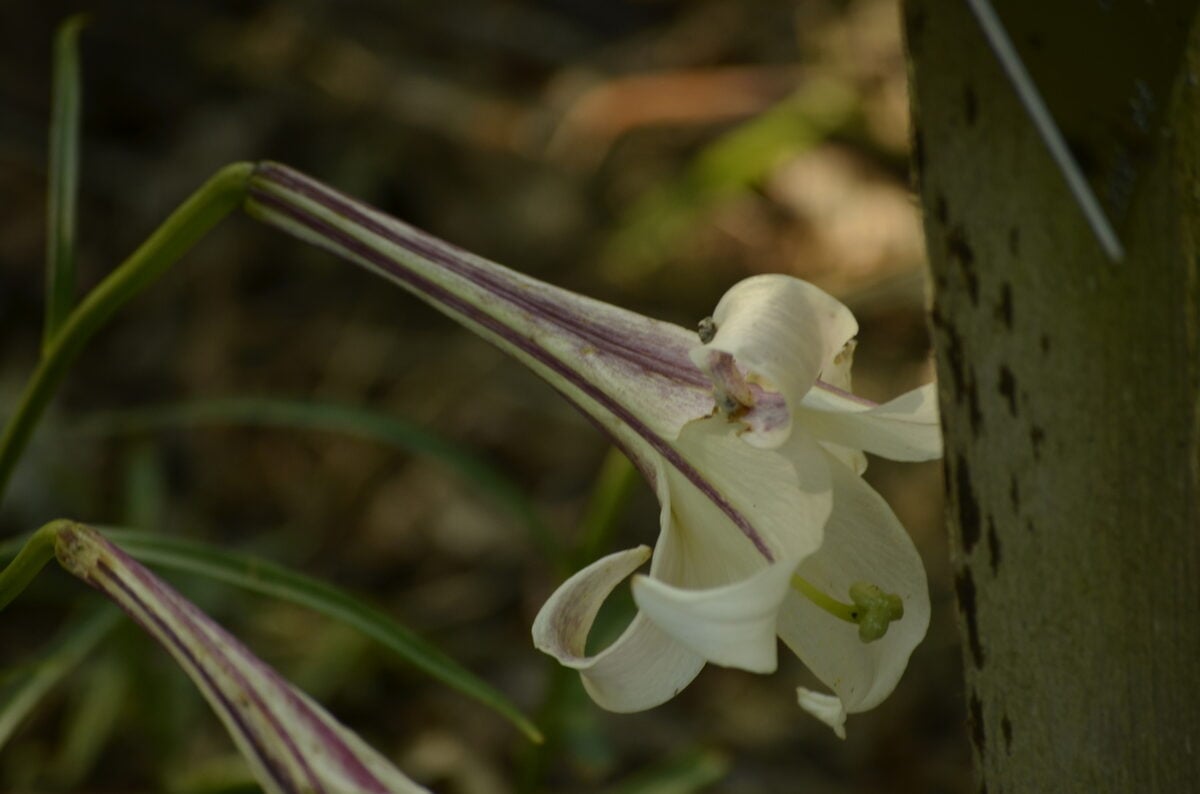
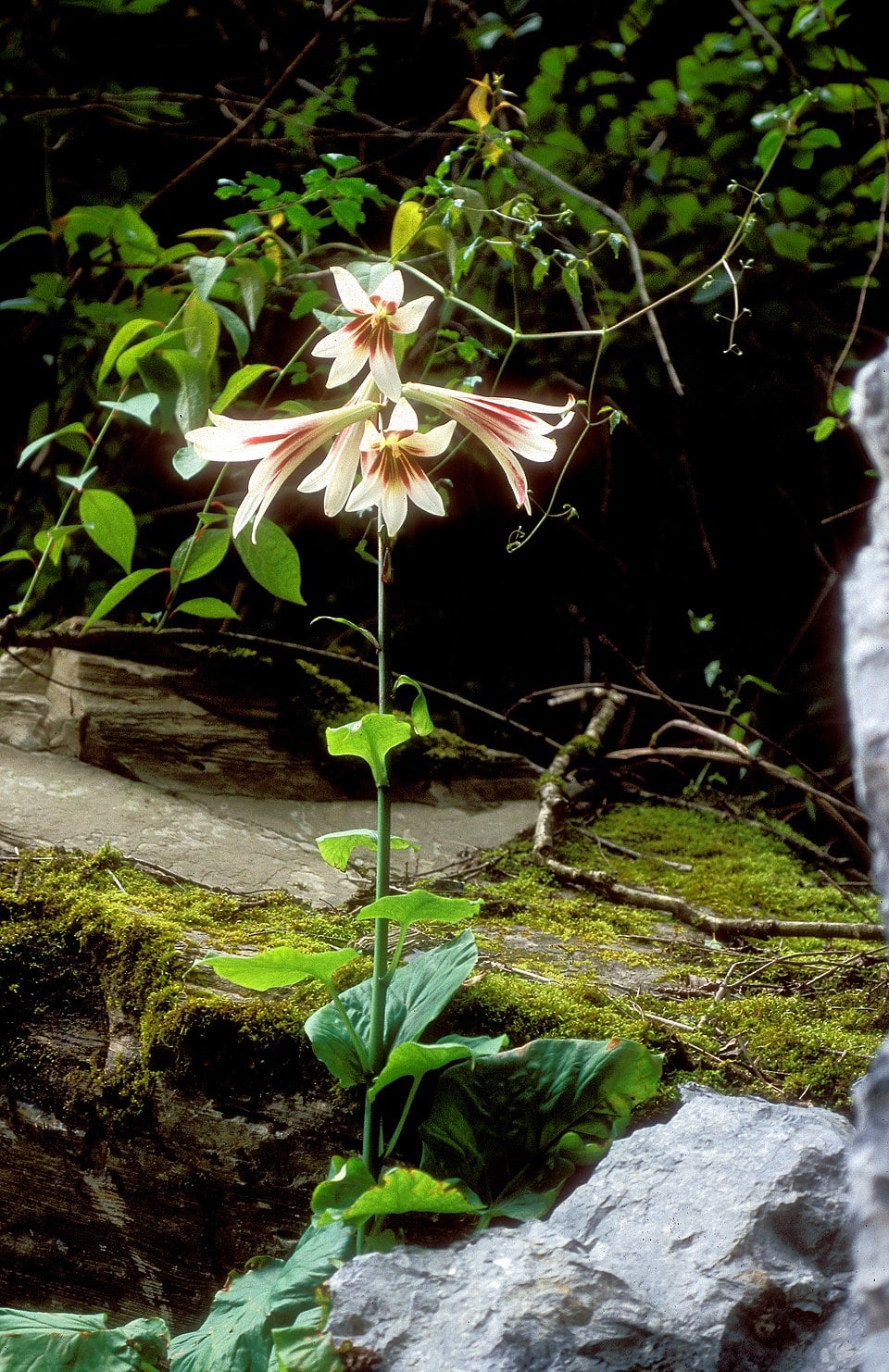
Fritillaria pudica
(Pursh.) Spreng.
Yellow Fritillary, Yellow Missionbells
iNaturalist· cc-by-nc
(c) Jeff Walker, some rights reserved (CC BY-NC), uploaded by Jeff Walker
iNaturalist· cc-by-nc
(c) Lynette Schimming, some rights reserved (CC BY-NC)
iNaturalist· cc-by-nc
(c) Adam Schneider, some rights reserved (CC BY-NC), uploaded by Adam Schneider
Summary
Source: WikipediaFritillaria pudica, the yellow fritillary, is a small perennial plant found in the sagebrush country in the western United States (Idaho, Montana, Oregon, Washington, Wyoming, very northern California, Nevada, northwestern Colorado, North Dakota and Utah) and Canada (Alberta and British Columbia). It is a member of the lily family Liliaceae. Another common (but somewhat ambiguous) name is "yellow bells", since it has a bell-shaped yellow flower. It may be found in dryish, loose soil; it is amongst the first plants to flower after the snow melts, but the flower does not last very long; as the petals age, they turn a brick-red colour and begin to curl outward. The flowers grow singly or in pairs on the stems, and the floral parts grow in multiples of threes. The species produces a small corm, which forms corms earning the genus the nickname 'riceroot'. During his historic journey, Meriwether Lewis collected a specimen while passing through Idaho in 1806. The corm can be dug up and eaten fresh or cooked; it served Native Americans as a good source of food in times past, and is still eaten occasionally. Today these plants are not common, so digging and eating the corms is not encouraged. The plant is called [q̓aw̓x̌e] in Salish and [ˈsɨkni] in Sahaptin. Yellow Bells have a similar nutrient profile to a potato but have 50 percent more protein, six times as much calcium, and nearly 30 times more iron. At 64 calories per 100g fresh weight, Yellow Bell bulbs have more caloric value than Common Camas (61 cal/100g) but less than Northern Riceroot (98 cal/100g). Yellow Bells are slightly higher in fat and much higher in calcium but lower in carbohydrates than both Common Camas and Northern Riceroot.
Description
A small herb that keeps growing from year to year. It is 10-30 cm high. There are only a few leaves and they are narrow and oblong. The flowers are pale yellowish-green. They have a faint purple stripe. The flowers turn orange or brown with age. The flowers usually occur singly and are nodding. They are cup shaped. The fruit is a dry papery capsule. It has many seeds.
Edible Uses
The bulb can be eaten raw, cooked, or dried for later use. It is rich in starch and best harvested in autumn. Commonly eaten by native North Americans, smaller bulbs were consumed raw while larger ones were cooked. Raw, the bulb tastes like potatoes; cooked, it resembles rice. It works well as a vegetable on its own or added to soups. The green seedpods can be eaten raw or cooked but are bitter, despite having a delicious overall flavour.
Traditional Uses
Caution: Most fritillarias are poisonous if eaten. The bulbs and offsets have been used as food. The are eaten raw, boiled, or steamed. They can be dried and stored.
Medicinal Uses
None known.
Distribution
It is a temperate plant. It grows on dry hillsides and stony mountain slopes.
Where It Grows
Canada, North America, USA,
Propagation
Seed is best sown as soon as ripe in a cold frame, where it should germinate in spring. Protect from frost. Stored seed should be sown as soon as possible and may take a year or more to germinate. Sow thinly to avoid the need to prick out seedlings. After germination, give occasional liquid feeds to prevent mineral deficiency. When plants die down at the end of their second growing season, divide the small bulbs and plant 2–3 per 8cm deep pot. Grow on for at least another year in light shade in the greenhouse before planting out while dormant. Divide offsets in August — larger bulbs can go directly into permanent positions, while smaller ones are best potted and grown on in a cold frame for a year before autumn planting. Propagation by bulb scales is also possible.
Other Uses
None known.
Notes
There are about 100 Fritillaria species.
Also Known As
Winida
References (12)
- Beckstrom-Sternberg, Stephen M., and James A. Duke. "The Foodplant Database." http://probe.nalusda.gov:8300/cgi-bin/browse/foodplantdb.(ACEDB version 4.0 - data version July 1994)
- Brickell, C. (Ed.), 1999, The Royal Horticultural Society A-Z Encyclopedia of Garden Plants. Convent Garden Books. p 448
- Cormack, R. G. H., 1967, Wild Flowers of Alberta. Commercial Printers Edmonton, Canada. p 38
- Couture, M. D., 1978, Recent and Contemporary Foraging Practices of the Harney Valley Paiute. Thesis, Portland State University
- Coutre, M. D., et al, 1986, Foraging Behaviour of a Contemporary Northern Great Basin Population. Journal of California and Great Bason Anthropology Vol. 8(2) pp 150-160
Show all 12 references Hide references
- Lim, T. K., 2015, Edible Medicinal and Non Medicinal Plants. Volume 9, Modified Stems, Roots, Bulbs. Springer p 43
- MacKinnon, A., et al, 2009, Edible & Medicinal Plants of Canada. Lone Pine. p 196
- Moerman, D. F., 2010, Native American Ethnobotany. Timber Press. p 240
- Plants for a Future database, The Field, Penpol, Lostwithiel, Cornwall, PL22 0NG, UK. http://www.scs.leeds.ac.uk/pfaf/
- Scotter, G. W., & Flygare, H., 1993, Wildflowers of the Canadian Rockies. Hurtig. p 86
- Stubbs, R. D., 1966, An investigation of the Edible and Medicinal Plants used by the Flathead Indians. MA thesis University of Montana. p 51
- Turner, N., 1997, Food Plants of Interior First Peoples. Royal BC Museum Handbook p 68