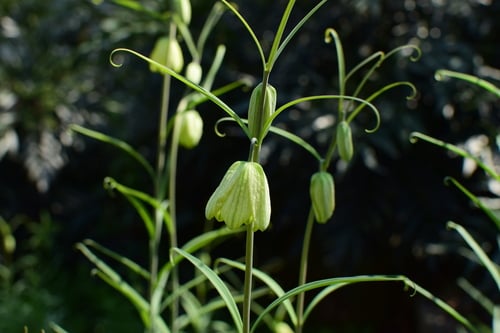
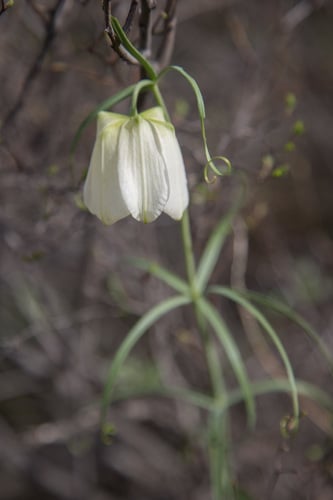
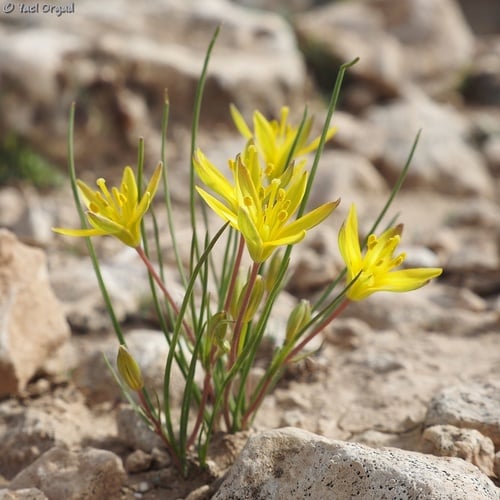
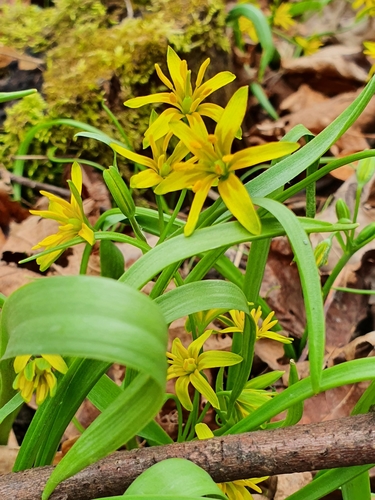
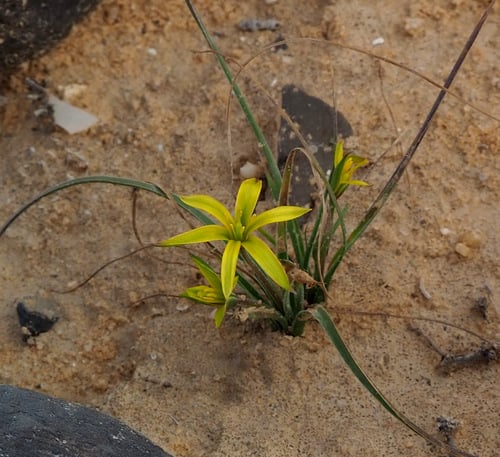
Fritillaria atropurpurea
Nutt.
Purple fritillary
iNaturalist· cc-by
(c) Matt Berger, some rights reserved (CC BY)
iNaturalist· cc-by
(c) Matt Berger, some rights reserved (CC BY)
iNaturalist· cc-by
(c) Matt Berger, some rights reserved (CC BY)
Summary
Source: WikipediaFritillaria atropurpurea is a species of fritillary known by several common names, including spotted fritillary, purple fritillary, spotted mountainbells, spotted missionbells, and leopard lily.
Description
A bulbous plant growing 0.6m tall by 0.1m wide, hardy to UK zone 4. Flowers April to May. Hermaphroditic and insect-pollinated. Prefers light sandy or medium loamy, well-drained soils with mildly acid to basic pH. Grows in semi-shade or full sun, adapts to dry or moist soil.
Edible Uses
The bulb can be eaten raw or cooked and is rich in starch. It is quite small, typically less than 15mm in diameter.
Traditional Uses
Caution: Most fritillarias are poisonous if eaten.
This uses section is brief — help expand it
Medicinal Uses
The plant has been pulverized into a salve and applied to scrofulous swellings.
Distribution
It is a temperate plant.
Where It Grows
North America, USA,
Cultivation
A woodland plant, preferring light soils. It is best grown in a well-drained sandy woodland soil. Plants are best grown in a bulb frame and kept rather dry in summer. Water should be withheld in summer or hot spells. Closely related to F. pinetorum.
Propagation
Seed is best sown as soon as ripe in a cold frame, where it should germinate in spring. Protect from frost. Stored seed should be sown as soon as possible and may take a year or more to germinate. Sow thinly to avoid the need to prick out seedlings. After germination, give occasional liquid feeds to prevent mineral deficiency. When plants die down at the end of their second growing season, divide the small bulbs and plant 2–3 per 8cm deep pot. Grow on for at least another year in light shade in the greenhouse before planting out while dormant. Divide offsets in August — larger bulbs can go directly into permanent positions, while smaller ones are best potted and grown on in a cold frame for a year before autumn planting. Propagation by bulb scales is also possible.
Other Uses
None known.
Notes
There are about 100 Fritillaria species.
References (1)
- Plants for a Future database, The Field, Penpol, Lostwithiel, Cornwall, PL22 0NG, UK. http://www.scs.leeds.ac.uk/pfaf/