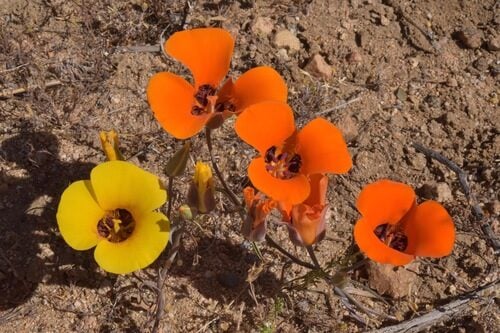
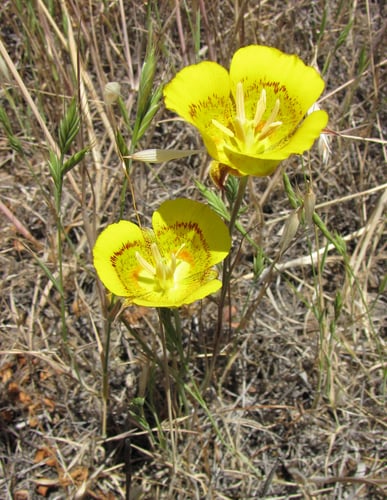
Calochortus gunnisonii
S. Watson
Mariposa lily, Gunnison mariposa
iNaturalist· cc-by-nc
(c) irishboy1, some rights reserved (CC BY-NC)
iNaturalist· cc0
no rights reserved
iNaturalist· cc-by-nc
(c) Nathan Steele, some rights reserved (CC BY-NC)
Summary
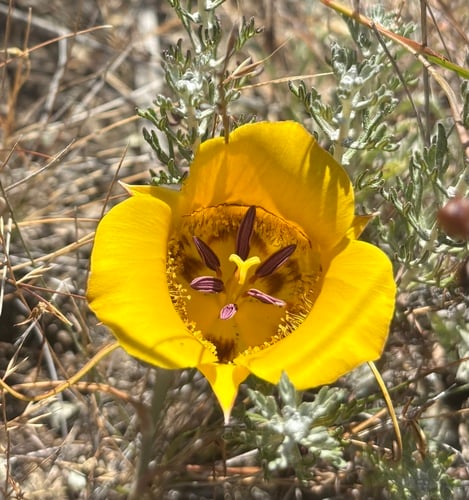
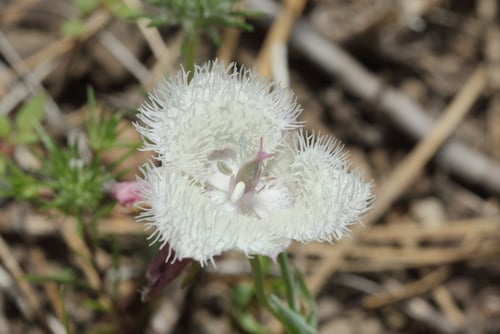
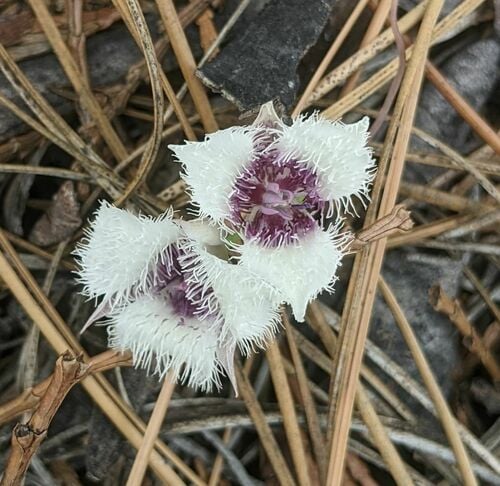
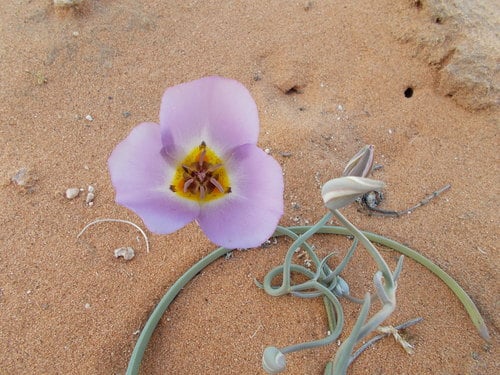
Source: WikipediaCalochortus gunnisonii commonly known as Rocky Mountain mariposa or Gunnison mariposa lily is a North American species of flowering plant in the lily family. It is native to the western United States, primarily in the Rocky Mountains and Black Hills: Arizona, New Mexico, Utah, Colorado, Wyoming, Montana, South Dakota, Washington state (Grant County, northwestern Nebraska (Sioux County) and eastern Idaho (Fremont County). Calochortus gunnisonii is a bulb-forming perennial with straight stems up to 55 cm tall. Flowers are white to purple with darker purple markings. The three petals have a wide rim above a deeply concave center lined with hairs. Between and behind each broad petal are three narrow, lanceolate, sepals. Varieties Calochortus gunnisonii var. gunnisonii - most of species range Calochortus gunnisonii var. perpulcher Cockerell - New Mexico The subspecies Calochortus gunnisonii var. perpulcher (Pecos mariposa lily) is an uncommon yellow color form limited to Colfax, Mora, and San Miguel counties in New Mexico.
Description
A bulbous perennial growing to 30 cm tall. Hardy to UK zone 4. Flowers appear June–July. Hermaphroditic flowers are insect-pollinated. Thrives in light sandy or medium loamy, well-drained soils across mildly acidic to mildly alkaline pH ranges. Requires full sun and tolerates both dry and moist conditions.
Edible Uses
Edible Parts: Flowers Leaves Root Seed Edible Uses: Bulb - raw or cooked. One report says that the raw bulb tastes like a raw new potato. It has a crisp nut-like texture and a pleasant flavour when cooked. The bulb can be dried and ground into a powder for making a sweet porridge, mush etc. Leaves - cooked. It is hard to obtain a sufficient quantity and use of the leaves will weaken the bulbs. Seed - ground into a powder. Flower buds - raw. Added to salads. The bulbs are edible and highly regarded for their flavor, while the leaves and seeds have limited nutritional value. The bulbs were eaten by several Native American groups, including the Ute and Shoshone, who roasted or boiled them as a sweet, starchy vegetable. The flavor is mild, without bitterness or mucilage [2-3]. Edibility rating: 4.5/5 for bulbs; 1/5 for leaves and seeds. Taste, Processing & Kitchen Notes: When roasted, the bulbs become soft and sweet, similar in flavor to roasted chestnuts or parsnips. Boiling produces a milder, potato-like taste. Fresh bulbs are crisp and faintly nutty when raw but are best consumed cooked, as this enhances digestibility and sweetness. Indigenous peoples often roasted them in earth pits or boiled them in baskets with hot stones. Dried bulbs can be stored and later reconstituted in stews or soups [2-3]. Seasonality (Phenology): Flowering: June–August, depending on altitude. Fruiting: Late July–September. Dormancy: By late summer, the plant’s aerial parts wither completely. Harvest: Bulbs can be collected from late spring through early autumn, ideally after seed set, when energy reserves are at their peak. Safety & Cautions (Food Use): Bulbs are edible only when thoroughly cooked. Raw bulbs can cause mild gastrointestinal upset. As with all Calochortus species, collection from protected areas should be avoided to preserve wild populations. Harvest & Processing Workflow: Locate mature flowering plants in early summer, then mark sites for later harvest once seed capsules dry. Carefully dig bulbs using a narrow trowel or stick. Wash, peel, and cook by roasting or boiling 15–20 minutes. Bulbs can be sun-dried for storage or roasted immediately. Traditional / Indigenous Use Summary: The Ute, Shoshone, and Paiute peoples valued C. gunnisonii bulbs as a nutritious, starchy food. They roasted them whole in ashes or boiled them with meat. In some traditions, the plant also held symbolic meaning associated with survival, renewal, and gratitude for seasonal abundance.
Traditional Uses
The fresh bulbs are eaten raw with salt. They can be fried or baked. They can be dried and pounded into flour for porridge. The flower buds are eaten raw in salads. The seeds are ground into flour and eaten.
Medicinal Uses
Antirheumatic Miscellany An infusion of the plant has been taken internally to treat rheumatic swellings and to ease the delivery of the placenta.
Known Hazards
Bulbs are edible only when thoroughly cooked. Raw bulbs can cause mild gastrointestinal upset. As with all Calochortus species, collection from protected areas should be avoided to preserve wild populations.
Distribution
It is a temperate plant. It is widespread in the Rocky mountains in the USA. It grows in grassland and open pine forests. It usually grows between 1,000-3,300 m altitude.
Where It Grows
Canada, North America, USA,
Cultivation
Gunnison’s Mariposa Lily prefers well-drained, sandy or loamy soils in open meadows, sagebrush flats, and mountain foothills. It thrives in full sun with cool, moist springs and dry summers. Tolerant of frost and snow cover, it is well suited to USDA Hardiness Zones 4–8. Overwatering or heavy clay soils lead to bulb rot. Requires a deep very well-drained fertile sandy soil in a sunny position and must be kept dry from mid summer to late autumn. This is a rather difficult plant to cultivate in Britain, it is very cold hardy but is intolerant of wetness especially in the winter. It is easiest to grow in a bulb frame but is worth trying outdoors at the base of a south-facing wall, especially with shrubs that like these conditions. Bulbs can be lifted as soon as the foliage dies down in the summer and stored overwinter in a cool dry place, replanting in the spring. The bulbs must be replanted immediately according to another report. Bulbs frequently divide after flowering, the bulblets taking 2 years to reach flowering size. This species is closely related to C. ambiguus. Hand pollination is necessary if seed is required. Habitat & Range: Native to Colorado, Utah, Wyoming, New Mexico, and northern Arizona, this species occurs primarily between 1,500 and 3,000 meters elevation. It favors montane grasslands, aspen openings, and sagebrush steppe—often flowering abundantly after wet springs. It is especially common in the Gunnison Basin of Colorado, from which its name derives. Size & Landscape Performance: Typically 15–45 cm tall and 10–25 cm wide, Gunnison’s Mariposa Lily produces spectacular displays in spring and early summer. In cultivation, it is hardy and resilient, performing well in rock gardens, native meadow restorations, and high-altitude xeriscapes. Pests & Problems: Few natural pests exist, though bulb rot can occur under prolonged soil moisture. Gophers or voles may dig bulbs in winter. In cultivation, fungal disease may arise in overly shaded or compacted sites.
Propagation
Seed - sow as soon as ripe or early spring in a cold frame in a very sharply draining medium. Stratification may be helpful. Germination usually takes place within 1 - 6 months at 15°c. Leave the seedlings undisturbed for their first two years growth, but give them an occasional liquid feed to ensure they do not become nutrient deficient. It is quite difficult to get the seedlings through their first period of dormancy since it is all too easy either to dry them out completely or keep them too moist when they will rot. After their second year of growth, pot up the dormant bulbs in late summer and grow them on for at least another 2 years in the greenhouse before trying them outside. Seedlings take about 5 - 7 years to come into flower. Division of the bulbs as soon as the foliage dies down. The bulbs can be planted straight out into their permanent positions but in areas with wet winters it might be best to store them overwinter and replant them in the spring. Stem bulbils, harvested from the stems after flowering. They can be stored cool and dry then planted in pots in the cold frame in the spring.
Other Uses
Miscellany In some traditions, the plant also held symbolic meaning associated with survival, renewal, and gratitude for seasonal abundance. Ecology & Wildlife: The flowers attract native bees and hoverflies, which pollinate while collecting nectar and pollen. Rodents and voles sometimes eat the bulbs, and deer occasionally browse foliage. The species contributes to the biodiversity of montane pollinator networks and helps stabilize fragile soils through its bulbous root system. Performs well in rock gardens, native meadow restorations, and high-altitude xeriscapes. Ethereal flowers continue to inspire naturalists and gardeners alike. Special Uses
Notes
There are about 60-100 Calochortus species. There are 7-9 species in tropical America. They have also been put in the family Calochortaceae.
Synonyms
Also Known As
Gunnison’s Mariposa Lily (Calochortus gunnisonii S. Watson)
References (8)
- Beckstrom-Sternberg, Stephen M., and James A. Duke. "The Foodplant Database." http://probe.nalusda.gov:8300/cgi-bin/browse/foodplantdb.(ACEDB version 4.0 - data version July 1994)
- Bircher, A. G. & Bircher, W. H., 2000, Encyclopedia of Fruit Trees and Edible Flowering Plants in Egypt and the Subtropics. AUC Press. p 74
- Facciola, S., 1998, Cornucopia 2: a Source Book of Edible Plants. Kampong Publications, p 143
- Kermath, B. M., et al, 2014, Food Plants in the Americas: A survey of the domesticated, cultivated and wild plants used for Human food in North, Central and South America and the Caribbean. On line draft. p 163
- Lim, T. K., 2015, Edible Medicinal and Non Medicinal Plants. Volume 9, Modified Stems, Roots, Bulbs. Springer p 21
Show all 8 references Hide references
- Plants for a Future database, The Field, Penpol, Lostwithiel, Cornwall, PL22 0NG, UK. http://www.scs.leeds.ac.uk/pfaf/
- Uphof,
- World Checklist of Useful Plant Species 2020. Royal Botanic Gardens, Kew