Fritillaria affinis
(Schultz. & Schult.f.) Sealy
Rice-grain Fritillary, Chocolate lily, Checker lily
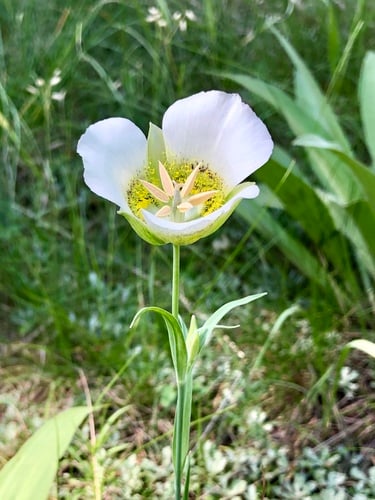
iNaturalist· cc-by-sa
(c) Franco Folini, some rights reserved (CC BY-SA)
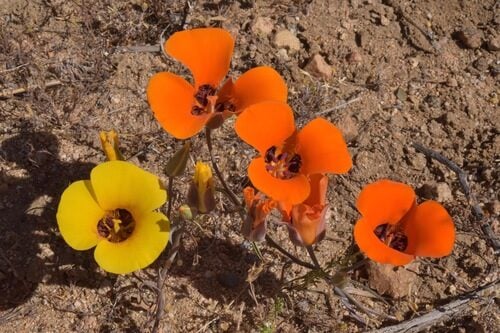
iNaturalist· cc-by-nc
(c) J. Maughn, some rights reserved (CC BY-NC)
Summary
Source: WikipediaFritillaria affinis, the chocolate lily, is a highly variable species of flowering plant in the lily family Liliaceae native to western North America.
Description
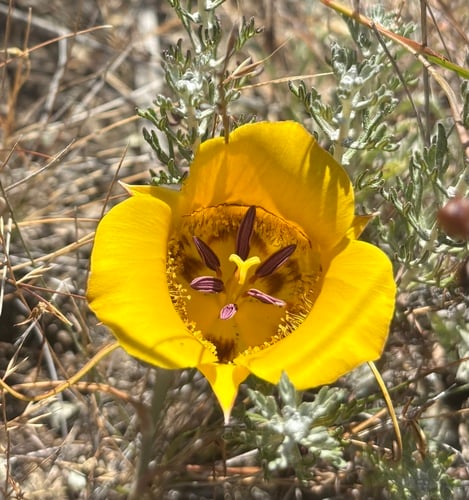
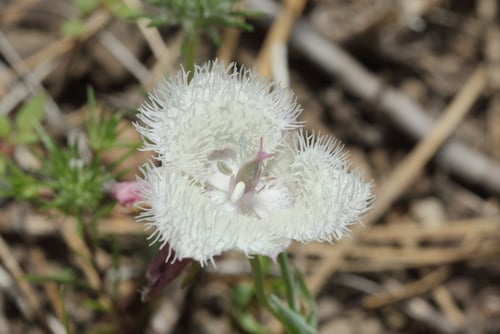
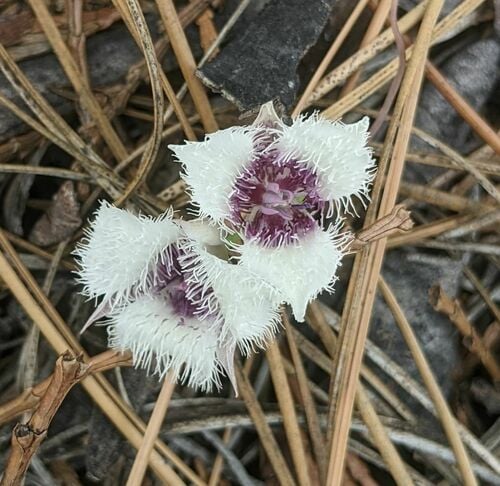
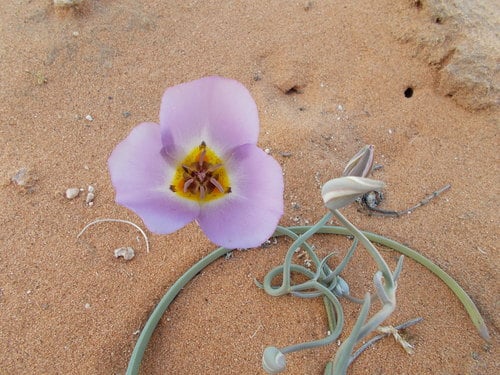
A bulb plant. It grows 60 cm tall. The leaves are broadly sword shaped and in rings. The leaves are blue-green. The flowers are purple-brown mottled with yellow spots. They are bell shaped and usually nodding.
Edible Uses
The bulb can be eaten raw, cooked, or dried for winter use. It is rich in starch and best harvested in autumn. The plant produces a small central bulb surrounded by rice-like bulblets; both are edible. When cooked, they become tender and delicate, resembling rice but with a slightly bitter taste. The bulb was a staple food for some native North American tribes. Immature seedpods can also be eaten raw or cooked, though they have a bitter flavour.
Traditional Uses
Caution: Most fritillarias are poisonous if eaten. The bulbs and bulblets are cooked are eaten. They are also used in soups and stews.
This uses section is brief — help expand it
Medicinal Uses
None known.
Distribution
It is a temperate plant. In Canada they grow in oak or pine woodlands and grasslands. It needs to be dry during the summer when bulbs are dormant. It suits hardiness zones 6-9.
Where It Grows
Australia, Canada, North America*, Tasmania, USA,
Propagation
Seed is best sown as soon as ripe in a cold frame, where it should germinate in spring. Protect from frost. Stored seed should be sown as soon as possible and may take a year or more to germinate. Sow thinly to avoid the need to prick out seedlings. After germination, give occasional liquid feeds to prevent mineral deficiency. When plants die down at the end of their second growing season, divide the small bulbs and plant 2–3 per 8cm deep pot. Grow on for at least another year in light shade in the greenhouse before planting out while dormant. Divide offsets in August — larger bulbs can go directly into permanent positions, while smaller ones are best potted and grown on in a cold frame for a year before autumn planting. Propagation by bulb scales is also possible.
Other Uses
None known.
Notes
There are about 100-130 Fritillaria species. They are bulb plants in temperate regions.
Synonyms
References (5)
- Brickell, C. (Ed.), 1999, The Royal Horticultural Society A-Z Encyclopedia of Garden Plants. Convent Garden Books. p 447
- Hibbert, M., 2002, The Aussie Plant Finder 2002, Florilegium. p 103
- MacKinnon, A., et al, 2009, Edible & Medicinal Plants of Canada. Lone Pine. p 192
- Plants for a Future, The Field, Penpol, Lostwithiel, Cornwall, PL22 0NG, UK. http://www.scs.leeds.ac.uk/pfaf/
- Turner, N., et al, 2011, "Up on the Mountain": Ethnobotanical Important of Montane Sites in Pacific Coastal North America. Journal of Ethnobiology 31(1): 4-43