Calochortus apiculatus
Baker
Mariposa lily
iNaturalist· cc-by-nc-nd
(c) Bill Bouton, some rights reserved (CC BY-NC-ND)
iNaturalist· cc-by-nc
(c) Stephen B. Brown, some rights reserved (CC BY-NC)
iNaturalist· cc-by-nc
(c) Stephen B. Brown, some rights reserved (CC BY-NC)
Summary
Source: WikipediaCalochortus apiculatus is a North American species of flowering plants in the lily family.
Description
A small herb with a fleshy bulb. It grows in clumps. It grows 10-30 cm high. There is one leaf which grows at the base near the bulb and in 6-12 mm wide. It is shorter than the stem. The flowers are yellowish-white and occur as 1-4 at the end of the weak stem. Each flower has 3 broad, spreading petals. They are purple. The fruit is 3 angled and nodding. It is dry and papery with many seeds. The capsule is 2.5 cm long.
Edible Uses
The bulbs are occasionally eaten raw in salads but are usually boiled or roasted.
Traditional Uses
The bulbs are occasionally eaten raw in salads but usually boiled or roasted.
This uses section is brief — help expand it
Distribution
It grows on dry open slopes and rocky ridges.
Where It Grows
Canada, North America, USA,
Notes
There are about 60-100 Calochortus species. There are 7-9 species in tropical America. They have also been put in the family Calochortaceae.
References (3)
- Cormack, R. G. H., 1967, Wild Flowers of Alberta. Commercial Printers Edmonton, Canada. p 31
- MacKinnon, A., et al, 2009, Edible & Medicinal Plants of Canada. Lone Pine. p 198
- Tozer, F., 2007, The Uses of Wild Plants. Green Man Publishing. p 50
More from Liliaceae
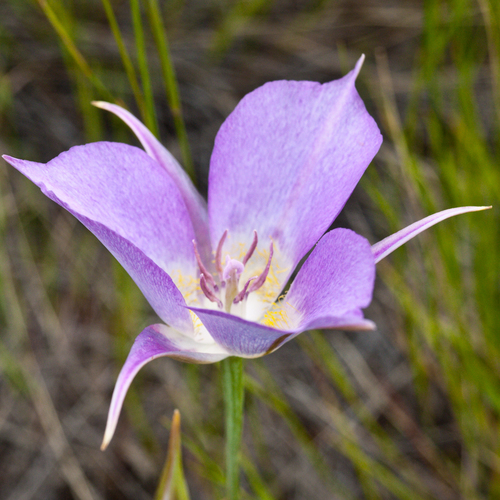
Calochortus macrocarpus
Sagebrush mariposa lily, Green-banded maroposa lily
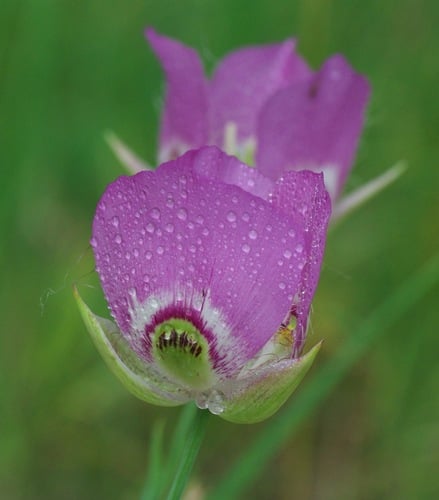
Calochortus nitidus
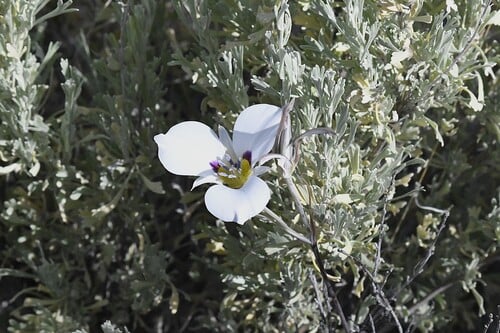
Calochortus nuttallii
Sego lily, Sago-Lilly, Mariposa Lilly, Nuttall's mariposa lily
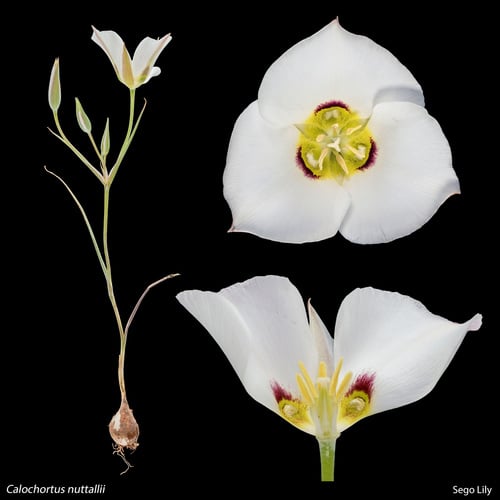
Calochortus nuttallii var. aureus
Mariposa lily
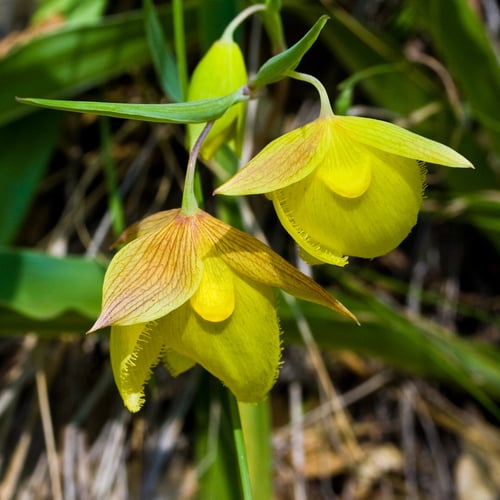
Calochortus pulchellus
Mount Diablo globelily, Star tulip, Golden lantern
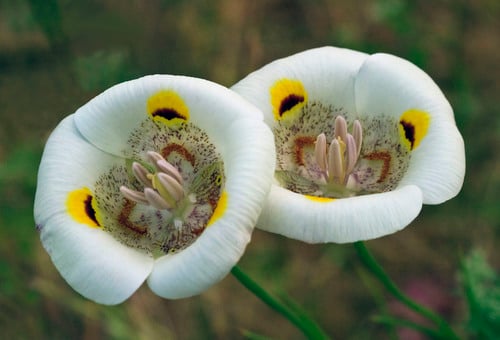
Calochortus superbus
Mariposa lily