Flacourtia flavescens
Willd.
Niger plum
iNaturalist· cc-by-nc
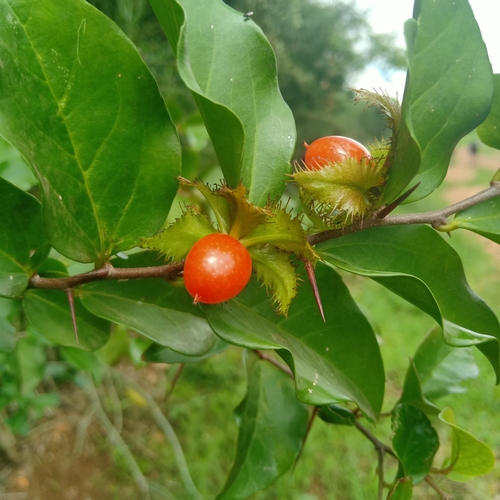
(c) Anderson Mesa C, some rights reserved (CC BY-NC)
iNaturalist· cc-by-nc
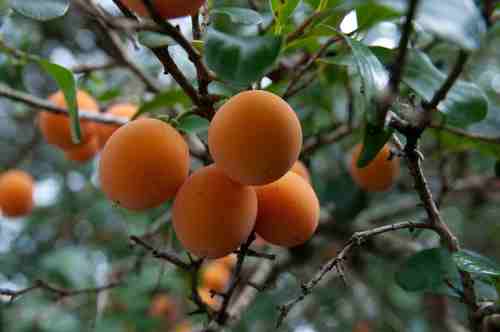
(c) Anderson Mesa C, some rights reserved (CC BY-NC)
iNaturalist· cc-by-nc
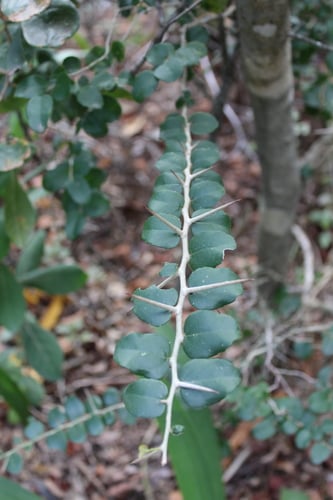
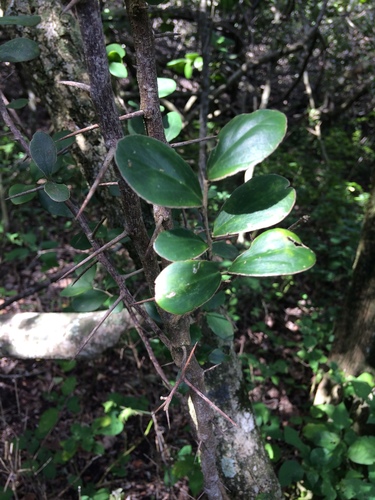
(c) Anderson Mesa C, some rights reserved (CC BY-NC)
Description
A spiny shrub or small tree. It can grow 10 m high. It is usually straggling with drooping branches. The leaves are 3.5-13 cm long by 2.5-7.5 cm wide. They are pale green and glossy above. There are teeth along the edge. The flowers are small and lack petals. They are greenish. The fruit are red or purple and 12 mm across. They are round when fresh but become angled when dry.
Edible Uses
The berries and fruit are eaten and are commonly used in West Africa, particularly during the drier season when other foods are scarce.
Distribution
A tropical plant. It grows on the edges of forests and in rocky situations in the savannah region.
Where It Grows
Africa, Angola, Benin, Burkina Faso, Cameroon, Central Africa, Congo, Côte d'Ivoire, Gambia, Ghana, Guinea, Guinée, Guinea-Bissau, Ivory Coast, Nigeria, Senegal, Sierra Leone, Togo, West Africa,
Other Information
It is a commonly used fruit in West Africa. Fruit tend to be available in the drier more hungry season.
Notes
There are about 17 Flacourtia species. Name unresloved in The Plant List but may be a synonym of Flacourtia indica. Also put in the Flacourtiaceae family.
Synonyms
Also Known As
Osere
References (12)
- Ambe, G., 2001, Les fruits sauvages comestibles des savanes guinéennes de Côte-d’Ivoire : état de la connaissance par une population locale, les Malinké. Biotechnol. Agron. Soc. Environ. 5(1), 43-48
- Atato, A., et al, 2010, Diversity of Edible Wild Fruit Tree Species of Togo. Global Science Books.
- Atato, A.,et al, 2011, Edible Wild Fruit Highly Consumed during Food Shortage Period in Togo: State of Knowledge and Conservation Status. Journal of Life Sciences 5 (2011) 1046-1057
- Burkill, H. M., 1985, The useful plants of west tropical Africa, Vol. 4. Kew.
- Dalziel, J. M., 1937, The Useful plants of west tropical Africa. Crown Agents for the Colonies London.
Show all 12 references Hide references
- Jardin, C., 1970, List of Foods Used In Africa, FAO Nutrition Information Document Series No 2.p 138
- Keay, R.W.J., 1989, Trees of Nigeria. Clarendon Press, Oxford. p 59
- N'Danikou, S. et al, 2010, Eliciting Local Values of Wild Edible Plants in Southern Bénin to Identify Priority Species for Conservation. Economic Botany, 20(10), 2011, pp. 1–15.
- Ouoba, P. et al, 2006, Fruit potential of the classified Niangoloko's forest in Burkina Faso. Fruits Vol. 61(1) pp 71-81
- Peters, C. R., O'Brien, E. M., and Drummond, R.B., 1992, Edible Wild plants of Sub-saharan Africa. Kew. p 114
- Vivien, J., & Faure, J.J., 1996, Fruitiers Sauvages d'Afrique. Especes du Cameroun. CTA p 162
- World Checklist of Useful Plant Species 2020. Royal Botanic Gardens, Kew