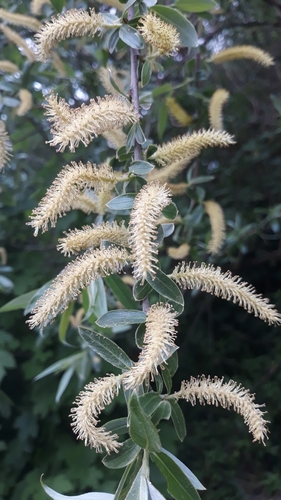
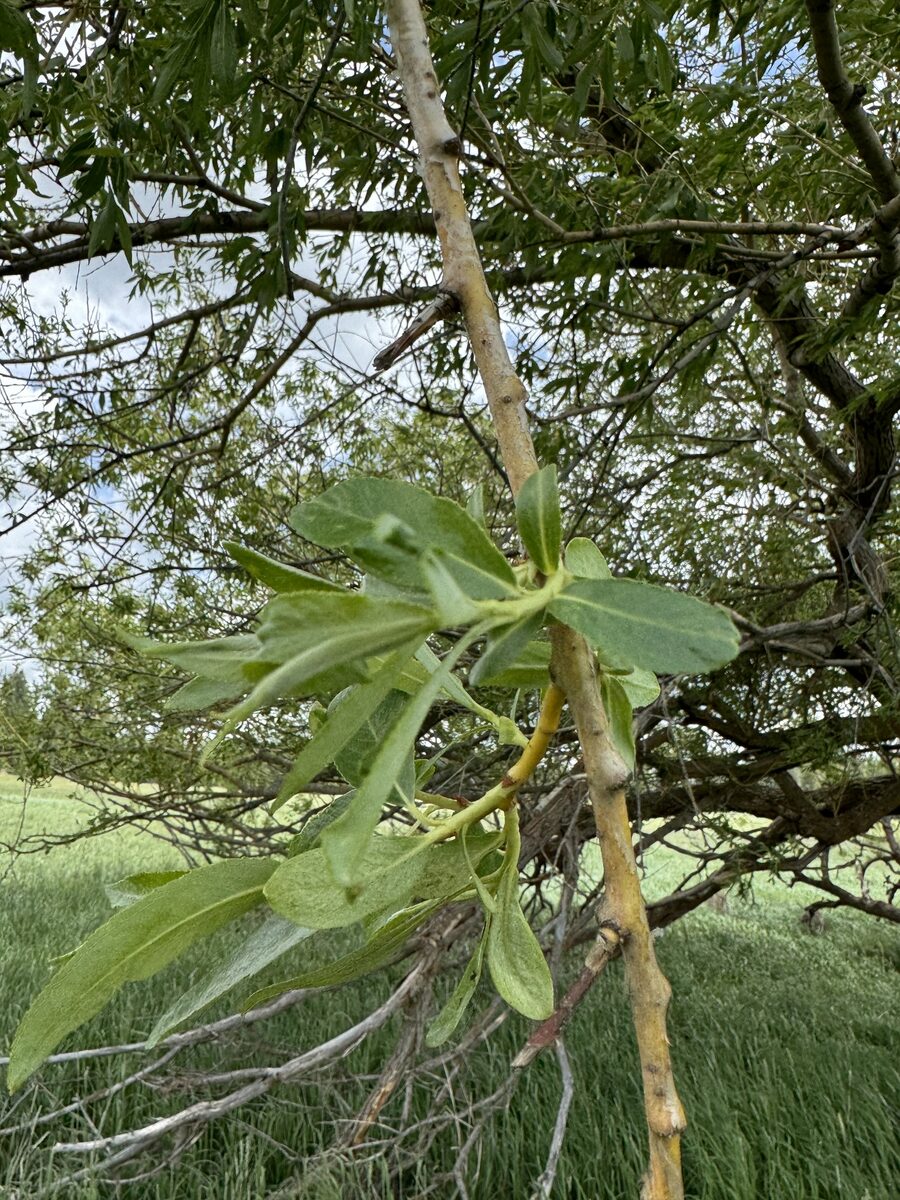
Populus deltoides var. wislizenii
(S. Watson) Eckenw.
Rio grande cottonwood
gbif· cc-by-nc-sa
University of Colorado Museum of Natural History Herbarium Vascular Plant Collection (COLO-V)
gbif· cc-by-nc-sa
University of Colorado Museum of Natural History Herbarium Vascular Plant Collection (COLO-V)
gbif· cc-by-nc-sa
University of Colorado Museum of Natural History Herbarium Vascular Plant Collection (COLO-V)
Summary
Source: WikipediaPopulus deltoides, the eastern cottonwood or necklace poplar, is a species of cottonwood poplar native to North America, growing throughout the eastern, central, and southwestern United States as well as the southern Canadian prairies, the southernmost part of eastern Canada, and northeastern Mexico.
Edible Uses
The wood of eastern cottonwood is typical of the Populus family in its softness, weighing just 0.45 g/cm3 (28 pounds per cubic foot). It is utilized for things like plywood and interior parts of furniture. General Custer fed his horses and mules the bark during the 1868–69 winter campaign against Native American tribes south of Arkansas. According to Charles Goodnight, cowboys afflicted with gastric disorders would make an astringent tea from the inner bark.
Traditional Uses
The flower buds are chewed as chewing gum.
This uses section is brief — help expand it
Where It Grows
Flowers, Gum, Inner bark, Leaves, Seeds,
Other Information
Salicaceae
Notes
A tree.
Synonyms
References (4)
- J. Arnold Arbor. 58:205. 1977 "wislizenii"
- Kermath, B. M., et al, 2014, Food Plants in the Americas: A survey of the domesticated, cultivated and wild plants used for Human food in North, Central and South America and the Caribbean. On line draft. p 677
- Moerman, D. F., 2010, Native American Ethnobotany. Timber Press. p 430
- Plants for a Future database, The Field, Penpol, Lostwithiel, Cornwall, PL22 0NG, UK. http://www.scs.leeds.ac.uk/pfaf/