Populus deltoides
W. Bartram ex Marshall
Eastern cottonwood, Carolina poplar
iNaturalist· cc-by-nc
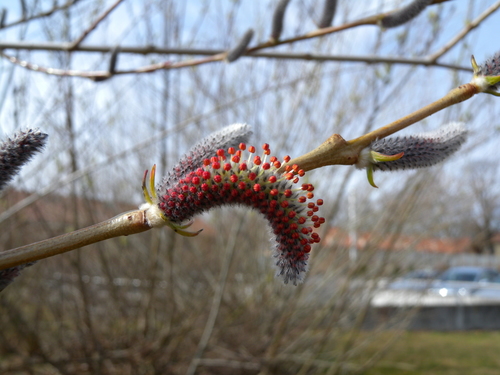
(c) Veronica Wahl, some rights reserved (CC BY-NC), uploaded by Veronica Wahl
iNaturalist· cc-by
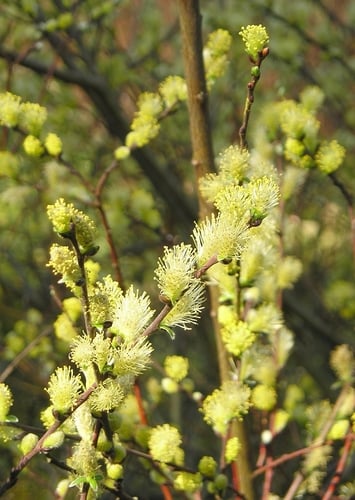
(c) Sandy Wolkenberg, some rights reserved (CC BY), uploaded by Sandy Wolkenberg
iNaturalist· cc-by-nc
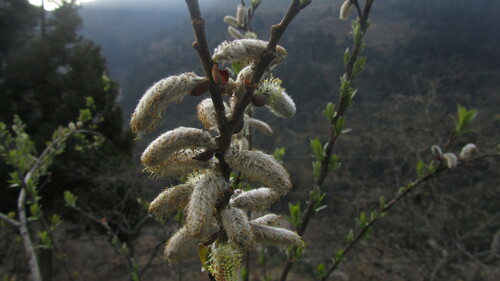
(c) Karen Scopel, some rights reserved (CC BY-NC), uploaded by Karen Scopel
Summary
Source: WikipediaPopulus deltoides, the eastern cottonwood or necklace poplar, is a species of cottonwood poplar native to North America, growing throughout the eastern, central, and southwestern United States as well as the southern Canadian prairies, the southernmost part of eastern Canada, and northeastern Mexico.
Description
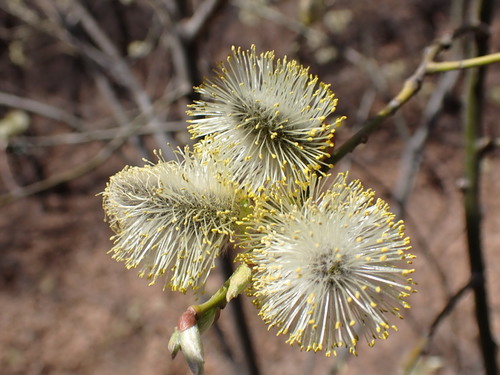
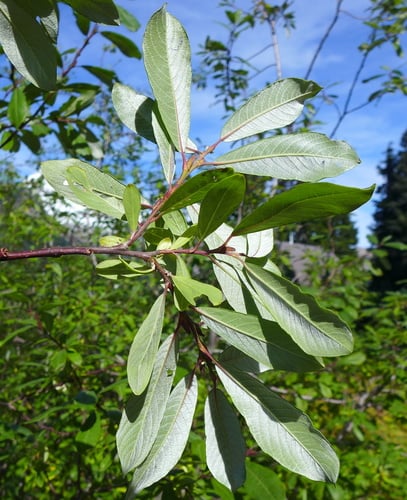
A medium sized tree. It loses its leaves during the year. It grows to 30 m tall. The trunk is 100 cm across. The bark is dark has deep cracks. The crown is broad. The leaves are triangle shaped and 5-10 cm long. The leaf stalk is long and flat. There are 2 or 3 glands on the stalk. The leaf blade is dark green on top and paler underneath. The leaves are hairy when young. The flowers are of one sex and are in catkins. The female flowers can be 20 cm long.
Edible Uses
The inner bark has a mucilaginous texture and is usually harvested in spring. It can be dried, ground into a powder, and used as a thickener in soups or added to cereals when making bread. The sap is also used for food, and the buds have been used as well, though details on preparation are limited. The seeds are very small and would be exceedingly fiddly to collect and use. The leaves are notably rich in protein and have a greater amino-acid content than wheat, corn, rice, and barley. A concentrate made from them is considered as nourishing as meat, but can be produced faster and more cheaply — some believe this could become a major food source for humans.
Traditional Uses
The inner bark and sap are used for food. The catkins are eaten raw.
This uses section is brief — help expand it
Medicinal Uses
The bark contains salicin, a glycoside that probably decomposes into salicylic acid (aspirin) in the body, making it anodyne, anti-inflammatory, and febrifuge. It is used especially for rheumatism and fevers, and to relieve menstrual cramp pain. An infusion of the bark has been used to treat whooping cough and tuberculosis, and a decoction has been used to expel intestinal worms. The bark has been eaten as a treatment for colds. A tea made from the inner bark treats scurvy. The inner bark combined with black haw bark (Crataegus douglasii) and wild plum bark (Prunus spp) has been used as a female tonic. A poultice of the leaves has been applied to treat rheumatism, bruises, sores, and boils.
Distribution
It is a temperate plant. It grows in rich moist soils. It needs cool aerated soil. It suits wetter climates. It suits hardiness zones 2-10. Arboretum Tasmania.
Where It Grows
Africa, Asia, Australia, Canada, East Africa, India, Korea, North America, Tasmania, USA, Zimbabwe,
Cultivation
An easily grown plant, it does well in a heavy cold damp soil but thrives best on moist well-drained, fine sandy loams or silts close to streams. Prefers a deep rich well-drained circumneutral soil, growing best in the south and east of Britain. Growth is much less on wet soils, on poor acid soils and on thin dry soils. It does not do well in exposed upland sites. It dislikes shade and is intolerant of root or branch competition. Tolerates both hot and cool summers. Fairly wind-tolerant. The tree is reported to tolerate an annual precipitation in the range of 60 to 150cm, an annual temperature in the range of 8 to 14°C, and a pH of 4.5 to 8. A fast-growing but short-lived tree. It can make new shoots up to 1.5 metres long each year and is often planted for timber in Europe. It does have drawbacks, though, since it is easily storm-damaged, is easily damaged by fire when young and is much attacked by fungi. Like the quaking aspen (Populus tremuloides) the leaves of this species rustle even in light breezes. The trees can be coppiced, sprouting freely from the base of the trunk and the roots if they are cut down. Poplars have very extensive and aggressive root systems that can invade and damage drainage systems. Especially when grown on clay soils, they should not be planted within 12 metres of buildings since the root system can damage the building's foundations by drying out the soil. Dioecious. Male and female plants must be grown if seed is required. Hybridizes freely with other members of this genus.
Propagation
Seed must be sown as soon as it is ripe in spring, as poplar seed has an extremely short period of viability and must be sown within a few days of ripening. Surface sow or just lightly cover the seed in trays in a cold frame. Prick out seedlings into individual pots when large enough to handle and grow on in the cold frame. If sufficient growth is made, plants can go out in late summer into permanent positions; otherwise keep in the cold frame until the following late spring. Most poplar species hybridize freely, so seed may not come true unless collected from the wild where no other poplars grow. Take cuttings of mature wood from the current season's growth, 20–40cm long, in November or December, in a sheltered outdoor bed or direct into permanent positions — very easy. Suckers can also be taken in early spring.
Other Uses
An extract of the shoots can be used as a rooting hormone for all types of cuttings, made by soaking the chopped shoots in cold water for a day. The leaf buds in spring yield dyes in a range of colours including green, white, yellow, purple, and red. Trees are planted for dune fixing in erosion control programmes and serve as good pioneer species, growing quickly to shelter other woodland trees before eventually being out-competed by them. The tree is fairly wind resistant and can be used in shelterbelt plantings, though one report notes it is also easily storm-damaged. The wood has been used as biomass for producing methanol to power internal combustion engines, with annual yields of 7 tonnes of oven-dry material per year recorded. The wood is weak, soft, and rather woolly in texture, without smell or taste, of low flammability, not durable, and very resistant to abrasion, but warps and shrinks badly. It weighs 24lb per cubic foot, takes paint well, and is easy to glue and nail. Principal uses include lumber, pulp, crates, and veneer.
Production
It is fast growing and short lived.
Notes
There are about 35 Populus species.
Also Known As
Bagnu, Bahar, Baupeepal, Caroline poplar, Necklace Poplar
References (13)
- Ambasta, S.P. (Ed.), 2000, The Useful Plants of India. CSIR India. p 484
- Arbust. amer. 106. 1785
- Cundall, P., (ed.), 2004, Gardening Australia: flora: the gardener's bible. ABC Books. p 1072
- Farrar, J.L., 1995, Trees of the Northern United States and Canada. Iowa State University press/Ames p 344
- Hibbert, M., 2002, The Aussie Plant Finder 2002, Florilegium. p 238
Show all 13 references Hide references
- Krishen P., 2006, Trees of Delhi, A Field Guide. DK Books. p 105
- Little, E.L., 1980, National Audubon Society Field Guide to North American Trees. Alfred A. Knopf. p 322
- MacKinnon, A., et al, 2009, Edible & Medicinal Plants of Canada. Lone Pine. p 51
- Moerman, D. F., 2010, Native American Ethnobotany. Timber Press. p 428
- Plants for a Future database, The Field, Penpol, Lostwithiel, Cornwall, PL22 0NG, UK. http://www.scs.leeds.ac.uk/pfaf/
- Schuler, S., (Ed.), 1977, Simon & Schuster's Guide to Trees. Simon & Schuster. No. 146
- Toupal, R. S. & Hollenback, K., 2009, An Ethnobotany of Indiana Dunes National Lakeshore: Plant Uses of the Ojibwa People. Bureau of Applied Research in Anthropology. University of Arizona
- World Checklist of Useful Plant Species 2020. Royal Botanic Gardens, Kew