Ficus fistulosa
Reinw. ex Blume
Common yellow stem fig
iNaturalist· cc-by
(c) Cheongweei Gan, some rights reserved (CC BY), uploaded by Cheongweei Gan
iNaturalist· cc-by-nc
(c) taisha568, some rights reserved (CC BY-NC)
iNaturalist· cc-by-nc
(c) Christian Brylle Dacanay, some rights reserved (CC BY-NC)
Summary
Source: WikipediaFicus fistulosa is an Asian species of fig tree in the family Moraceae. It is native to South and Southeast Asia from Assam to Taiwan, including India, Bangladesh, Myanmar, Thailand, Laos, Cambodia, Vietnam, Peninsular Malaysia, southern China including Hong Kong and Hainan, and throughout Malesia and the western Pacific, extending to East New Guinea. It is dioecious, with male and female flowers produced on separate individuals. No subspecies are listed in the Catalogue of Life. In Vietnam, it is called sung giòn.
Description
A tropical fig in the Moraceae family, traditionally used for food in its native range.
This description is brief — help expand it
Edible Uses
The leaves and fruit are eaten as vegetables.
Traditional Uses
Leaves, Fruit, Vegetable,
This uses section is brief — help expand it
Medicinal Uses
The root is boiled and the infusion is taken for 3 days as a diaphoretic. It is used for post-natal treatment. Mature leaves are used as a narcotic, being smoked with opium.
Distribution
E. Asia - southern China, India, Bangladesh, Myanmar, Thailand, Vietnam, Malaysia, Indonesia, Philippines to New Guinea.
Where It Grows
An understorey tree in undisturbed mixed dipterocarp to sub-montane forests at elevations up to 1,700 metres. On hillsides and ridges with sandy to clay soils.
Cultivation
Moraceae
Other Uses
The wood is of low quality, but is used for items such as temporary constructions, mouldings, interior work, cladding, drawers, laundry tubs, fruit crates and floats. The wood is used for fuel.
Production
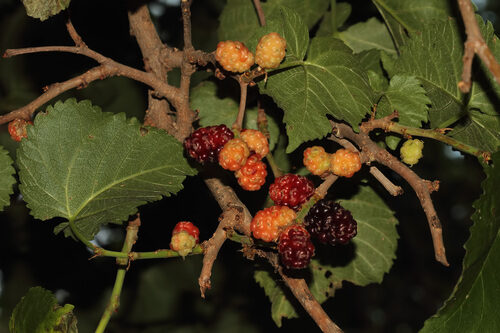
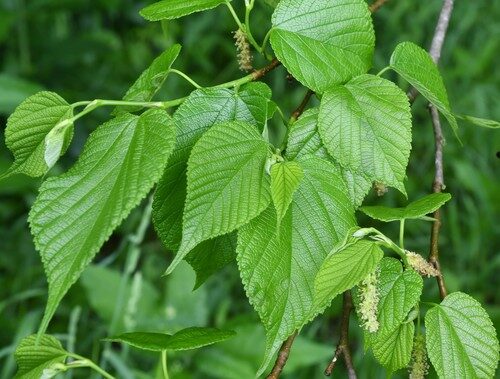
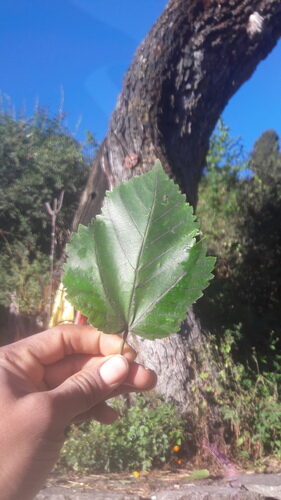
A fig. It is a small tree. It is evergreen. It is 10-15 m high. The trunk is 15-30 cm across. The sexes are separate. The bark is dark brown. The small branches are coarse. The leafy structures near the base of the leaves are oval and about 1.7 cm long. The leaf stalk is 1.5-4 cm long. The leaves are alternate. The leaf blade is oblong and 10-20 cm long by 4-7 cm wide. They are papery. They are slightly hairy underneath. The base is wedge shaped but unequal. The tip is sharp. The figs are in clusters on small outgrowths from old stems. They are orange red when mature and round but flattened. They are 1.5-2 cm across. They are smooth. The stalk is 0.8-2.4 cm long. Male and gall flowers are in the same fig with the male flowers near the opening.
Synonyms
Also Known As
Ara serapat, Benying, Buruni-buruni, Ching khao, Ching, Kalapong, Kelampong bukit, Kedampul, Kujanjing, Labe, Lolo, Maduea plong, Mak war, Mobopu, Peelasa, Pohon ara kujajing, Sekuduk'en, Semantung, Shui tong mu, Sung rung, Tibig, Weelada, Wilada
References (19)
- Ambasta, S.P. (Ed.), 2000, The Useful Plants of India. CSIR India. p 222
- Anderson, E. F., 1993, Plants and people of the Golden Triangle. Dioscorides Press. p 211
- Burkill, I. H., 1966, A Dictionary of the Economic Products of the Malay Peninsula. Ministry of Agriculture and Cooperatives, Kuala Lumpur, Malaysia. Vol 1 (A-H) p 1025
- Delang, C. O., 2007, Ecological Succession of Usable Plants in an Eleven-Year Fallow Cycle in North Lao P.D.R., Ethnobotany Research and Applications. Vol. 5:331-350
- Flora of China.
Show all 19 references Hide references
- Forest Inventory and Planning Institute, 1996, Vietnam Forest Trees. Agriculture Publishing House p 546 (As Ficus harlandii)
- Hariyadi, B., 2008, The Entwined Tree: Traditional Natural Resource Management of Serampas, Jambi, Indonesia. Ph. D thesis. Univ. or Hawaii. p 402
- Japanese International Research Centre for Agricultural Science www.jircas.affrc.go.jp/project/value_addition/Vegetables
- Luczaj, L., et al, 2021, Wild food plants and fungi sold in the markets of Luang Prabang, Lao PDR. Journal of Ethnobiology and Ethnomedicine (2021) 17:6
- Martin, F.W. & Ruberte, R.M., 1979, Edible Leaves of the Tropics. Antillian College Press, Mayaguez, Puerto Rico. p 206
- Nakahara, K. et al, 2002, Antimutagenicity of Some Edible Thai Plants, and a Biocative Carbazole Alkaloid, Mahanine, Isolated from Micromelum minutum. Journal of Agricultural and Food Chemistry. 50: 4796-4892
- Ochse, J.J. et al, 1931, Vegetables of the Dutch East Indies. Asher reprint. p 495
- Priyadi, H., et al, Five hundred plant species in Gunung Halimun Salak National Park West Java. A checklist including Sundanese names, distribution and use. CIFOR, FFPRI, SLU p 18
- Slik, F., www.asianplant.net
- Sukarya, D. G., (Ed.) 2013, 3,500 Plant Species of the Botanic Gardens of Indonesia. LIPI p 284
- Terra, G. J. A., 1973, Tropical Vegetables. Communication 54e Royal Tropical Institute, Amsterdam, p 46
- World Checklist of Useful Plant Species 2020. Royal Botanic Gardens, Kew
- www.eFloras.org Flora of China
- Xu, You-Kai, et al, 2004, Wild Vegetable Resources and Market Survey in Xishuangbanna, Southwest China. Economic Botany. 58(4): 647-667.