Ficus enormis
(Miq.) Miq.
Enormis fig
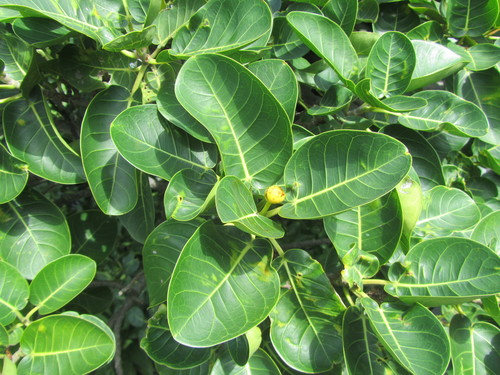
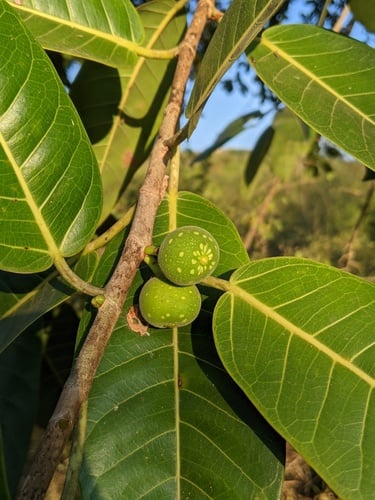
iNaturalist· cc-by-nc
(c) jbugoni, some rights reserved (CC BY-NC), uploaded by jbugoni
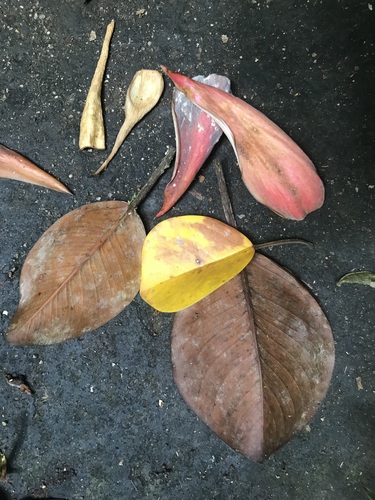
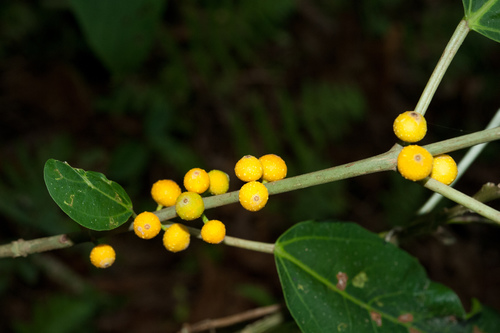
iNaturalist· cc-by-nc
(c) Luís A. Funez, some rights reserved (CC BY-NC), uploaded by Luís A. Funez
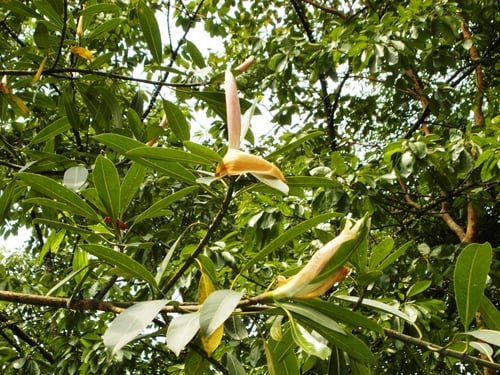
iNaturalist· cc-by-nc
(c) Luís A. Funez, some rights reserved (CC BY-NC), uploaded by Luís A. Funez
Summary
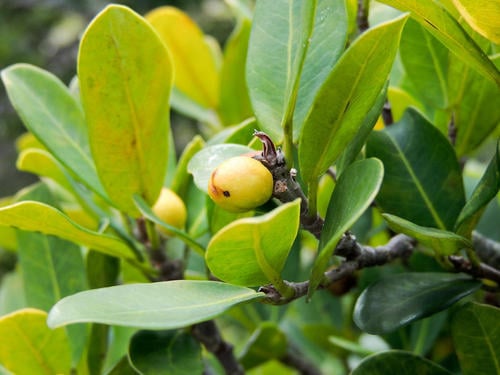
Source: WikipediaFicus enormis is a species of flowering plant in the family Moraceae, native to Brazil. An evergreen fig tree reaching 14 m (46 ft), it is an epiphyte (especially on palms) and lithophyte that can handle dense shade to full sun.
Description
A fig. It is a tree. The crown is round and dense. It grows 6-14 m tall. The trunk is short and crooked and can be 40-80 cm across. It often grows attached to other plants. The leaves are simple and alternate.
Edible Uses
The fruit is eaten.
Distribution
It is a tropical plant. It is often in open forest.
Where It Grows
Amazon, Argentina, Brazil, Paraguay, South America, Uruguay,
Cultivation
Succeeds in full sun to quite dense shade. Established plants are drought tolerant. Fig trees have a unique form of fertilization, each species relying on a single, highly specialized species of wasp that is itself totaly dependant upon that fig species in order to breed. The trees produce three types of flower; male, a long-styled female and a short-styled female flower, often called the gall flower. All three types of flower are contained within the structure we usually think of as the fruit. The female fig wasp enters a fig and lays its eggs on the short styled female flowers while pollinating the long styled female flowers. Wingless male fig wasps emerge first, inseminate the emerging females and then bore exit tunnels out of the fig for the winged females. Females emerge, collect pollen from the male flowers and fly off in search of figs whose female flowers are receptive. In order to support a population of its pollinator, individuals of a Ficus spp. must flower asynchronously. A population must exceed a critical minimum size to ensure that at any time of the year at least some plants have overlap of emmission and reception of fig wasps. Without this temporal overlap the short-lived pollinator wasps will go locally extinct.
Propagation
Seed - best sown as soon as it is ripe in a partially shaded position in a nursery seedbed. The seed is very small, so it should be sown on the surface and gently watered into the soil, being careful not to wash it away. A low germination rate can be expected, with the seed sprouting within 21 - 28 days.
Other Uses
The wood is medium-textured, moderately heavy, soft, with poor mechanical properties and not very durable. Easy to work with, but of low quality, it is only used for door and panel fillings, boxes, plywood etc.
Synonyms
Also Known As
Agarrapalo, Figueira-da-pedra, Gameleira-preta, Guapoy, Higuera del monte, Higueron, Ibapohe, Ibapoi, Ibapoy, Mata palo, Mata-pau, Yatita, Yva poy
References (5)
- Grandtner, M. M. & Chevrette, J., 2013, Dictionary of Trees, Volume 2: South America: Nomenclature, Taxonomy and Ecology. Academic Press p 253
- INFOODSUpdatedFGU-list.xls
- Kinupp, V. F., 2007, Plantas alimenticias nao-convencionais da regiao metropolitana de Porto Alegre, RS, Brazil p 83
- Kinupp, V. F. & Bergman, I., 2008, Protein and minerals of native species, potential vegetables and fruits. Cienc.Tecnol. Aliment. Vol. 28 No. 4 Campinas Oct/Dec.
- www.colecionandofrutas.org