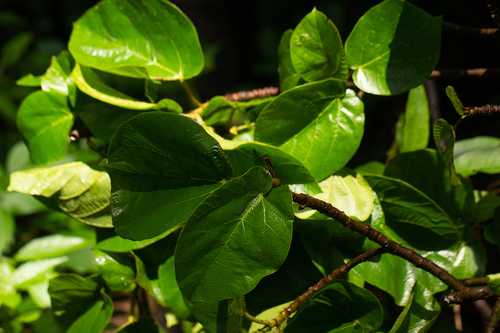
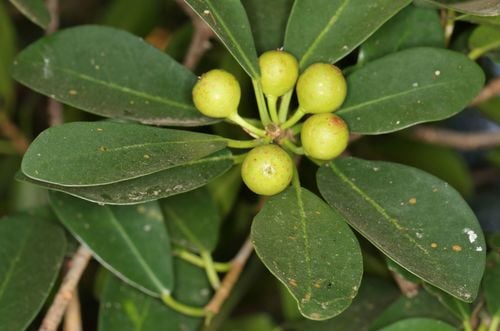
Ficus exasperata
Vahl
White fig tree, Forest sandpaper fig
iNaturalist· cc-by-nc
(c) Rujuta Vinod, some rights reserved (CC BY-NC), uploaded by Rujuta Vinod
iNaturalist· cc-by-nc
(c) International Institute of Tropical Agriculture, some rights reserved (CC BY-NC)
iNaturalist· cc-by-nc-sa
(c) TanzaniaPlantCollaboration, some rights reserved (CC BY-NC-SA)
Summary
Source: WikipediaFicus exasperata, also called the sandpaper tree, forest sandpaper fig, white fig, or sandpaper leaf tree, is a deciduous, and dioecious species of plant in the mulberry family Moraceae, native to tropical Africa (an area from Senegal east to Ethiopia and south to Angola and Mozambique) and southern Asia (India, Sri Lanka, Yemen).
Description
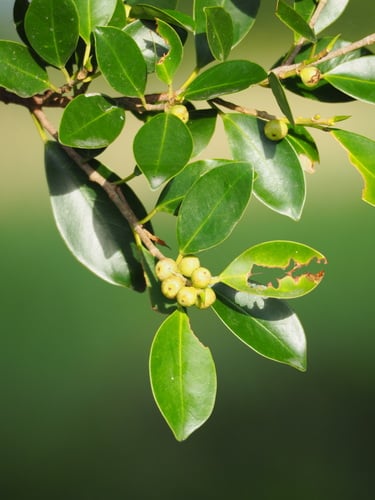
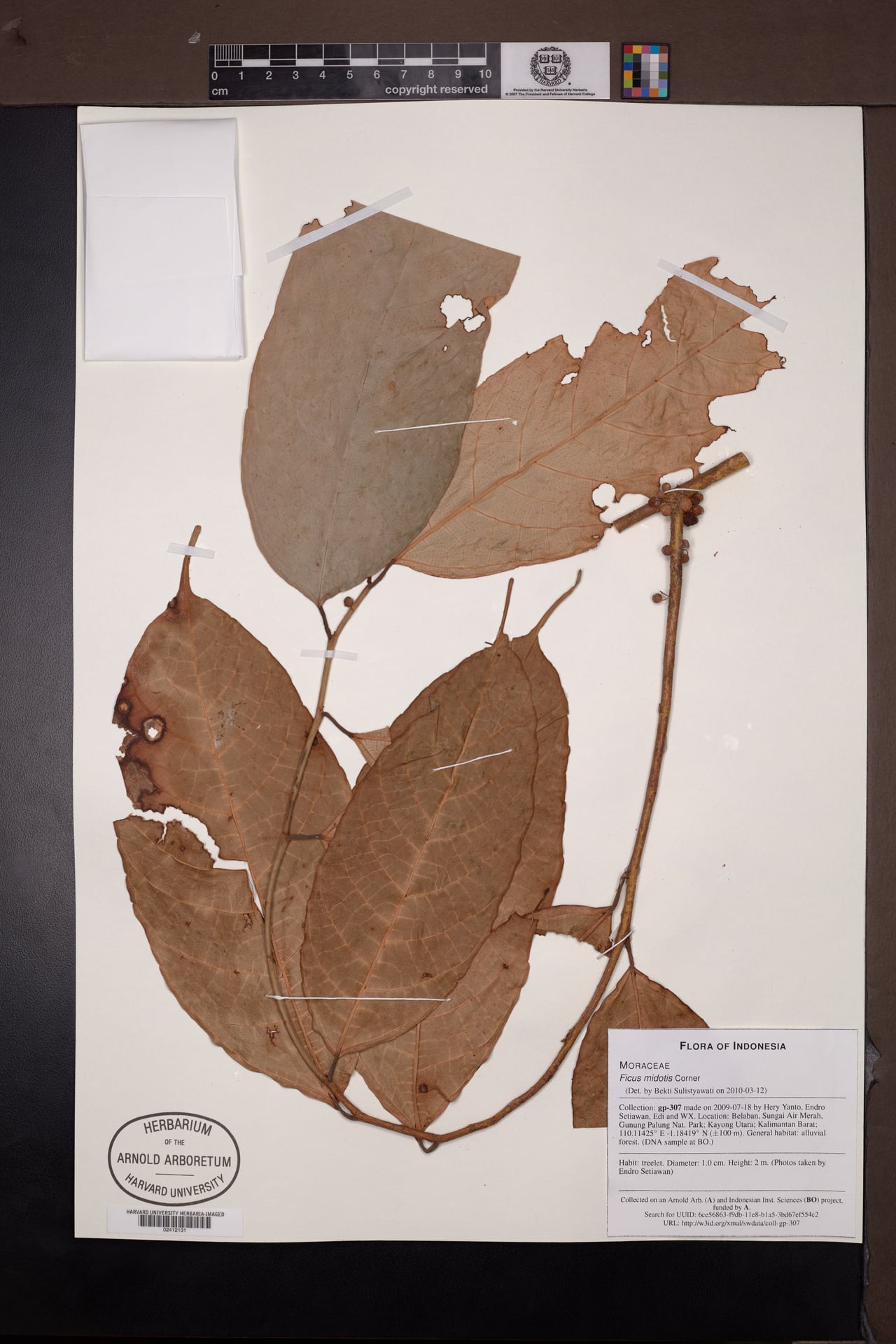
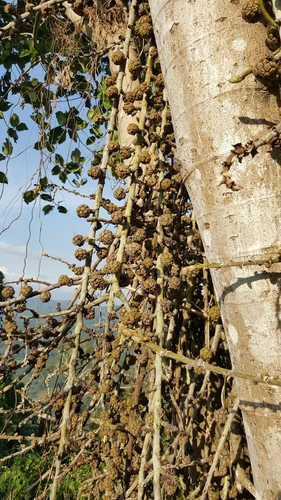
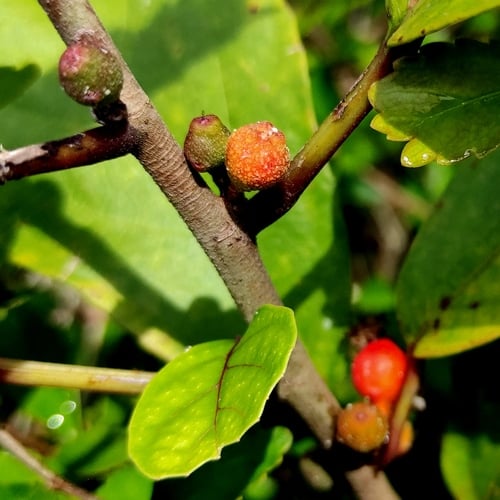
A fig. It is a tree. It grows 21 m tall. The trunk can be 50 cm across. It can have slight buttresses. It does not have aerial roots. It loses its leaves in the dry season. The leaves are rough like sandpaper. They have teeth around the edge. They are 12 cm long by 8 cm wide. The figs are in the axils of leaves or on lumps on the wood of last year's best branches. They occur singly or in pairs. They are pink or orange-red when ripe.
Edible Uses
The fresh leaf is locally added to oil palm fruits in the milling or pounding stage in order to improve the quality and stability of the oil obtained. The inclusion of Ficus exasperata leaves in the processing of oil palm resulted in better stabilization of the oil in Nigeria. The anti-oxidant activities were enhanced whereas saponins, where present, were eliminated and sterols reduced.
Traditional Uses
The ripe fruit are eaten.
This uses section is brief — help expand it
Medicinal Uses
Forest sandpaper fig is commonly employed in African traditional medicine, being used in the treatment of a wide range of conditions. There have been several investigations into its medicinal actions. Aqueous extracts of the leaf have shown gastrointestinal protective effects, diuretic activity, lipid-lowering effects and hypotensive effects. An ethanolic extract of the leaf showed in-vivo analgesic and anti-inflammatory activity and weak antipyretic activity. Methanolic plant extracts have shown antitumour activity and inhibition against trypsin activity. Aqueous and ethanolic extracts of the leaf did not show any toxicity in various bioassays. A compound with nematicidal activity, 5-methoxysporalen, has been isolated from the leaf. The content was six times higher in young leaves than in mature leaves. The stem and leaf contain alkaloids, flavonoids, tannins and cyanogenic glycosides. The fruit contains flavonoids and xanthones. Root decoctions are used in the treatment of urinary tract ailments, gonorrhoea, asthma and tuberculosis. The root is chewed in case of cough. The root is an ingredient in a prescription to expel worms. The root bark is used against eye problems. The body is rubbed with root scrapings as a tonic. The wood ash or charcoal is applied on lesions caused by leprosy. Decoctions of the bark are used in the treatment of coughs, worms, haemorrhoids and abnormal enlargement of the spleen. They are also used as ingredients in the treatment of heart problems. A cold bark extract is drunk in case of dizziness. A maceration of the bark, combined with Senna occidentalis and Setaria megaphylla is taken to facilitate childbirth or to heal gonorrhoea. Sap from the stem bark is used to stop bleeding, as a treatment of wounds, sores, abscesses, eye ailments, stomach-ache and for the removal of spines, but some traditional healers consider it corrosive to the skin and dangerous to ingest. The ash of burnt stem bark is sprinkled on wounds. Scrapings from the bark are made into an embrocation with stimulant and tonic properties. The stem bark is locally applied on the body for the treatment of malaria. The leaves and young stems are abortifacient, analgesic, antidote, diuretic, emetic, oxytocic and stomachic. A decoction is taken for the treatment of dysentery; diseases of the kidneys and urinary tract; respiratory conditions such as coughs, colds, flu and asthma; hypertension. The young leaf is chewed and swallowed in case of gastric ulcers. The fresh leaf is used as an ingredient of preparations for the treatment of heart diseases. The leaves are cooked with bananas and eaten as a treatment for gonorrhoea; the cooking water is also drunk for this purpose. The leaf juice or a decoction of the leaf is applied as an enema for the treatment of stomach-ache, and as an antidote to poison. The leafy shoot is used in preparations applied externally against jaundice. Leaf pulp or sap is externally applied for the treatment of eye ailments, rash, wounds, leprous sores, fungal infections, itching, oedema, ringworm, rheumatism, and lumbar and intercostal pain. The powder of the dried leaf is sprinkled on burns. The leaves are used as a mouthwash against thrush, inflammation of the gums and other mouth and throat ailments. The head is rubbed with warmed leaves for the treatment of headaches; tumours are also rubbed with warmed leaves. In case of severe headache, the patient’s head is washed with a decoction of the leaf. The abrasive leaf surface is used to scarify the skin to promote penetration of medicines, and to scour the tongue and throat for the treatment of mouth and throat ailments. The leaf is also used to scratch itching parts of the body and is ingested for mechanical treatment of diarrhoea and intestinal worms. The fruit is eaten as a treatment of coughs and venereal diseases. The dried and powdered fruit is added to porridge for the treatment of sterility in women. Water with the seed powder is drunk as a tonic in case of fever.
Known Hazards
Although the leaf is sometimes recorded to be poisonous to goats and sheep, it is often fed to ruminants, especially in Ghana. The stem bark and the leaf are ingredients of arrow-poisons.
Distribution
A tropical plant. It grows in the drier parts of the evergreen forest in West Africa. In Malawi it grows in lowland and mid altitude rainforest and along rivers. It suits humid locations. It is recorded between 600-1,450 m altitude.
Where It Grows
Africa, Angola, Arabia, Asia, Benin, Burkina Faso, Cameroon, Central Africa, Central African Republic, CAR, Congo DR, Congo R, Côte d'Ivoire, East Africa, Equatorial Guinea, Ethiopia, Gabon, Ghana, Guinea, Guinée, Guinea-Bissau, India, Ivory Coast, Kenya, Malawi, Middle East, Mozambique, Nigeria, Sao Tome and Principe, Saudi Arabia, Senegal, Sierra Leone, Southern Africa, Sri Lanka, Sudan, Tanzania, Togo, West Africa, Yemen, Zambia, Zimbabwe,
Cultivation
The wasp pollinator is Kradibia gestroi afrum (Wiebes).
Propagation
Seed - Cuttings.
Other Uses
The rough leaves are widely used as a sandpaper for polishing wooden, metal or ivory articles, such as kitchen utensils, gourds, sticks, bows, spear shafts, chairs, boards and bracelets. A maceration of the leaf is sprayed on crops against insect attack. Cowpea pods treated with Ficus exasperata leaf powder before being stored under traditional conditions showed decrease in both the percentage of beans with Callosobruchus maculatus and the number of emerged beetles. The white wood is moderately hard. It is used for making canoes, house posts, furniture, stools, utensils, containers and drums. Young branches are used for making pipe (smoking pipe) stems. The wood is used for fuel and for making charcoal. Wild trees are sometimes maintained when the forest is cleared so that they can provide shade in banana, coffee or cocoa plantations.
Notes
There are about 800-1000 Ficus species. They are mostly in the tropics. There are 120 Ficus species in tropical America.
Synonyms
Also Known As
Acarta-lixo, Athi-maram, Baure, Borra-cha-di-marabu, Bu pundun, Bu ves, Buiumbar, Bungadje, Cuncre, Cungre, Kalayodo, Karda, Ki ink, Korat, Lingua-di-baca, Lukenga, Muparauta, N'cungre, Nhinha, Noii, Po-di-lixa, Rufuba, Uiassiass, Umfubu, Uncuncre
References (14)
- Batawila, K., et al, 2007, Diversite et gestion des legumes de cueillete au Togo. African Journal of Food, Agriculture, Nutrition and Development 7( 3& 4): 66
- Burkill, H. M., 1985, The useful plants of west tropical Africa, Vol. 4. Kew.
- Enum. pl. 2:197. 1805
- Fowler, D. G., 2007, Zambian Plants: Their Vernacular Names and Uses. Kew. p 83
- Ibrahim, H. A., et al, 2012, Ethnobotanical Survey of the Wild Edible Food Plants Consumption among Local Communities in Kano State, North-Western, Nigeria, International Journal of Science and Technology. Vol. 2. No. 10 p 4
Show all 14 references Hide references
- Nayaham, M. C., et al, 1993, Less Known Edible Fruit - Yielding plants of Nilgiris. Ancient Science of Lif. Vol. X11 Nos. 3 & 4, pp 363-376
- Sharma, B.D., & Lakshminarasimhan, P., 1986, Ethnobotanical Studies on the Tribals of Nasik District (Maharashtra). J. Econ. Tax. Bot. Vol. 8 No. 2 pp 439-446
- Terashima, H., et al, 1992, Ethnobotany of the Lega in the Tropical Rainforest of Eastern Zaire (Congo): Part Two, Zone de Walikale, African Study Monographs, Suppl. 19:1-60
- von Katja Rembold, 2011, Conservation status of the vascular plants in East African rain forests. Dissertation Universitat Koblenz-Landau p 166
- White, F., Dowsett-Lemaire, F. and Chapman, J. D., 2001, Evergreen Forest Flora of Malawi. Kew. p 386
- World Checklist of Useful Plant Species 2020. Royal Botanic Gardens, Kew
- www.figweb.org
- www.zimbabweflora.co.zw 2011
- Yaradua, S. S. & El-Ghani, M. A., 2015, Ethnobotanical Survey of Edible Plants Sold in Katsina Metropolis Markets.International Journal of Science and Research (IJSR). 4(12)