Ficus ilicina
(Sond.) Miq.
Laurel fig
iNaturalist· cc-by-sa
(c) Tony Rebelo, some rights reserved (CC BY-SA), uploaded by Tony Rebelo
iNaturalist· cc-by-nc-nd
(c) markus lilje, some rights reserved (CC BY-NC-ND), uploaded by markus lilje
iNaturalist· cc-by-nc
(c) Alan R. Franck, some rights reserved (CC BY-NC), uploaded by Alan R. Franck
Summary
Source: WikipediaThe Laurel fig (Ficus ilicina) is a species of rock-splitting fig that is native to the semi-desert regions of southwestern Africa. It is only found on rocks, up to an altitude of 1,300 m (4,300 ft).
Description
A fig. It is a small tree. It is about 4.5 m tall. It spreads sideways and clasps the rocks. The white trunk spreads over the rock surface. The branches are pale, long and thin. The leaves are carried at the ends of the branches. The leaves are dark and slender. They are smooth and thick. They are 2.5-10 cm long and 5 cm wide. The leaf base varies in shape. The leaves are carried on yellow or red stalks. These are about 1 cm long. The fruit are small and round. They are on short stalks either singly or in pairs. They are edible.
Edible Uses
The fruit are eaten raw as a snack.
Traditional Uses
The fruit are eaten raw as a snack.
This uses section is brief — help expand it
Distribution
A tropical plant. It mostly grows in rocky places. It grows in hot arid areas. It grows in semi-arid areas. It grows between 133-1,450 m above sea level. It can grow in arid places.
Where It Grows
Africa, Angola, Central Africa, Namibia, South Africa, Southern Africa,
Cultivation
The wasp pollinator is Elisabethiella enriquesi (Grandi).
Other Uses
The bark is a source of tannins. The bark is used as a dye.
Notes
There are about 800-1000 Ficus species. They are mostly in the tropics. There are 120 Ficus species in tropical America.
Synonyms
Also Known As
Klimvy, Omupendarwa, Rock-splitting fig
References (8)
- Jansen, P.C.M., 2005. Ficus glumosa Delile. [Internet] Record from Protabase. Jansen, P.C.M. & Cardon, D. (Editors). PROTA (Plant Resources of Tropical Africa), Wageningen, Netherlands. < http://database.prota.org/search.htm>. Accessed 16 October 2009.
- Mannheimer, C. A. & Curtis. B.A. (eds), 2009, Le Roux and Muller's Field Guide to the Trees and Shrubs of Namibia. Windhoek: Macmillan Education Namibia. p 22
- Palmer, E and Pitman, N., 1972, Trees of Southern Africa. Vol. 1. A.A. Balkema, Cape Town p 479
- Royal Botanic Gardens, Kew (1999). Survey of Economic Plants for Arid and Semi-Arid Lands (SEPASAL) database. Published on the Internet; http://www.rbgkew.org.uk/ceb/sepasal/internet [Accessed 4th May 2011]
- Ruiters-Welcome, A. K., 2019, Food plants of southern Africa. Ph.D. thesis. Univ. of Johannesburg p 79
Show all 8 references Hide references
- Welcome, A. K. & Van Wyk, B.-E., 2019, An inventory and analysis of the food plants of southern Africa. South African Journal of Botany 122 (2019) 136–179
- World Checklist of Useful Plant Species 2020. Royal Botanic Gardens, Kew
- www.figweb.org
More from Moraceae
Maclura tinctoria - (L.) D.Don ex Steud.
Fustic Tree
Maclura tricuspidata
Che, Silkworm thorn, Chinese Che, Chinese Mulberry, Cudrang, Mandarin Melon Berry, Tuo, Zheshu, Zhe tree
Maquira calophylla
Maquira guianensis
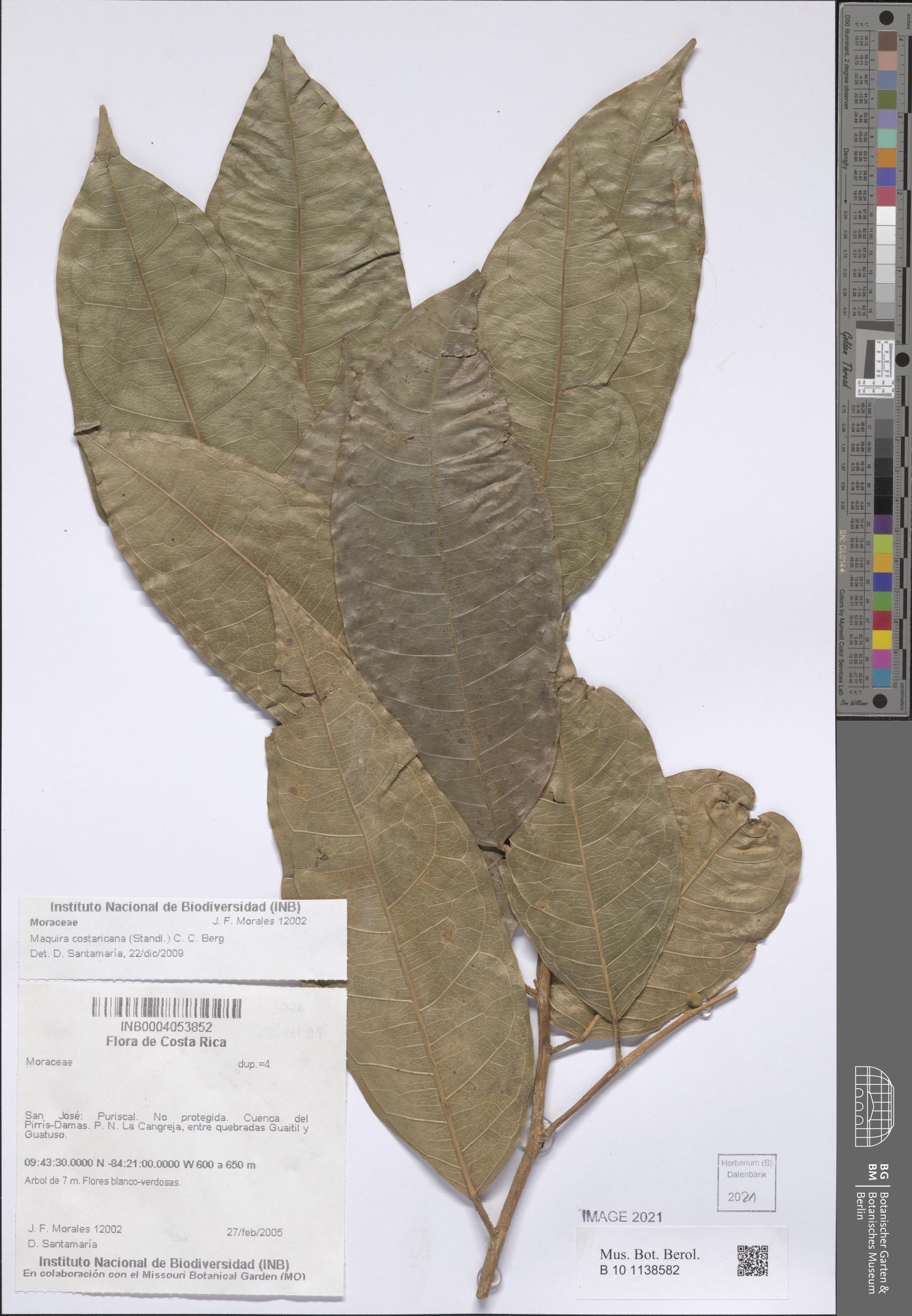
Maquira guianensis subsp. costaricana
Mutata, Marimita
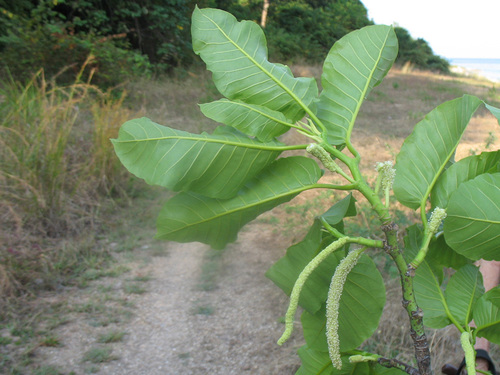
Milicia excelsa
African teak